MR. BILL OF THE SEA
Rolling right along with my amended Dragon Stole. I’m now officially past the half-way point. Everything from here on in mirrors what has happened before.

The undine turns out to have a rather small head for all that body, and a face and gesture rather like that of Mr. Bill:


I guess, surrounded as she is by two rather formidable hippocampi, she’s caught in the middle of saying “OHHH, NOOOOOO!”
RIGHT ON TRACK
A semi-quiet weekend here at String.
First, progress on my Dragon Stole, which I’ve modded to include the central undine from its pattern’s ultimate ancestor:
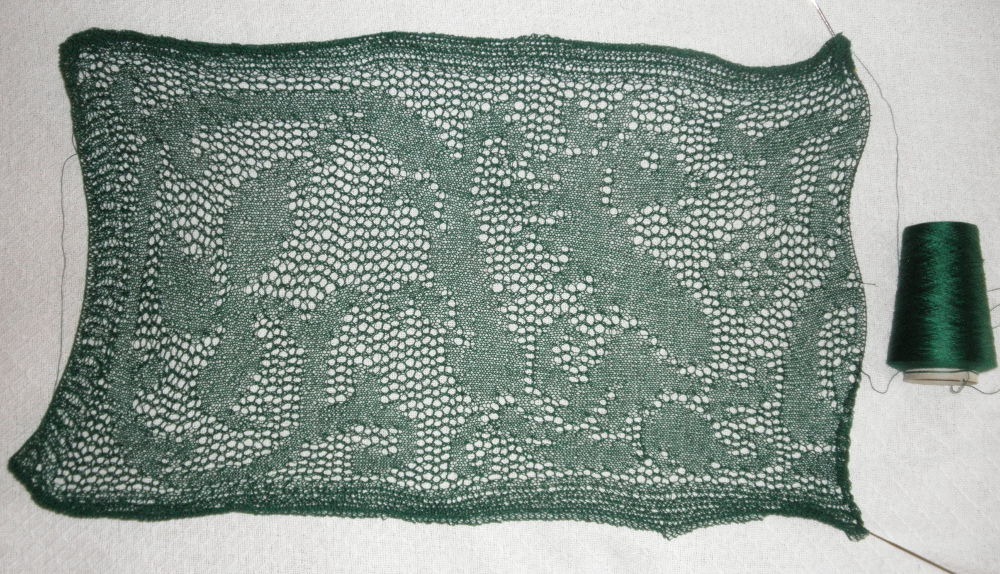
Mods include the star above the beastie’s eye, the large flower in front of it, and beginning of the mermaid at the right.
You can see that my spool of Valley Yarns Tencel 8/2 has been barely diminished by all this knitting. The tencel is quite easy to work with, a bit slippery compared to cotton (which for me is a good thing), but less slippery than rayon. It doesn’t roll back on itself to kink, even coming off the cone. Being about half done at this point, I estimate that my cone, claimed by Webs to have 3360 yards on it, will be ample for 8-10 shawls of this size. At around $25 for the cone, I’d rate it as a very good buy. Aside – if you’re budget challenged or packing for an extended stay somewhere, consider taking up lace knitting. Lace offers the most knitting satisfaction per dollar invested on materials, and per square inch of suitcase space.
Then, coincident with the Indian nation’s Republic Day, Younger Daughter’s school had their annual field day – a morning of track and field events pitting the Indus International School’s various houses against each other. Phoenix, Orion, Hercules, and Pegasus have vied all year for points in academics, debating, deportment, and sporting events, just like at Hogwarts. Field day is the culmination of the annual competition.
Assignment to the houses appears to be pretty arbitrary, no sorting hat here. Younger Daughter was shuffled off to Hercules on the whim of the admitting administrator. Hercules took first place in the day’s marching. Here they are, behind their blue flag:

Perhaps the most fun of the day was the kids vs. faculty tug of war, where (no surprise) the myrmidons of the massed houses triumphed over their long-suffering teachers. Younger Daughter’s sense of triumph is palpable:

Phoenix house won the 2012 house trophy. I hear the kids are already plotting new domination strategies for 2013.
HIPPOCAMPI AND UNDINE
Progress on several fronts here. Slow, for sure – but progress.
First, my MMarioKKnits Dragon Stole continues to grow:
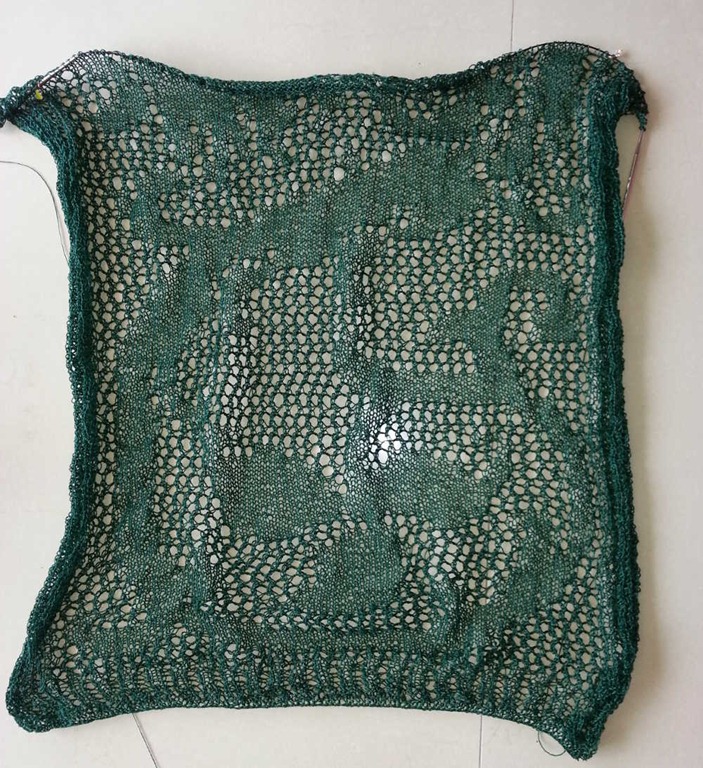
Both Long Time Needlework Pal Kathryn and I were convinced we’d seen this beastie before.
Sure enough, blessed by the local resource fairy, and well versed in Siebmacher’s oeuvre, Kathryn managed to dig up the original, from the 1603 edition of Siebmacher’s Shon Neues Modelbuch. I got in touch with MMarioKKnits himself to ask if he used the Siebmacher when he drew up his pattern, or if he remembered some other secondary source that was his inspiration. Many of these designs were re-collected in the mid 1800s, when counted work went through a major renaissance, some of which was inspired by actual Renaissance pattern books. I suspected that one of these mid 1800s collections was the source in question.
MMario confirmed that he indeed started with a mid 1800s work, but he didn’t remember which one. He pointed me at the Antique Pattern Library (more on this below). I’m pretty familiar with their inventory, but wasn’t able to find his secondary source either.
There are some differences between the MMario version and the one from 1603 – as one would expect in a multi-century game of garbled pattern transmission telephone – but the main motif, a hippocampus (not a dragon) is spot on count for count the same. Why do I think it’s a hippocampus? Because these designs were highly thematic, and a mermaid would be more likely to keep company with a mythical sea-steed than a dragon.
I’ve got official permission from MMario to post some quotes from his graph in order to put the changes in context. The black squares are the same in his rendition and the 1603 Siebmacher version. The red squares are from 1603, and are different from his design. The majority of the beastie is the same in both.

This center panel – a dual tailed undine similar to the one used by Starbucks in its logo – can be used as a drop in, inserted right into the MMario piece to make a wider stole.
The other modification is in the tail. MMario’s beast has an elongated tail swirl with a nifty trifoliate tail. But in the original we see instead a smaller, tighter spiral sweep, a large quaternary flower, and the implication of a bridged mirroring putting two hippocampi tail to tail, centered around a second “bounce line.” Please note that I’ve not included the whole dragon repeat in order to keep from stepping on MMario’s pattern toes. You’ll have to visit his design to get the rest of it.

I’m going to attempt to introduce the center mermaid into my Dragon Stole. Wish me luck!
Aside on Antique Pattern Library – this is a non-profit, volunteer effort to scan and preserve out of print documents and ephemera related to needle and domestic arts. They have a huge collection of public domain embroidery, knitting, crochet, tatting, sewing and crafts books and leaflets dating from before 1920. A large proportion are from 1860 through 1910 or so. They even have a couple of early Modelbooks thrown in! As a reference, its invaluable. As an archive of women’s history, even more so. I strongly urge everyone to visit, to sample some of the freely available resources there, and most important – to donate to sustain the collection. It’s no secret that they live hand to mouth. I’d truly love to see them do so a bit longer.
10,000 SNACKS
France may be the land of 500 cheeses, but India is the land of 10,000 snacks.
They take their snacks very seriously here. There appear to be micro-regional specialties, and a dizzying variety of basic types – far beyond the chips (crisps for my UK readers), pretzels, tortilla chips, and smattering of other items seen in American supermarkets. I suspect if a new vegetable or grain were to spontaneously appear, the US FDA would study it for two years before decreeing wholesomeness, the European Union would ban it because there is no established tradition of farming or cooking it, but India would throw open her arms and overnight it would appear in fifty new packaged fried snack foods, each with a distinctively cheerful bag.
We’ve been trying some as our weekend treat, and we’ve barely scratched the surface of what’s available at the Hypermarket down the street:

Yes, those are potato sticks. The particular variety we tried is (like much of India) perfumed with cumin. Potato (aloo) sticks come in dozens of varieties, some spicy/hot/salty, some herbed, and some plain. We really liked this one, they’re easy to nibble and go great with roasted little red-skin peanuts, smaller than those in the US, but tastier.
Oh. I forgot to mention, combining these nibbles into one’s own custom snack mix appears to be a national pastime, so we’re following suit, mixing and matching these as whimsy overtakes us.
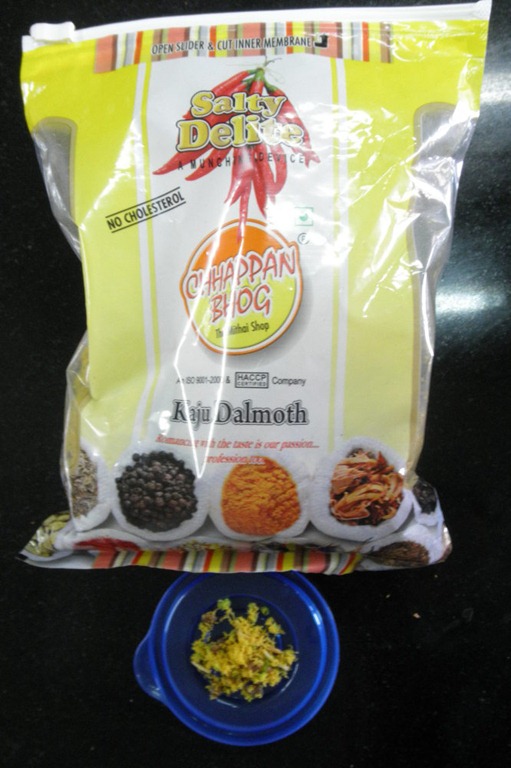
This one is a bit messier to eat. In texture, it’s like fuzzy dust studded with little bits of roasted lentils, cashew nuts, and other seeds and spices. It’s so fine it almost needs to be spooned. It’s also intensely spicy. I love the product tag line “A Munching Device.” A good mixer to use with other, less intense varieties.

These are The Resident Male’s favorite. They’re crunchier than Cheetos, and flavored with onion and chili instead of Mystery Orange.

Puffed wheat! Very roasty tasting, and a perfect background foil to these other hot and spicy treats. I knew a little about the variety of Indian foods and was prepared for that exploration, but the wealth of casual nibbles here took me by surprise. I find it a very amusing arena for small discoveries. I’ll post more about these as we try more.
On the needlework front, I’ve made a bit of progress on the Dragon Stole:

I’m just about up to the body, half way through the first dragon.
And I’ve unpacked my stitching. I’ve set up my big green sampler.
Unfortunately, there’s no good place in the apartment to work on it. I need very bright light, and even though we finally found the exotic flavor light bulbs used in the fixtures here, and have more than one 40 watt light source in the living room, there’s still not enough light to work it by. So as a stop gap, I’ve started the Sarah Collins kit I picked up at Winterthur in 2011:

I’ve never done a kit before, preferring to muddle about on my own. I am having mixed feelings about this. It’s cumbersome, with a zillion large scale detailed charts that require constant cross-referencing. The design is pleasing, the colors are o.k., not my faves, but well suited to the design. The linen is nice, and working 3×3 is a refreshing change, quite large compared to what I’ve been stitching of late. I opted for the cotton rather than the silk threads, in part because the silk kit was expensive. That’s why I’m working it on the padded round frame. Were this silk, it would fight for space on my flat frame with Big Green.
Oh, and yes – I’m working on T2CM, too. I’m up to the exquisitely boring part, where I add proofed counts to each pattern.
KITCHEN TOOLS FROM ANOTHER WORLD
No, this alarming looking device is not a Vogon marital aid:

It’s a coconut reamer – the perfect tool needed to produce fluffy grated fresh coconut from a whole nut. Grated coconut is a common cooking ingredient, and the best is obtained by buying the coconuts and shredding them yourself. And if we choose to save the husks, I’m sure we’ll have enough to outfit an entire clip-clop cavalry detachment by the time we return home.
In knitting, Dragon Stole continues to grow:

You can make out the tail section in the center. Long time needlework pal Kathryn is probably right – the graphed pattern used in this MMario Knits design has a very Renaissance look, and resembles several patterns in the various editions of Siebmacher’s modelbooks. I’ve been through his 1597 pattern book on line, and didn’t find it, but recourse to my library is a bit constrained over here in India, so I am not giving up yet. (Aside: Kathryn provides a selection of the 1597 patterns in her collection Patterns from Renaissance Germany, available on Flowers of the Needle).
WHELK AND STOLEN DRAGON
The long flight overseas was not wasted. I managed to knit a hat during the trip. This is Le Bulot (The Whelk) by Kokolat de la Kokolatiere. I worked it up with some remnants, roughly less than half a skein each of charcoal color Regia Extra Twist Merino, and On-Line Supersocke 100 Harlekin Color for the multi.

I’m pleased with the result, but I can say that the pattern isn’t entirely straightforward. It took some deciphering, plus referring back and forth between the French original, the English translation, and the very informative pix of the finished item, but I got it all together in the end.
One thing that sped up production and minimized the number of things that could go sliding underneath my airplane seat – instead of using the slip one stitch to a cable needle and knit in front, I used a left twist stitch. When I got up to the part of the pattern that included decreases made at selected twists, I worked them by inserting the tip of my right hand needle into the backs of the second and third stitch from the end, knitting them together but leaving them on the right hand needle, then shimmying the right hand needle into position to knit the twisted stitch, and finally slipping the entire unit off the left hand needle. Oh, and while doing that I kept track of which color would follow in the logic of the row, and made sure that the decrease was worked with that one. Not particularly difficult, but not exactly mindless, either.
On the yarns, I’ve used the Supersocke many times before. It’s a standard issue self striping sock yarn, with an interesting mix of bright colors in a rather conservative small repeat. On socks, about four full repeats of the entire color sequence will occur in the foot part. I was less pleased with the Regia Extra Twist Merino. It’s nice and soft, and looks good when knit up, but for a sock weight yarn it splits like crazy. No word yet on durability, but I’ve knit a hat, admittedly not the most torturous use for the stuff.
I’ve finally unpacked my knitting and stitching stash. Working on my big green sampler right now will be problematic, though. I don’t have a good light for evening stitching, although I can haul a kitchen chair to the big windows and work on it during the day. I may ease my stitching withdrawal symptoms by working on a smaller in-hoop project. I brought some supplies and a kit with me, so I’m armed.
In the mean time, I’ve embarked on the MMario Knits Dragon Stole, an extended exercise in filet knitting.

I’d played with filet knitting before, but was not satisfied with the methods I had tried. MMario uses three worked rows per graphed chart line, and while not as teeny, nor as precisely geometric as filet crochet, works quite nicely. I’m hoping that I’ll be able to apply his method to my huge warehouse of Italian Renaissance graphed patterns and have some cross-pollination fun.
IN WHICH WE WANDER ABOUT
We’re still learning the ropes of our new adopted home, but we took off some time last week before Younger Daughter started school today to explore some of the sights of the Pune area. Thankfully, Elder Daughter was armed with her camera, because I’m pitiful at taking pictures.
On Wednesday we visited Parvati Darshan, a temple complex on a hill in the middle of the city. Structures at the complex date to the mid 1700s, and were constructed by the Peshwas, the royal rulers of the Maratha Empire, formerly centered in this area.
There was a small cultural museum at the base of the hill, displaying Peshwa dynasty artifacts, including weapons, portraits of the ruling line, coins, and everyday items. The climb to the 2,100 foot summit was a short uphill hike ascending wide ramps and stairs, with stonework to either side.
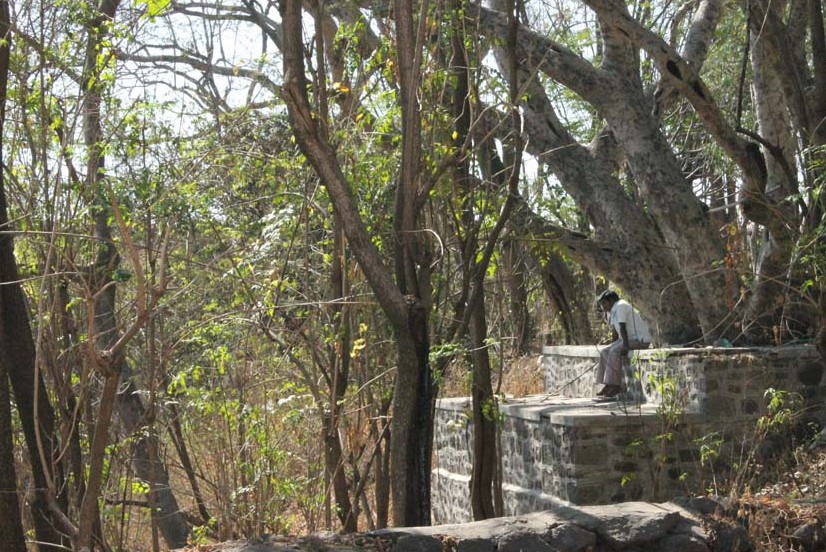
The Vishnu temple at the top is spectacular:
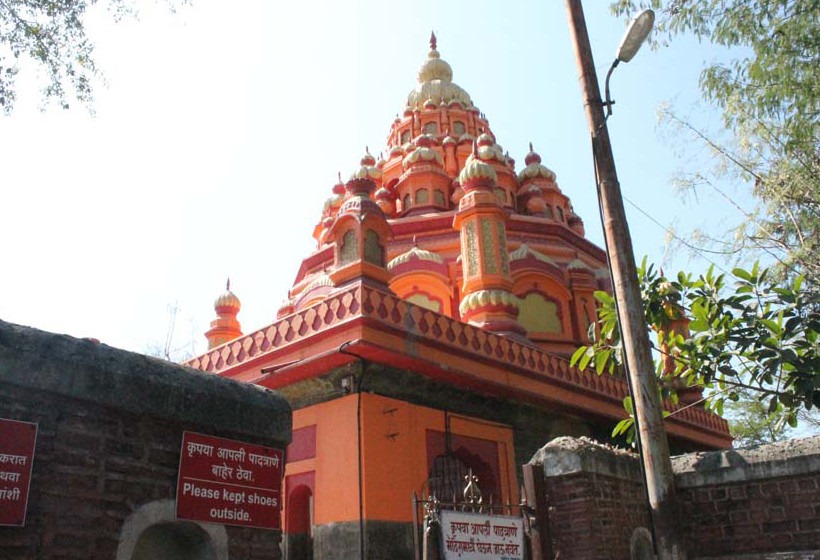
And the view of the surrounding city is also well worth the ascent, although I don’t have any snaps of that to hand.
With the quick climb behind us, our driver Rupesh suggested additional exercise – this time a hike up to Singhagad, one of the massive fortifications ringing the city. These forts also date back to the 1600s and 1700s. They changed hands many times and were the sites of historic battles, sieges, and massacres as the Maratha forces vied with the Mughals for control of the region.
Singahad Fort’s summit is over 4,300 feet – about 2,625 feet above the surrounding country, an imposing presence with a commanding view. To be entirely fair, we didn’t hike from the base. There was a twisty switchback road about 1.75 car-widths wide that took us most of the way. One side of the road was the cliff, the other a haphazardly defined margin of scrubby bushes, with a deadfall just beyond them. Since this was a two-way road with occasional bus traffic, it made the day all that more exciting. The last several hundred feet though was on foot, up another series of ramps and stairs, winding around the top of the hill.
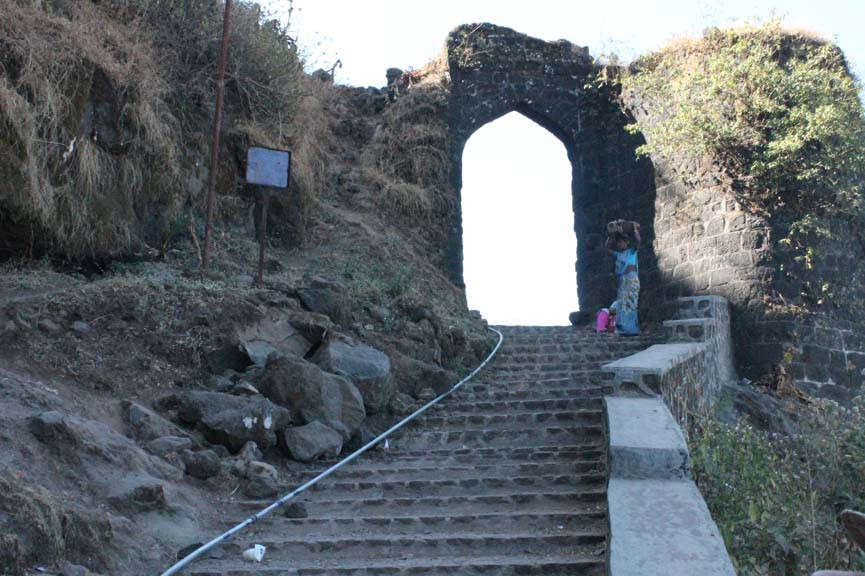
The climb does not dissuade path-side snack sellers, who ply their trade at every landing and vista on the way up. The white city in the distance is Pune.

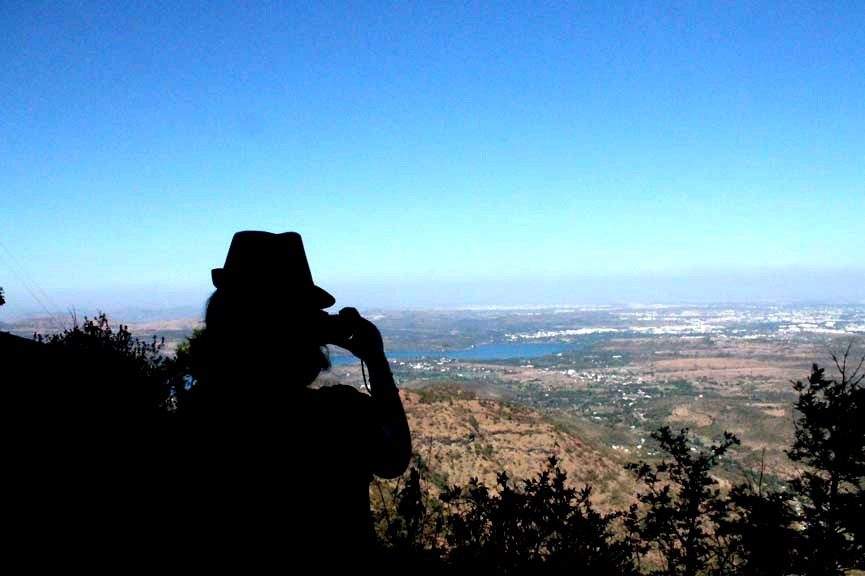
Around every breathless bend was another spectacular shot:
We went out touring again on Saturday. First we went to the Rajiv Gandhi Zoological Park. We went early, just as it opened. The morning was cool and breezy, and the zoo was quiet and shady, compared to the bustle of the streets. The larger animal exhibits are well spread out, and we enjoyed strolling along the zoo’s lanes to find them.
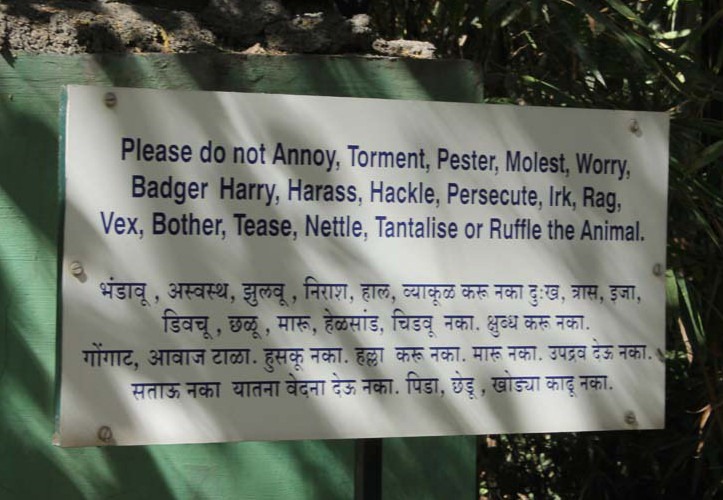
Having been warned, we avoided the thought of ruffling the tigers, guar, wolves, and hoofed stock. Snake hackling was also right out.

You’ll have to take our word for it though that we saw elephants, macaques, and cobras, too – but all were camera-shy.
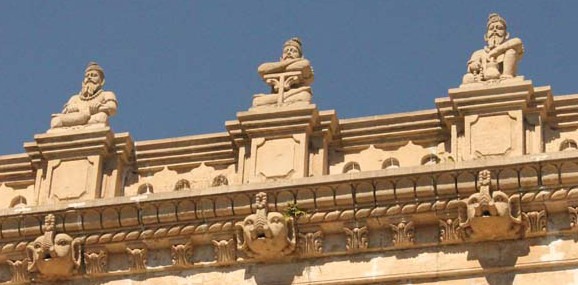
After a pleasant morning strolling about, we went to another historical venue. This was a memorial to Shinde Chhatri, a heroic general of the Marathas, who served the Peshwas from 1760 to 1780. The building has been recently restored, inside and out.
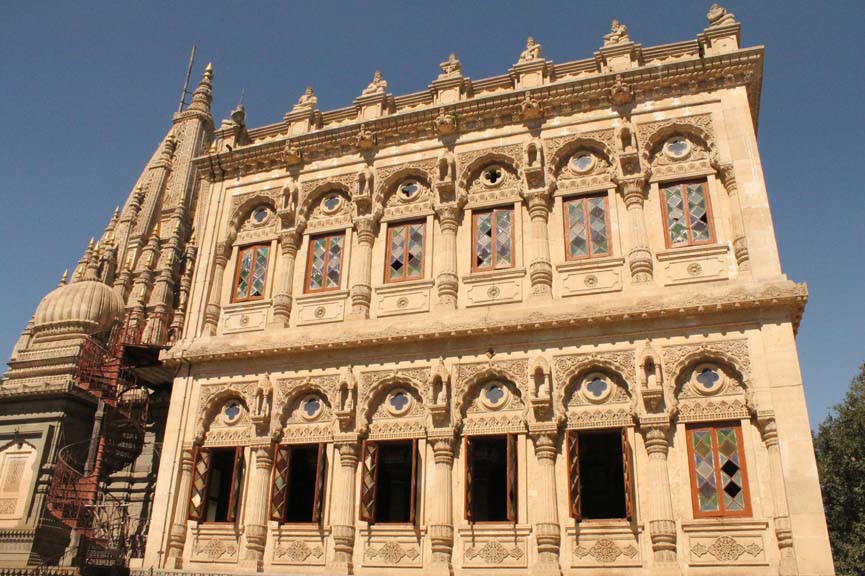
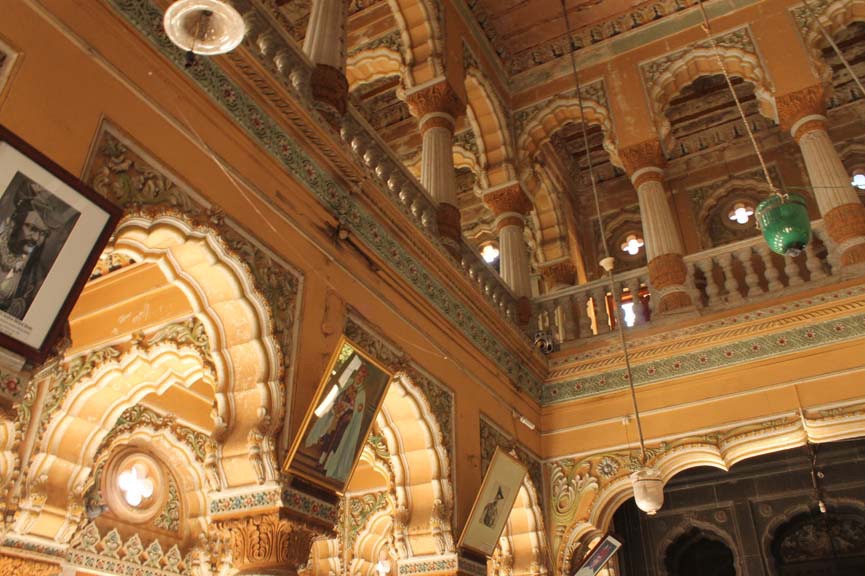
The caretaker explained to us (as best he could) that the line of notables descended from the general and his family (the portraits lining the walls) persists to this day, and remains active in governance and politics.
Needless to say, I’ll be reading more about India’s pre-Colonial history, especially that of the Maratha Empire.
THERE (BUT NOT BACK AGAIN ANY TIME SOON)
We’ve made it to Pune!
The flight didn’t set any high bars for comfort or food – in fact the tastiest item served on both Virgin Atlantic flights was called GU.

It was a prepackaged chocolate/banana pudding thing, the only edible object on the tray. In general, Lufthansa should rejoice. Amenities were so poor on Virgin that the German carrier has been promoted out of my basement ranking for long haul fights.
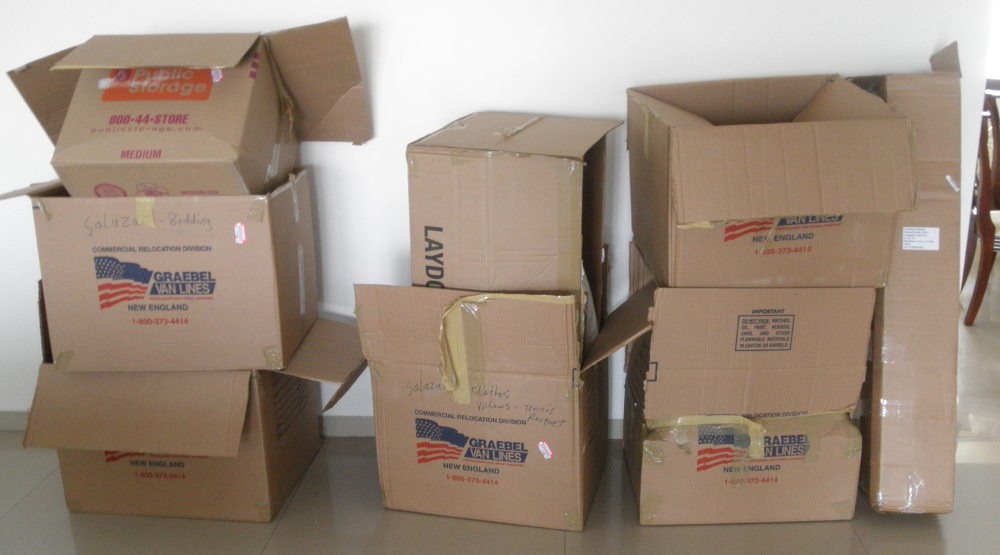
But you aren’t reading this for airplane food rants. Not only are we here, but after two days of aggressive power napping interspersed with cleaning and unpacking, we’ve managed to achieve relative sentience and order. Proof of the unpacking:
Proof of relative sentience and a virtual apartment tour, not necessarily in that order. First, the kitchen, with the soon to be infamous Pigeon Porch at the right.
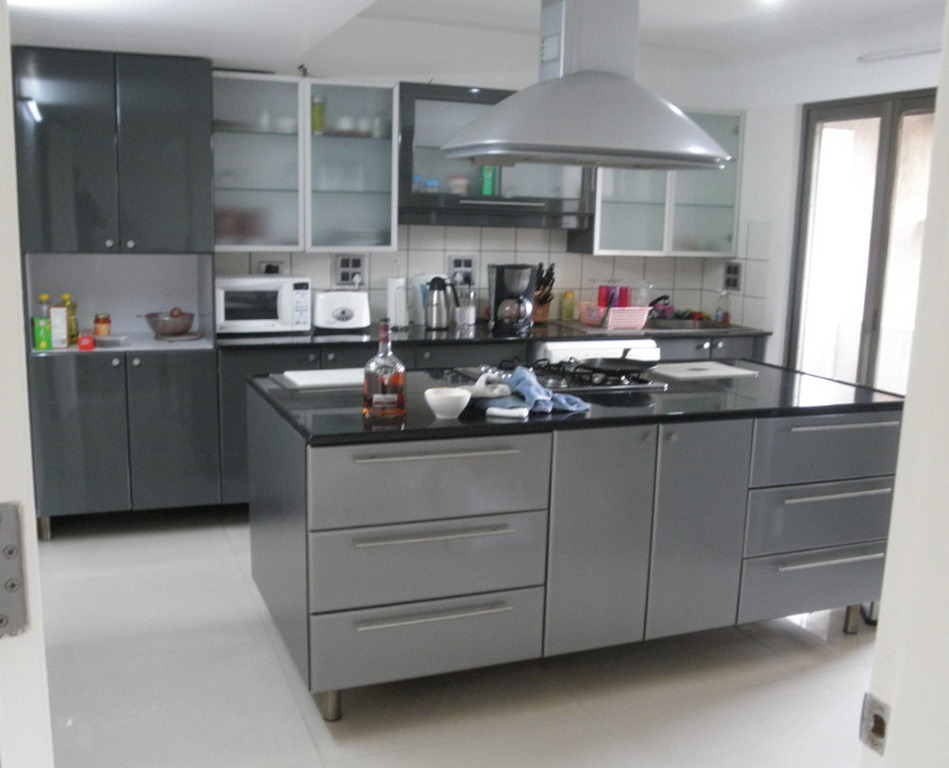
The living room, with legacy non-working TV left by the landlord:

A couple of offspring-infested bedrooms:

Younger daughter is already entertaining herself with the paint set she brought with her.
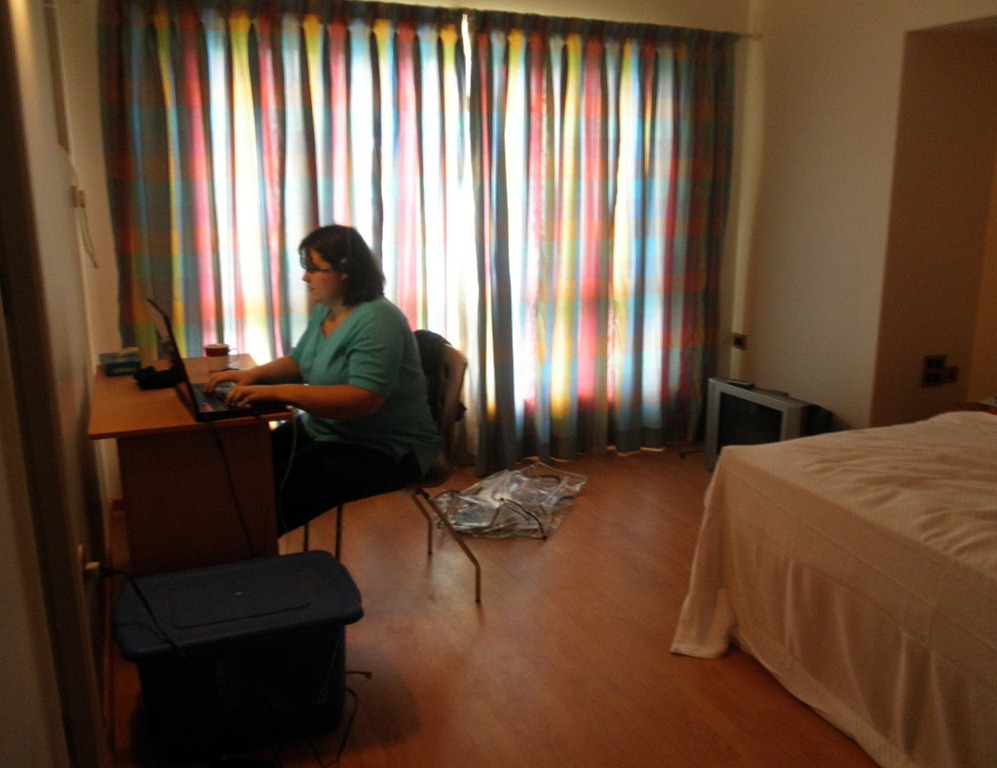
Elder daughter, doing what comes naturally. Note my knitting and stitching stash bin in the foreground, and yet another landlord abandoned dead TV in the background. Our bedroom is the same, a bed, a wardrobe wall that includes both hanging space and shelves behind wood and mirrored doors, and a king size bed. No student desk in ours, though.
The Resident Male needs to do a lot of work after hours, synching up with colleagues on US time, so we’ve turned the fourth bedroom into an office:
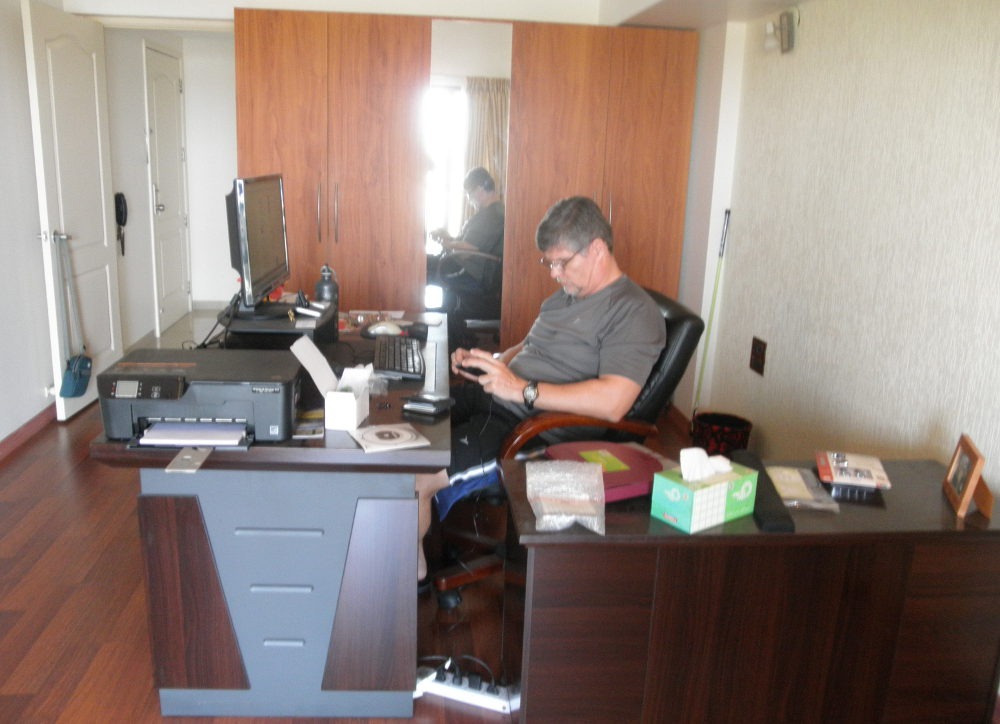
The office is off the entry vestibule, on the far side of the living room, so he can do phone meetings without disturbing the rest of us. I’ll spare you the pix of the dining room, in which I sit and type this; maid’s room, turned laundry room, with its curiously mobile washing machine and drying racks; and of all of the bathrooms. Every bedroom comes equipped with its own, with a separate one off the laundry room.
And finally – the view off the balconies:

There’s no road behind the building – just a strip of shrubby ground between us and the Indian Army’s athletic training facility. Most mornings there are groups of cadets out there doing dawn calisthenics. On a couple of mornings they’ve had loudspeaker music accompaniment. Other mornings a full military marching band has rehearsed, complete with bagpipes. I haven’t seen them yet, although we can definitely hear them. I suspect they are training on the field on the other side of the grandstand.
So there you have our post-settlement tour. We’re here, finally (mostly) adjusted to local time, feeling out local resources and schedules, and starting to branch out on adventures. More on those to come!
MOTLEY DONE!
And it’s snuggly!

Not only is Motley officially finished:
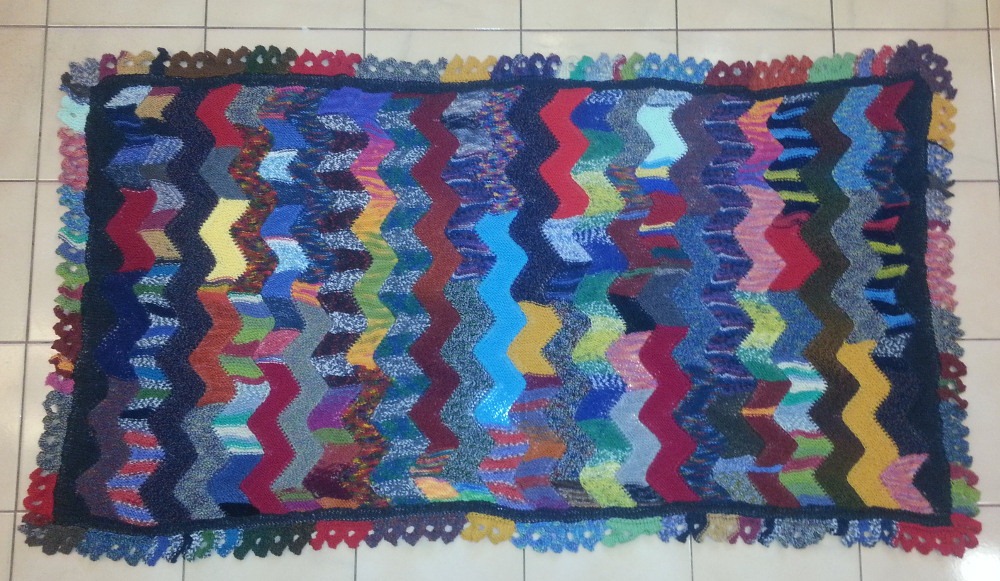
I’ve also posted a full pattern for it in the Knitting Patterns section, above. The pattern also includes directions for Hollow Point Edging – a new, quasi-original finish. Complete with a short-rowed turned corner, in both chart and prose.

How did the end of this project go? Quickly and not very quickly at the same time. Knitting this was a breeze. I cast on the week before Thanksgiving, and finished on Friday last, minus a week spent knitting fingerless gloves. That’s a rather large sofa throw in fingering weight in three weeks of evenings. BUT the last two days were a slog:

That’s one evening’s worth of orts from the Dreaded Darning In The Ends phase. No doubt about it – Motley had a lot of ends. I looked into various knit-in as you go methods, but I wasn’t convinced of their durability in a blanket, so I did it the hard way. Still, I had nowhere near as many ends as the look of the blanket presents. Remember, most of my yarns were leftovers from self-stripers. That means color changes without ends. A joy!
One last note – although I usually block my finished pieces, I did NOT block Motley. The reason I didn’t is because of the wide variety of yarn densities and gauges used. I was afraid that while everything is nice and flat now, if I were to block the thing, each fragment would behave differently, leading to cupping, sagging, or differential stretch. So I punted and let it it sit, as is.
I do hope that someone else attempts this one. It’s fast, it’s fun, and if you use up that dratted bag of leftovers that’s taking up space in the back of your closet – it’s practically free.
ROUND THE CORNER
You guessed it! More Motley:

The framing in charcoal is now complete, and I’m more than half way done with the edging. I looked through all the books that I haven’t shipped ahead, and various on-line sources, hunting for an edging that looked right. I wanted something not too lacy, with design elements that echoed the zig-zag of the center, but that was not just a duplicate of that simple point pattern. I didn’t find anything I liked in particular, so I tossed all of it into my cranial Cuisinart, and came up with my own. It’s very simple, and likely as not, I’m not the first to hit on it. Still, I like the look, and it’s quick to knit. Two evenings has marched me around almost three sides. Eventually I’ll be posting the pattern for this, including how to miter it for a neat 90-degree corner.
I’m happy with how Motely is turning out. It has a certain folkloric, rustic look. I’m sure however that I’ll think less of it once I begin working in all those ends.
On the Knowledge Base and Beginners
I’ve been having an enjoyable comments-chat with Nila. She asked a couple of questions I answered in my last post, then she posted a hint of her own. She was surprised that as a (relative) beginner, she could add onto the common knowledge pile. I think she needn’t be surprised.
Knitting, like many crafts, is simultaneously ancient and evolving. Bright people take up needles and learn. Some, infested with the how-why bug, look at their lessons with fresh perspectives, and bring insights of their own. Yes, sometimes in a limited environment their insights are rediscoveries, but that does not make those insights less valuable.
A hundred years ago, grafting sock toes was a revolutionary new technique. As late as 60 years ago slip-slip-knit instead of K1-slip one- pass slip stitch over was not universally known (reading lace instructions from books printed before the 50s turns up far more of the latter than the former). Using two circulars as giant DPNs and the using one giant circular (aka Magic Loop) are relatively new tricks, gaining wide popularity only in the last 12 years or so.
We have inherited a huge, shared tool chest of techniques, from anonymous and named innovators over the past 500 or so years of knitting history. But that doesn’t mean that the inherited ways are the ONLY ways or the ONLY CORRECT ways to produce pieces.
My point is even in a limited craft like knitting, there is a wealth of alternatives that can be pursued, and even today, a steady stream of healthy innovation. There are only so many ways to form a flat sequential multiple loop based fabric, and only so many ways to manipulate or deform stitches, yet even within those bounds, EVERYONE – beginner, intermediate, or advanced knitter – has the potential to have that flash of insight, to see some new technique or method; one that saves time, effort, money, or aggravation, or that leads to a new method of expression. Beginners can bring unspoiled eyes to annoyances more experienced knitters take in stride. More advanced knitters can blend techniques and come up with alternate ways to get things done. And everyone can cross-pollinate – bringing in inspiration, methods, and concepts from experiences outside the world of knitting.
I encourage you to try something new, to think on other or better ways to do something, or to add to your own personal toolsets with the goal of gaining inspiration through broadening your own skills. You never know – an “Aha! moment” could strike at any time, and the next inventor could well be you!
 String-Or-Nothing