ANNUAL SPRING SACRIFICE
My annual digression into gardening. Apologies if you came looking for needlework content. I must document my annual Rite of Spring, otherwise I’ll never remember what went in where. Please bear with me.
Spring finally arrived here in the Boston, Massachusetts metro area. It snuck in two weeks ago after an extended bout of “Are we Spring yet?” weather. And we have now performed our annual rite of sacrifice, cleaning up our planting beds, destroying invasive weeds, dividing and moving the overgrown, spreading 6 cubic yards of mulch, and otherwise adding to the plant population and general ambience.
First the front view:

The mountain laurel in back of the mulched perennial garden is on its last legs. I will do everything possible to keep it going because it’s my favorite, but it’s no where near as impressive as it was eight years ago. I added to the perennial collection, a Trollius Europaeus – a compact yellow flower variety, dead center, next to the tall peonies. The other plantings from last year did appear to survive. On the far side of the steps from right to left are Spike, our rugosa rose, and two blueberry bushes. We hack Spike back every other year to keep him contained, otherwise he’d devolve into a tangle of lethally thorned and whippy stems. He doesn’t seem to mind.
Those who have visited us may note that the giant grass that usually sat behind the blueberries is gone. It got too unruly, and given its fairy-ring growth pattern, was more an empty hole with scions invading the rest of the bed than the rustling clump it had been. There was really no way to take it back and rejuvenate the bed, so we excavated and removed it. Next year we will put something else there. Perhaps a dwarf tree or tall shrub, preferably flowering, and a bit out of the ordinary. No rhodies, arbor vitae, azaleas, or cherries. It’s fun to branch out (pun intended).
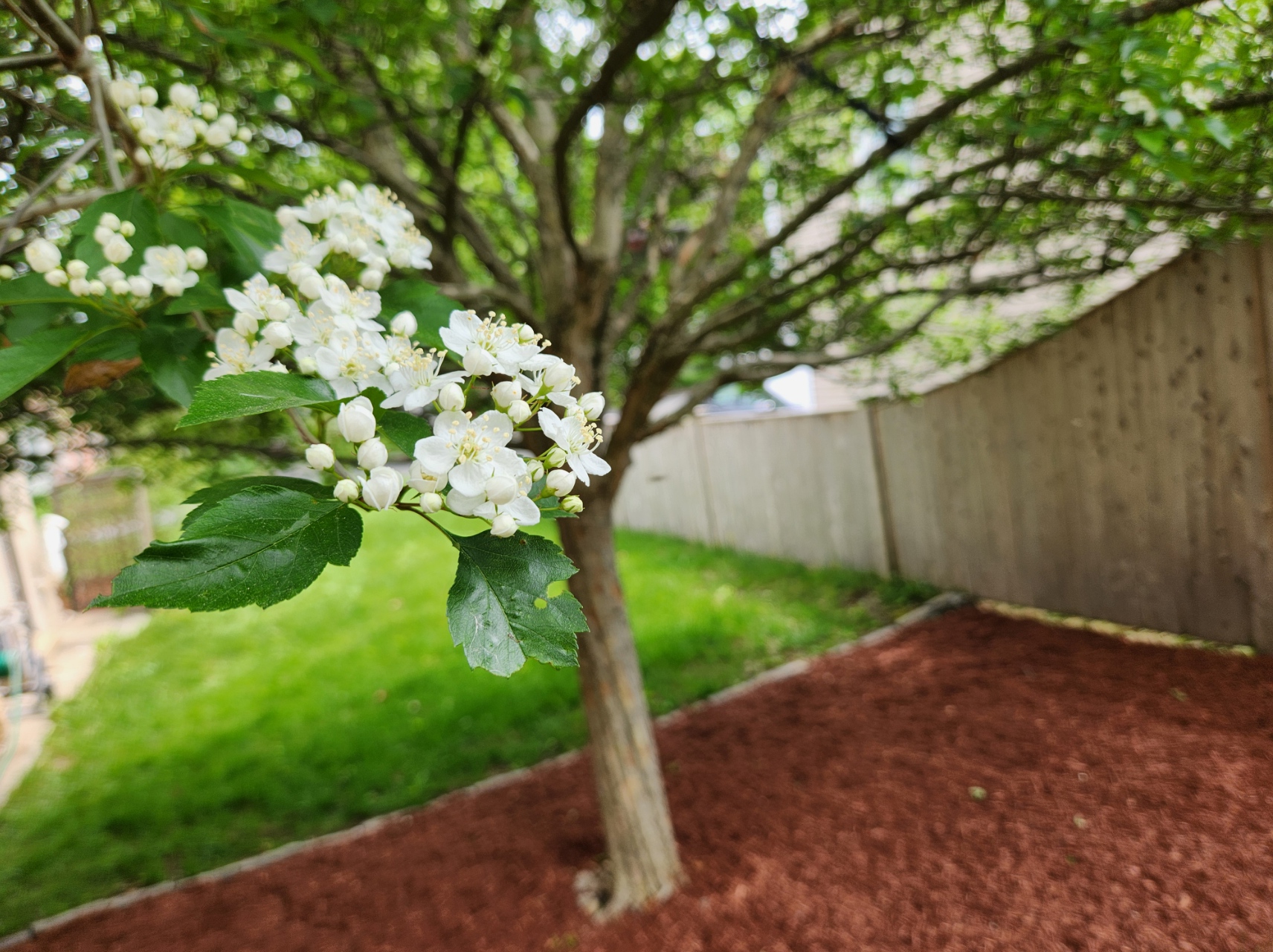
The side bed. Always a problem. It had been totally overrun by goutweed. All the plantings in there were shot through with the stuff, with no way to pull it without massive collateral damage. So I finally conceded defeat and yanked everything. Then I sorted through, carefully detangling white-stripe hostas, fern clumps, and daffodils from the carnage. I split up the hostas and put them all around the property. With one exception every white stripe you see in these pix is a transplant from the tree bed. The ferns I put under the mountain laurel. The daffodils (if they survive being moved at the wrong time of the year) will re-emerge in front of the blueberry bushes. Here you see the side bed, reduced to JUST the Hawthorne tree, now in early flowering, surrounded by stones unearthed from the bed, and mulch around that.
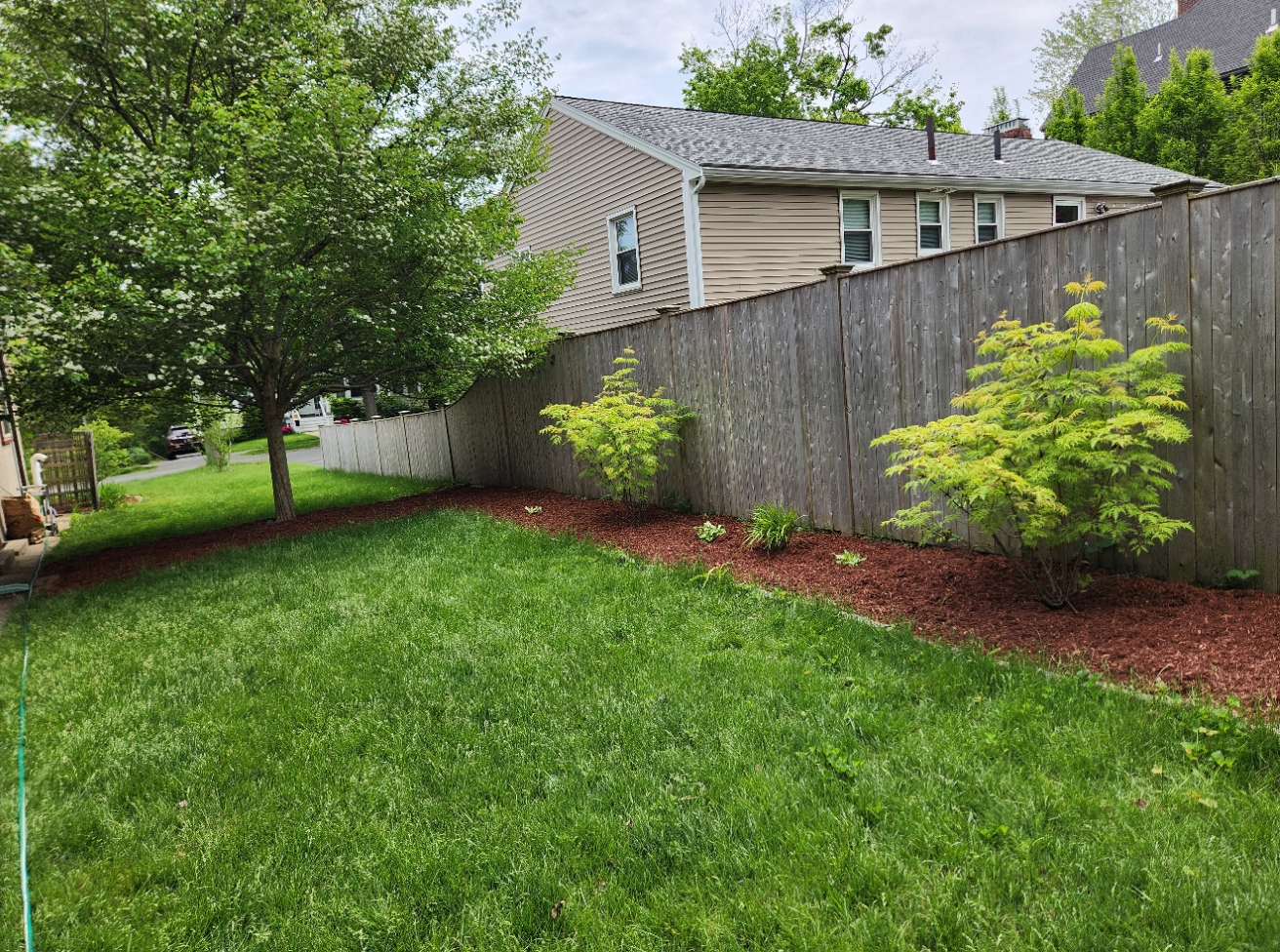
Continuing up and around the southern side of the lot, more goutweed was cleared. The elderberries we put in two years ago continue to thrive in spite of the shade. We gave them friends, adding low growing Japanese clumping grass and some of the transplanted hostas in between.
Now for the corner. Last fall the mighty maple that defined the corner of our lot had to come down. Here he is on his last day, in early October 2023.

I was heartbroken but knew it was for the better. He never recovered from the abuse suffered when our side neighbor took out the in-ground pool in her yard. With half his root system compromised, he lost a major side trunk, and became severely rot-damaged on the side away from the camera. He was a looming threat our backyard neighbor’s house. Luckily we were able to get him tended to before last winter’s major storms. So there was a big empty spot that needed to be filled. We opted to put a witch hazel there. Eventually it will be 12-15 feet tall. And of course, more hostas. I am looking forward to seeing the blooms of the witch hazel come October. It will be the only late blooming thing on the property.

Oh. The witch hazel’s name? June of course. After June Foray, the brilliant voice actor who provided so much to animation during my kid cartoon years. Including this character – Witch Hazel, an occasional nemesis of Bugs Bunny.

Continuing to the next major improvement, we come up to the space where I used to plant our scarlet runner beans, climbing up an improvised trellis made from giant grass canes and cable ties. Now that there is more sun and less volunteer labor here, we decided to make life easier. Fernando built me a raised bed. I’ve populated it. Rosemary in back, with parsley, some marigolds, then a big space, and in the front, three varieties of mild and medium hot peppers, plus Japanese eggplant. Since the photo was taken I’ve added established clumps of chives and oregano to that barren spot, overflow gifts from Neighbor Kevin’s prolific garden.

Obviously there is still some work to be done. Weeds sprout in the narrow path between the lawn and the garage. And there’s that one last bastion of goutweed, lurking at far left. I will savage that sometime this week.
So there is the summary of what we have been up to the past three weeks. With luck everything will survive my ungentle hand.
IN WHICH I ATTEMPT TO GARDEN AGAIN
Once more it’s time for this household’s annual blood sacrifice to our garden demons. Aided by a pal with infinite patience, I made a foray to a nursery/garden center to buy candidate perennials for our front mulch garden, and shrubs for along our northern shady side of my neighbor’s stockade fence.
And in doing so, I inadvertently added to our already growing collection of poisonous and poison-associated plants. First, for along the fence I bought four elderberry bushes. Anyone who has seen or read Arsenic and Old Lace knows the reference. The Resident Male will help me plant them over the weekend. Here they are in the garden center, innocently ignorant of their coming fate at my hands:

For the much garden my plan is to scatter specimen perennials across it, with taller ones in back, and infill the spaces between the survivors with additional plants in future years. This area faces east and gets morning sun, but quickly goes to shade for the bulk of the day, eclipsed by the house’s shadow. Here’s this year’s rogue’s gallery:


Top left – An aconite, also known as wolfsbane and monks hood. One of the poison players. It is supposed to top out at about four feet (about 122 cm), and sport tall blue flower spikes.
Top center – A strange mounding hosta variant with thin, curly crimped leaf edges. Too weird to pass up. He’s only going to be about 6 inches tall, and is in the front. Hostas are poisonous to dogs and cats.
Top right – a brunerra. Apparently we already had another variety of brunerra, a survivor of last year’s plantings. It has tiny star shaped blue flowers just beginning to open. Not sure what color flowers this one will have, but he is a much larger leafed variety, or will be when he’s mature. He’s in the middle area, and will be about 12 inches tall (about 30.5 cm) . Blissfully non-toxic.
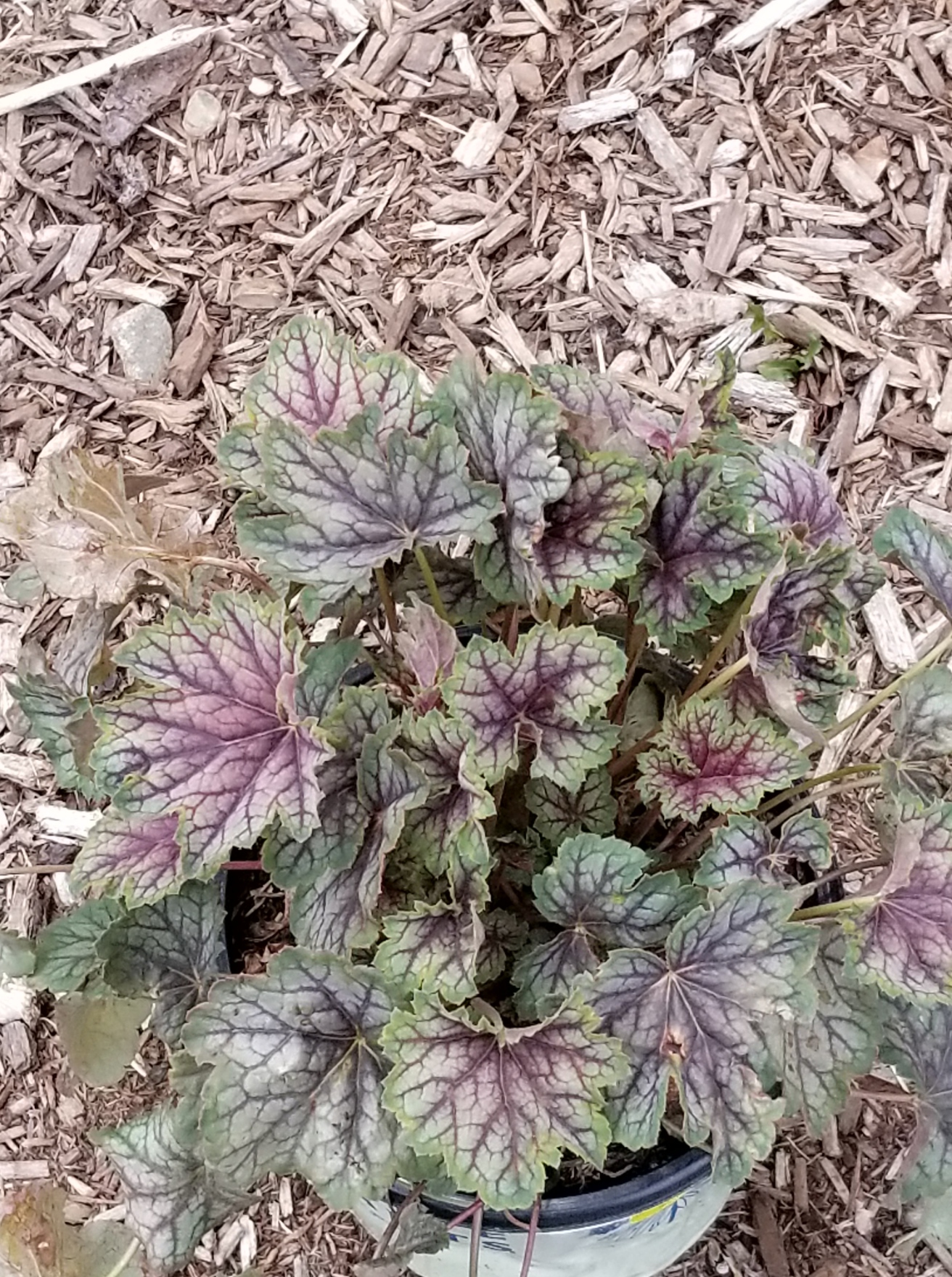
Bottom left – A Heuchera, aka Coral Bells. I am also not sure what color flowers this one will have but it doesn’t matter. I got it because of the dramatic foliage. He will be about 16 inches tall (about 41 cm), bigger than the brunerra and is further back in the plot. Also non-toxic.
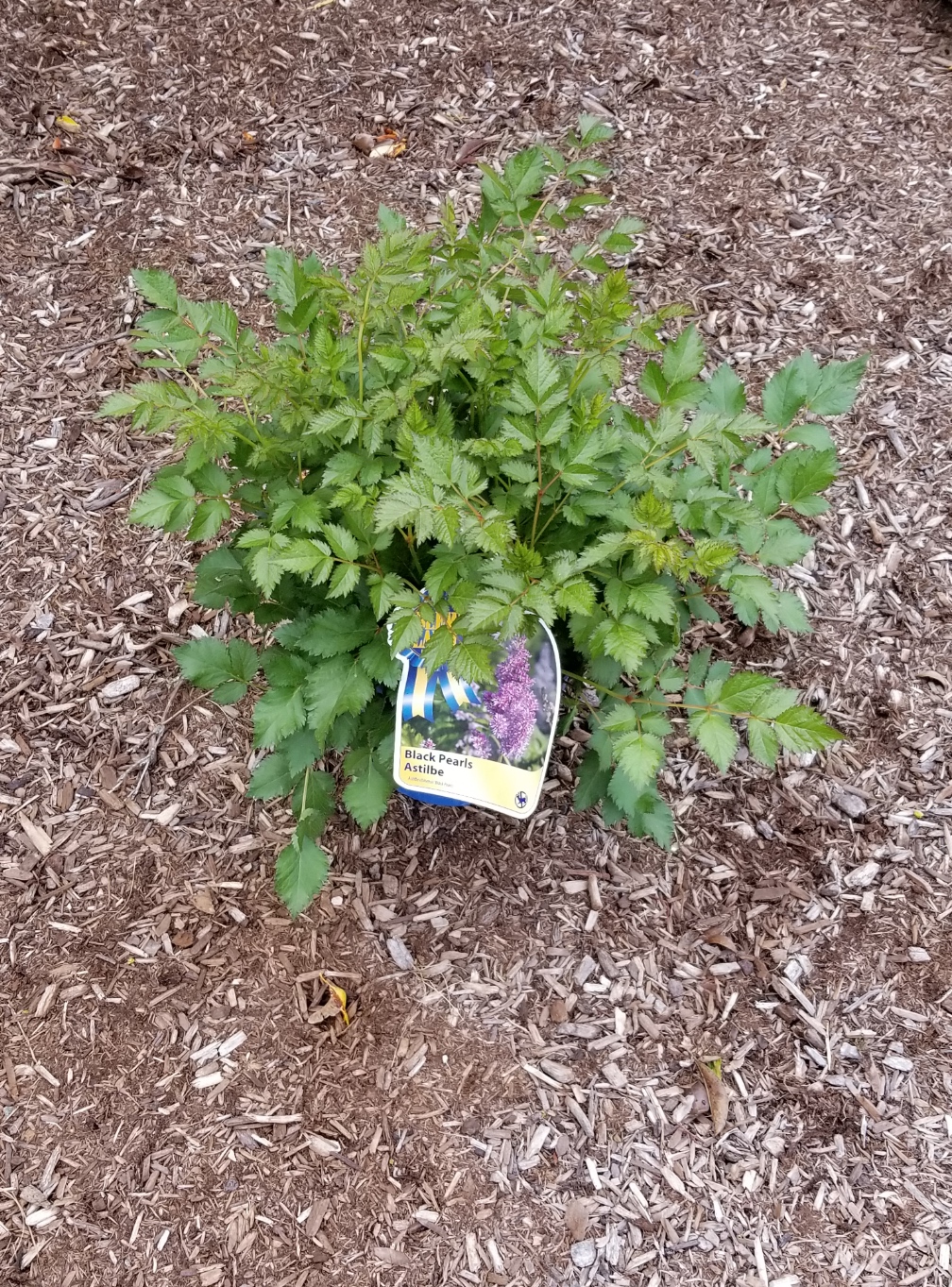
Bottom right – An astilbe. A BIG astilbe. This one will have purplish pink flowers, and grow to about 2 feet tall (61 cm). He’s in the back near the aconite. Not poisonous.
I moved a resilient peony that survived our decimation of the fence plot late last summer. He’s also in this garden in the hope he makes it. Big floppy white flowers with a pinkish tinge. He’s in a tomato cage in towards the rear.
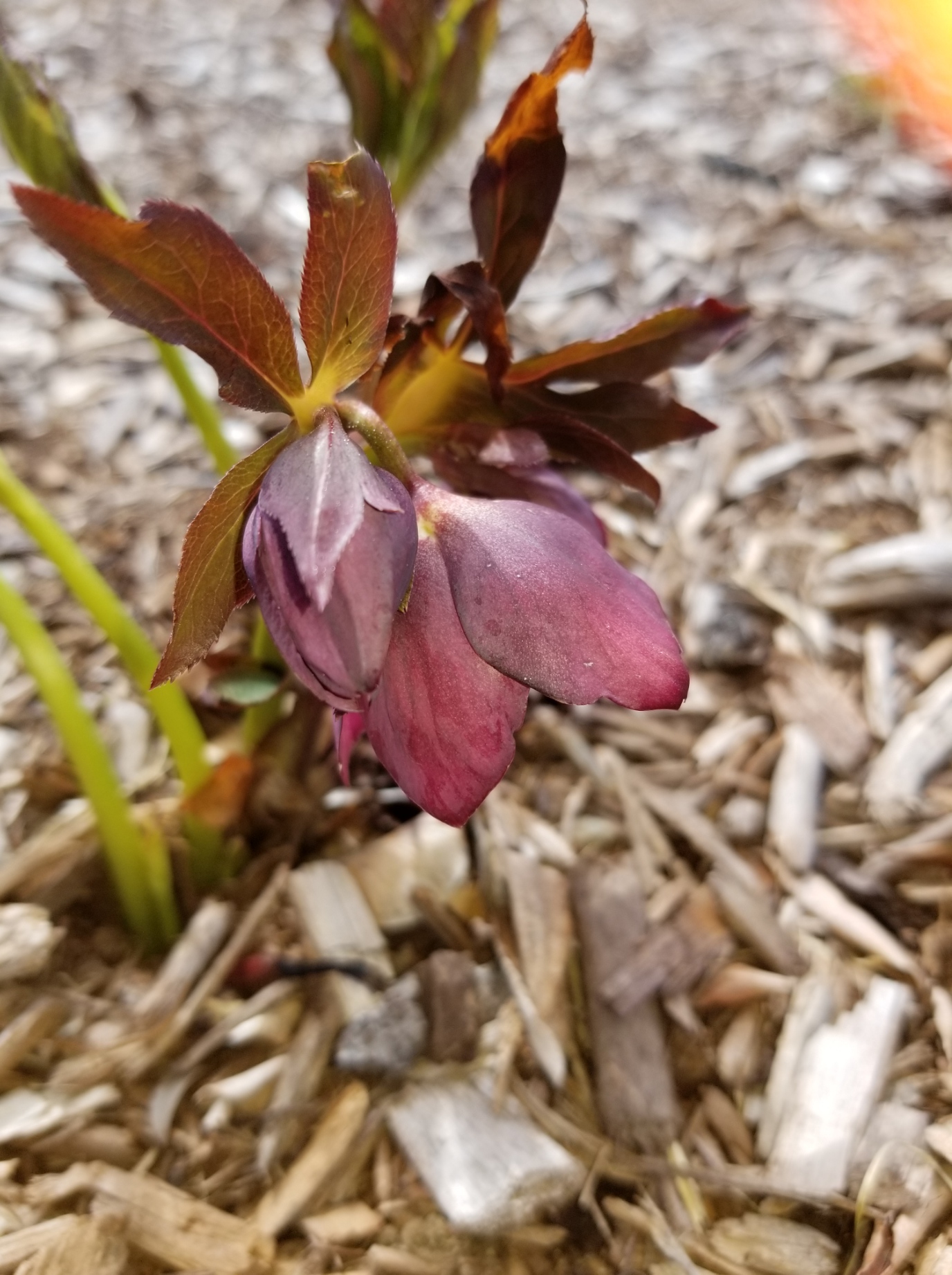
These denizens join my small ground-hugging brunerra and my hellebore from last year. Sadly the blooms on the hellebore appear to have been knocked around in the recent windstorm, and their stem is snapped, but the foliage is growing nicely. And of course hellebore is infamously poisonous to humans and pets.
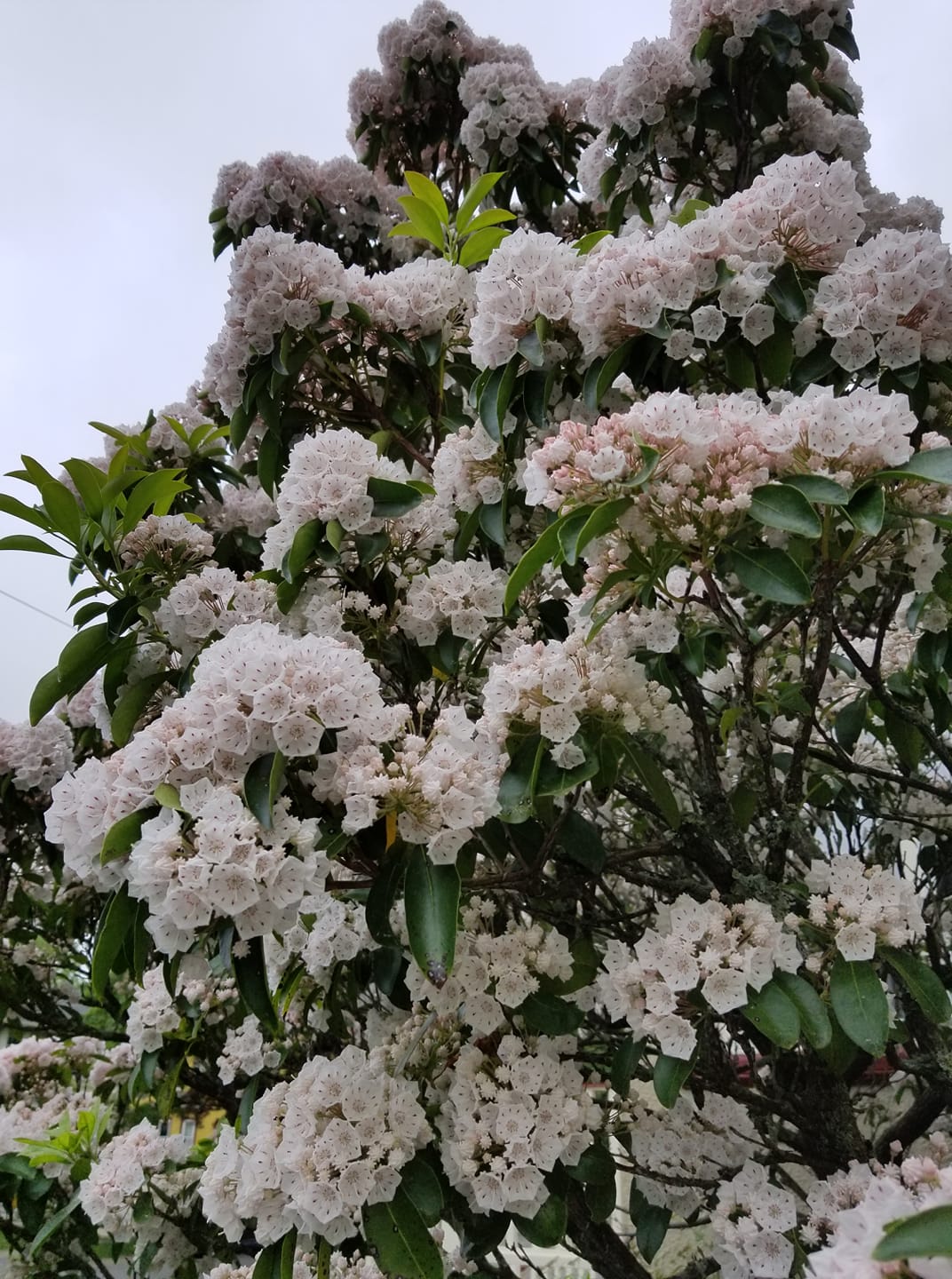
The backdrop to this garden with its mix of toxic and non-toxic residents? Why, a glorious Mountain Laurel of course. Itself on the lethal list. By the end of May it will look like this.
And the family photo – all the boys tucked into the bed.

STEP FORWARD, STEP BACK
As you can probably tell by the off-the-end-of-the pier style of my knitting and stitching projects here, not everything is fully swatched, graphed out, or perfectly planned before it’s realized. This may horrify some readers, but it’s the way I think. I prefer to learn on the fly, and don’t mind ripping back or starting again. For me, exploration is more fun than final product.
Case in point – the latest Wingspan. Let’s critique this thing to shreds:

Things I like:
- The basic Wingspan pattern
- The larger needle size/gauge for this particular yarn
- Using dice to determine hole size and placement
Things I don’t like:
- The color progression of this particular yarn
- This yarn in garter stitch
- The overall (near) finished look
- The combo of color, stitch and technique is too busy
One thing that made the last two Wingspans so dramatic was the long and gradual shading of the Zauberball Crazy. This was achieved by Zauberball’s dual strand ragg plies each cycling independently through their color ranges. In this full strand as opposed to ply-dyed yarn, color change is abrupt and the colors themselves are high-contrast. Speckles of the next color dot each block. (Now I remember starting socks with this ball, and not liking them either). The holes look less like airy bubbles, and more like the savaging of a demented moth army. And the eyelets, which work nicely in stockinette, look sloppy in garter stitch.
In total, I was Not Pleased. So this has been totally ripped back. I may play a bit with other stitches and this yarn, but in spite of it being a looonnnnngggg repeat, I am not confident that it’s right for a garter stitch Wingspan. However, the technique of placing eyelets in a fabric using a randomizing device to determine placement is still gnawing at me, as is thinking about other possible Wingspan variants. As a single project, this is a failure, but as a learning experience, it was valuable.
In other news, I’ve added to our house arsenal:

It’s a Korean-made sickle, sharp and sturdy. Similar ones have been used in Japan for centuries. They often figure in Anime, Samurai (and gangster) movies, both in their agricultural context and as weapons. We are close-in suburban here at String Central, and not out in the land of gentrified sprawl, so why do we need such a thing?
Giant grass:

I cut the patches on the side and front of the house each fall, just after they bloom but before they scatter seed. I don’t want to be responsible for colonizing the neighborhood with the stuff, and I don’t want it to sit looking forlorn and frowzy through the winter. To date I’ve been clipping each stalk with a pruner, but that’s painful and time consuming. I am hoping that this tool will allow a swifter handful by handful harvest.
For those concerned with possible waste – I strip the leaves off the stems and re-use the stalks to build my bean trellis each spring. The leaves go to town composting. I also post about availability of (free) plant stakes each year on the local mailing list, and put them out on the curb for other gardeners to take.
 String-Or-Nothing