CASHMERE LACE SHAWL – FINISHED!
Lead a Horse to Water Department
Reminder – every NYT file I posted a link to earlier this week is free-for-view to people registered at the New York Times website. I didn’t pay a cent to look at any of them. If you are getting a paid access message it means you are not logged in. Go to the main NYT page and register. It’s free. I’ve been a member since the site went live and not once in all that time have I received spam traceable to that source.
Cashmere Lace Shawl
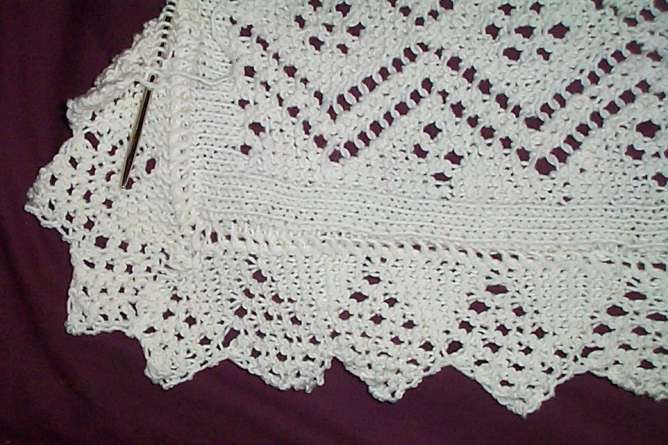
It’s done! Here it is in the not-so-harsh light of a cloudy morning, unblocked but patted flat on a white rug:

It measures approximately 100cm (39 inches) square in this state. I’m sure blocking will add another couple of inches as it stretches. Some detail shots, too!


The patterns were adapted from charts appearing in The Knitted Lace Patterns of Christine Duchrow, volumes I and III. I’m pleased with the way my corners worked out. They’ll display better under blocking, but the designs meet up at the corners without truncation. The edging is a bit narrow to be in proportion, but I think that blocked it will also display better.
SHAWL PROGRESS AND FUTURE LACE CHALLENGES
Progress on my shawl!

I’m finishing up the edging along Side #3, in preparation for Corner #3. Then it’s the mad dash along the final side. It’s taking a little over week per side, so I expect to be done by the end of next week. Then the sorry thing gets added to my blocking pile, which has itself become an embarrassment.
Now is the part of any project that I find the hardest. No new challenges, just more of the same, with the siren call of other things beckoning me away. For example, there’s the Resident Male’s Galaga hat. I need to finish that before cold weather sets in. And the quickie strip scarf out of black Merino Lace. That was begun as an interim project until I could finish the big shawl. There are other half-finished things from The Chest of Knitting Horrors(tm) that I really need to finish, too. Like my dragon-skin Rogue. Older Daughter is looking pained about it.
But (and I’m sure my fellow flitterwing knitters will understand) there’s something that’s calling to me. In the back of the Duchrow #3:
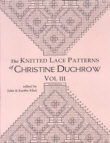
there are six hand-drawn charts included as an appendix. They’re not well documented, and use slightly different symbols than the more formal repros in the rest of the book. The key and few accompanying notes are not only in German, they are a medium-quality photocopy of the pattern author’s hand-written script. That makes them very difficult to decipher, especially considering that I don’t read German. Marginalia names the author of the appendix charts as Gertrud Weywod, a “contemporary of Christine Duchrow.” I’ve done some cursory searching for more info on her, to find out if anyone else has worked these patterns up; and to see if any of her work was ever published professionally in her own day. So far, I haven’t turned up anything, but again – I can’t read German and don’t have access to much in the way of German-language libraries. If you’ve heard of this pattern author, please let me know. I’m itching to find out more.
As you can tell, these patterns fascinate me. Several are floral rather than geometric, and most of them are very complex. One of the simpler ones reminds me strongly of some double running stitch and counted band patterns from patternbooks published in Germany in the 1520s.
I think I’ve deduced what most of Weywod’s graph symbols mean. Using those assumptions I’ve translated one of the graphs to modern notation. I’m proofing it now – doing the calculations to see if given each row’s stitch counts, increases, and decreases, whether or not my assumptions are knit-able. I’ve also got some lovely sage green laceweight – another gift from Friend Dena. So it’s pretty much a given that by the middle of the fall, I will have fallen to a new challenge, and will be hopelessly fuddled working out the Weywod patterns.
But first I have to finish my shawl, and that hat, and all that blocking…
CASHMERE LACE SHAWL – EDGING
First some administrivia. This site has been under massive attack by comment and trackback spammers. As a result, we’ve totally disabled the trackback feature, and limited comments to the most current three months of entries. We have also instituted a protected comment system to prevent automated spammers. But since the crowd that visits here doesn’t appear to be particularly chatty, that shouldn’t be a problem. We’ve also updated the software that runs the infrastructure of the blog. Whenever a set of changes of this magnitude is undertaken, it’s going to take a few days before the bugs are ironed out. Apologies if you tried to consult these pages and received error messages. We’re working on the remaining nits as fast as we can. Special thanks to The Resident Male – website plumber extraordinaire for the hours he’s put in wrestling with these issues.
In the mean time, knitting here continues. Friend Dena was amazingly generous, giving me more of the gray/brown laceweight (also lots of other goodies destined for some more over the top lace projects). Ten thousand thanks! Armed with more yarn, I’ve been able to work more on the big shawl. I’m rounding the second corner and on the back stretch. No pix today though. It looks much as it did last week – a frothy gray/brown object too unblocked to see well.
It turns out that this blog serves a major purpose that I didn’t really appreciate. I am not good at cataloging what exactly I do as I fudge my way through a project. I was careful to note the pattern and mechanism I was using for the framing area of my shawl, but I hit on the edge pattern during the time I was stretched thin and didn’t have time to write up entries. Therefore I didn’t make a written note of where that edging pattern came from and what I did to adapt it for this piece. Since I also set the shawl aside when I ran out of yarn, I had lost my thread of continuity on it. It took me a couple of days before I located the edging that I was using and figured out what I had been up to. It’s from the first volume of Duchrow reprints compiled by J. and K. Kliot:
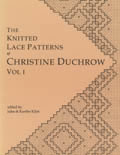
I now present it here as much to keep track of what the heck I’m up to for myself, as for others to play with. The pattern I’m using appears on Page 35. The original stumped me a bit because I couldn’t make the last three stitches work out correctly. According to the book, every row should end with a SSK, K2 – but I find that working the “uphill” side of my triangular dags, I have room for a plain K3, and on the “downhill” side as the dag narrows back, I have room for a K2tog, K3 – but need to cheat, working the first stitch on the wrong side return row as a P2tog to preserve the visual line of the narrow strip at the outer edge of my border.

The pattern page (click on image above to get a readable version) presents both the original from the book, translated into modern notation; and my adaptation.
NORTH TRURO COUNTERPANE SIGHTING
I’m delighted to announce that at least one other human being has the courage, fortitude, and profound lack of reason to attempt my North Truro Counterpane. Not only is she doing the pattern, she’s simplifying it a bit by cleverly knitting some of the pieces together, avoiding several seams in the process
High-fives to Sandra B. who is busy knitting on this right now, but who took the time to send me the snap above. She made my day! (The photo above is hers, reproduced with her permission).
CATCHING UP
O.K. Where have I been? Here, but totally snowed under at work. In the corners of time between deadlines, some progress on the home front was made.
After a series of two steps forward/one step back mishaps involving subcontractors (all made good by the general contractor at no cost besides delay time, and the extra effort of a bit more repainting than we planned), the bathroom renovation is now 90% done. All of the fixtures and tiling is complete and the room is functional. I’m particularly pleased with way things have turned out, in spite of the delays.

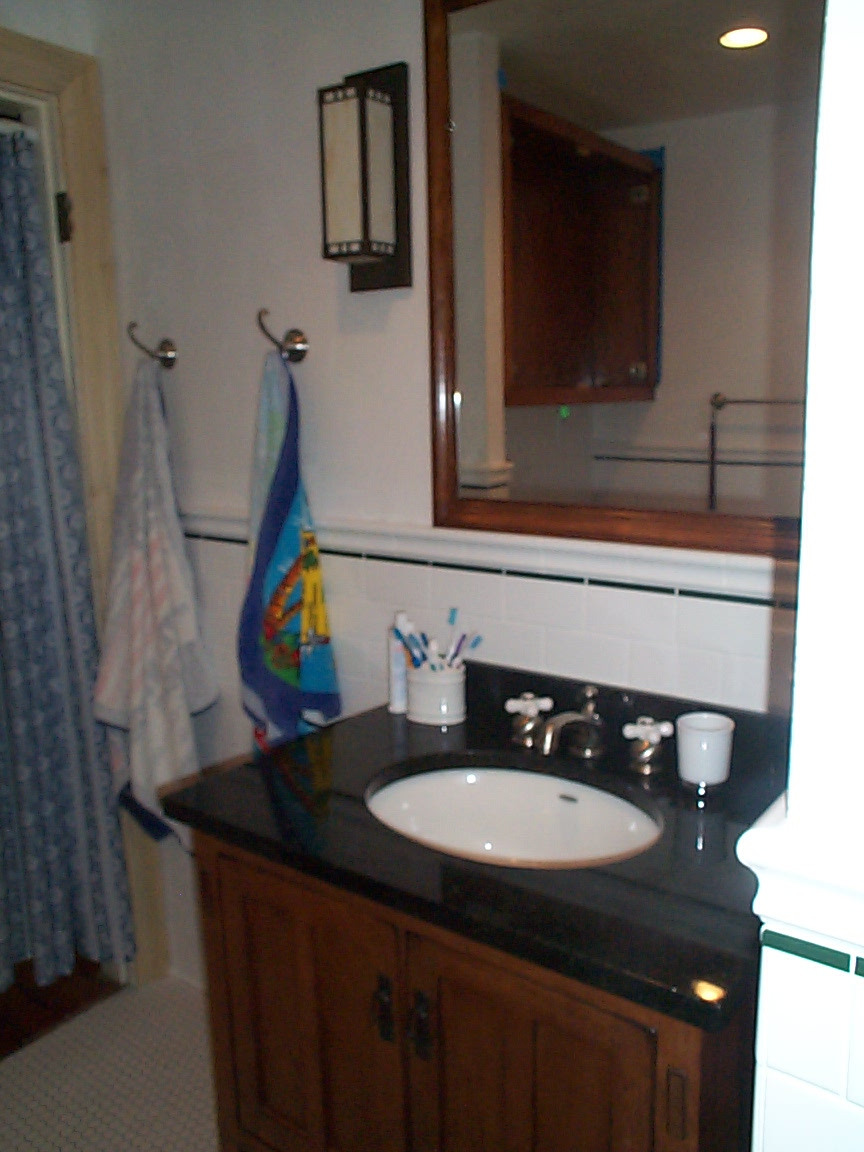

All that remains is finishing the woodwork and painting the upper part of the walls. We’re doing those things ourselves, including stripping paint from our door and stained glass window (both missing in the photos above), staining both to match the rest of the room’s wood. At this point, we’ve finished staining and finishing the in-place part of the cabinetry, plus the window frame and the frame around our mirror. We’ve done the first pass stripping on the door. The window is stripped and sanded, and has been stained. The upper cabinet’s doors and shelves have been stained and are awaiting finishing, and we’re in the middle of staining the doors and shelves in the lower cabinet.
On the knitting front, I’ve got a ton of things I need to block. I finished the baby blanket, am almost done with the gray/brown lace shawl, and finished a small lacy doodle. I also have quite a few projects from earlier this year to pin out and/or block. Here’s proof that the baby blanket is done, although not yet blocked or mailed.

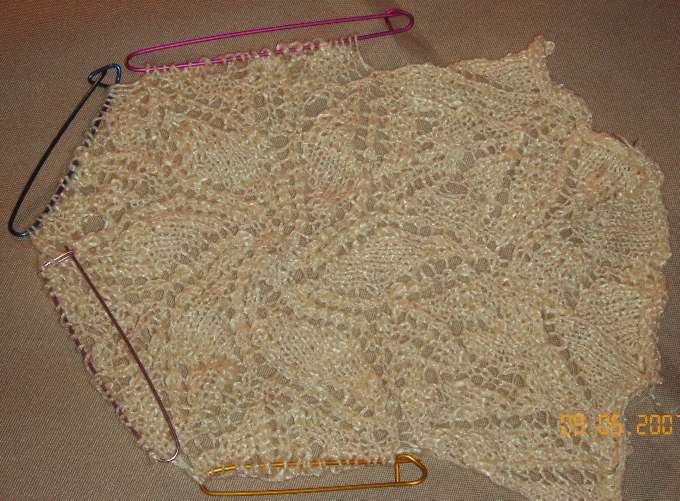
On the lace shawl, as predicted, I ran out of yarn. But Friend Dena has graciously offered up a some more to complete. As you can (sort of) see below, all I need to do is finish the final edging.

The doodle was to try out a pattern in one of the lace books I gave myself for my birthday – Old World Treasures by

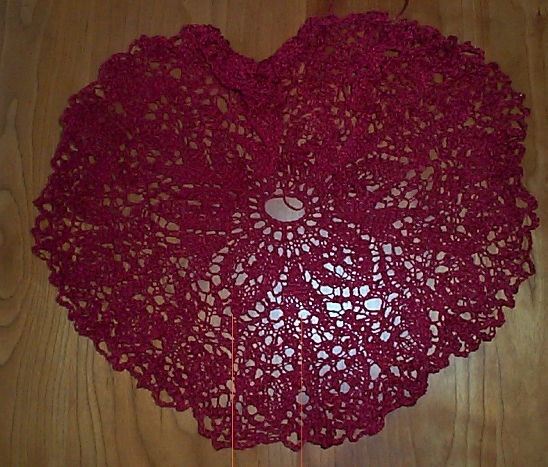
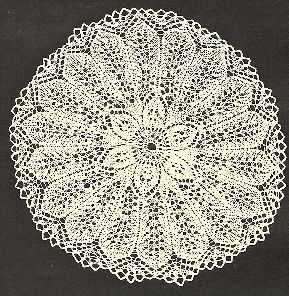
I am not a big fan of prose directions, but although unorthodox these are pretty clear. However I did note that the photograph of the piece that accompanies the pattern I tried is not a literal representation of the pattern as written. The photograph clearly shows a much deeper section of the final petaled shapes, involving at least four more repeats of the design as written, with some sort of accompanying increase to account for the ever increasing diameter of the piece. Although my unblocked lace doodle is difficult to make out, you can see that the final petals between the two orange lines appear to be less tall than same area in the book’s photo. Obviously blocking is in order here, too.
I’m now doodling with some black Skacel Merino Lace, trying out some of the patterns from the German Language Kunst-Stricken (Knitted Lace). In this case, the patterns are graphed, using a block and triangle system that’s not standard, but not difficult to read. I find them easier than the typography based system used in the Duchrow books. Duchrow’s numeral 1s and German lower case letter ls are particularly confusing to me.) The charts in Knitted Lace however are particularly tiny. The visually challenged might like to either regraph or use photo enlargement. I chose to regraph.
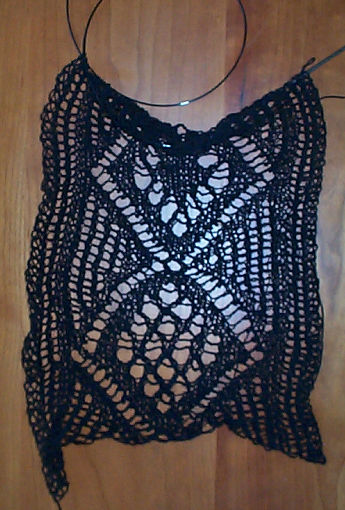
Here’s my progress from last night. I’ve chosen an insertion pattern (shown in the book as dual insertions meant for use on a decorative linen pillowcase), and a simple zig-zag lace edging used in the book as a handkerchief embellishment. Needless to say, I just started with the insertion, but I’ve played with the pattern somewhat. I changed the side to side framing, and I chose to tinker with the diamond centers. Rather than doing all in the heavily eyeleted lower style, I’ll either alternate that with the one above, or figure out a bunch more variants as I progress. My goal is to make a scarf about 8 inches wide and about five feet long, or as long as I can get out of my one 1375 yard skein of Merino Lace.
I’m not entirely sure I’ll keep this intact. I’m leaning towards reworking the thing on a larger size needle to make it a bit more lacy.
Oh. My advice on knitting lace from black thread-weight yarn?
Don’t.
MORE ON EDGINGS AND CORNERS
More on corners. Using the same principles as the knit-from-center-out framing area on my cashmere shawl, I’ve done a mitered corner on my baby blanket. I do envision a problem now that I’ve finished a credible Corner #1, but I’ll deal with it when I get there.
The first step was to make sure that I had a multiple of my halved row count available as live stitches along each edge of the project (small alerts should be going off in your head right now, but back to this later). That’s because using my chosen attachment method, two rows of edging are attached to each live stitch.
Edging right side row: S1, work pattern to end
Edging wrong side row: Work pattern to penultimate stitch, SSK last stitch together with a live stitch of the body.
I can modify this scheme by doing an occasional SSSK on that wrong side row, in which one edging stitch is knit together with two live stitches from the body. This can be periodic and eat a specific number of stitches over a given number of repeats (eating one on every Edging Row 1, or every third row of the edging, for example); or it can be ad-hoc – performed when the thing looks like it’s getting too ruffly. Being a precise person, I prefer the former, but I’m not above sneaking one in using the latter should it be necessary. You’ve probably already figured out that working an edging onto a top or bottom of live knit stitches (or stitches rescued after unzipping a provisional cast on) will require a different rate of attachment than would knitting them onto stitches picked up off a side edge formed when the body was knit, via a standard slip stitch edge.
The second step was to identify a clear diagonal on the existing pattern, and use that as an alignment point on which to build my mitered corner. In this case, the edge of the eyelet diamonds makes a good divider.
So having stated the obvious, I violate it all. To create the live stitches all the way around my perimeter, I picked up, putting all the new stitches on a large circ. I started at the end of a knit-side row of stockinette, placed a marker and picked up a stitch in every slip stitch selvage on my left side edge. Then – not having done a provisional cast-on because I was on vacation and was lazy – I placed a marker and picked up the same number of stitches as I had stockinette stitches across the bottom of my half-hitch cast-on row. Then it was a march back to the origin point, placing a marker then picking up stitches along the remaining selvage.
It so happened that my picked up stitch count on each side is pretty close to a multiple of my edging row count-halved. So I started knitting my edging a couple of stitches in from my corner, commencing with good old Edging Row #1. (Hearing that ding-ding alert again? You should be.)
All is well and good (sort of). I’ve now marched around three of my four corners, and am in the home stretch, working my last straight side. Then it’s on to the final corner and graft.
Now. Why all those alerts?
Because my corner as graphed works best when I commence it on the tallest row of my point – not on Row #1, which is the shortest row. I didn’t figure that out until I was well along. Not wanting to rip it all back a THIRD time, I’m going to see if I can somehow cheat on Corner #4.
Here’s a graph for my modified edging and corner, with attachment instructions (done to the best of my ability).

SECRET PAL, AND CONSTANT PROGRESS
On the baby blanket, I decided to rip back the entire edging (about half-finished at the point of decision). I decided I wanted to re-do corner #1, plus I didn’t like the way that the joins along the first edge looked. I’d been reducing along the body, working roughly every six rows of edging onto four live body stitches. While the points were lying flat, the yarn I’m using is heavy enough to make the necessary decreases along the body look clunky. (You can get away with this in a fine lace, but not in the almost DK weight I’m using). Instead I’ve opted for a bit fuller edge with (perhaps) a bit of ruffle. I’d post pix, but they pretty much show the same blanket body as the last post, but with an arrow that says “edging used to be here.” More on this later this week.
In other news, I finally got to the post office to pick up the mail I had on hold over vacation week. There, perched on top of the pile was my July No Sheep secret pal package. The formerly mysterious (but now known) Melanie was kind enough to send this:

That’s two skeins of Schachenmayr Denim in a sunshiny yellow/orange, plus two tins of killer tea. I dance a dance of thanks! I’m looking forward to trying it all. On the downstream end, I finally made contact with my secret pal recipient, and am busy picking out the goodies for her.
And finally – progress on the bathroom front. Which is a good thing because washing one’s hair in the sink can get old after five weeks. The tile is now (mostly) up and grouted. Vanity, storage cabinet, fixtures and finish work are left:

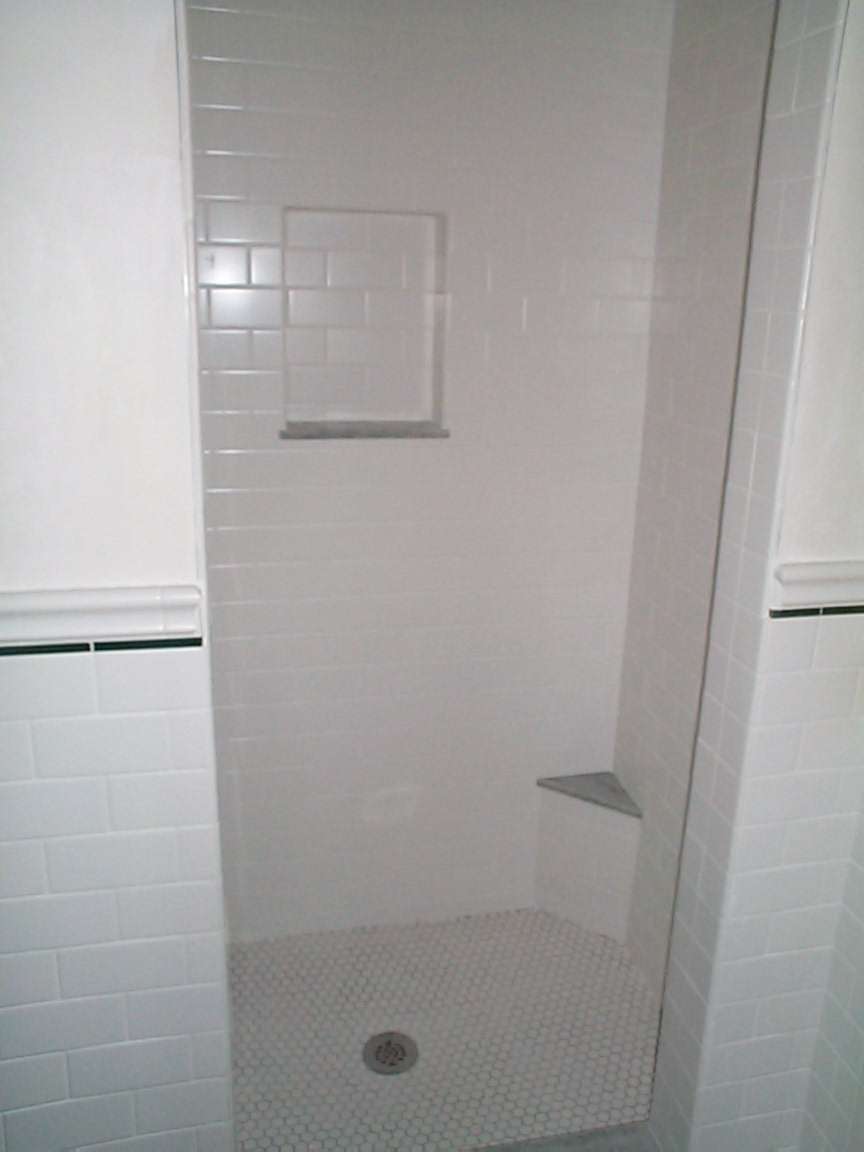
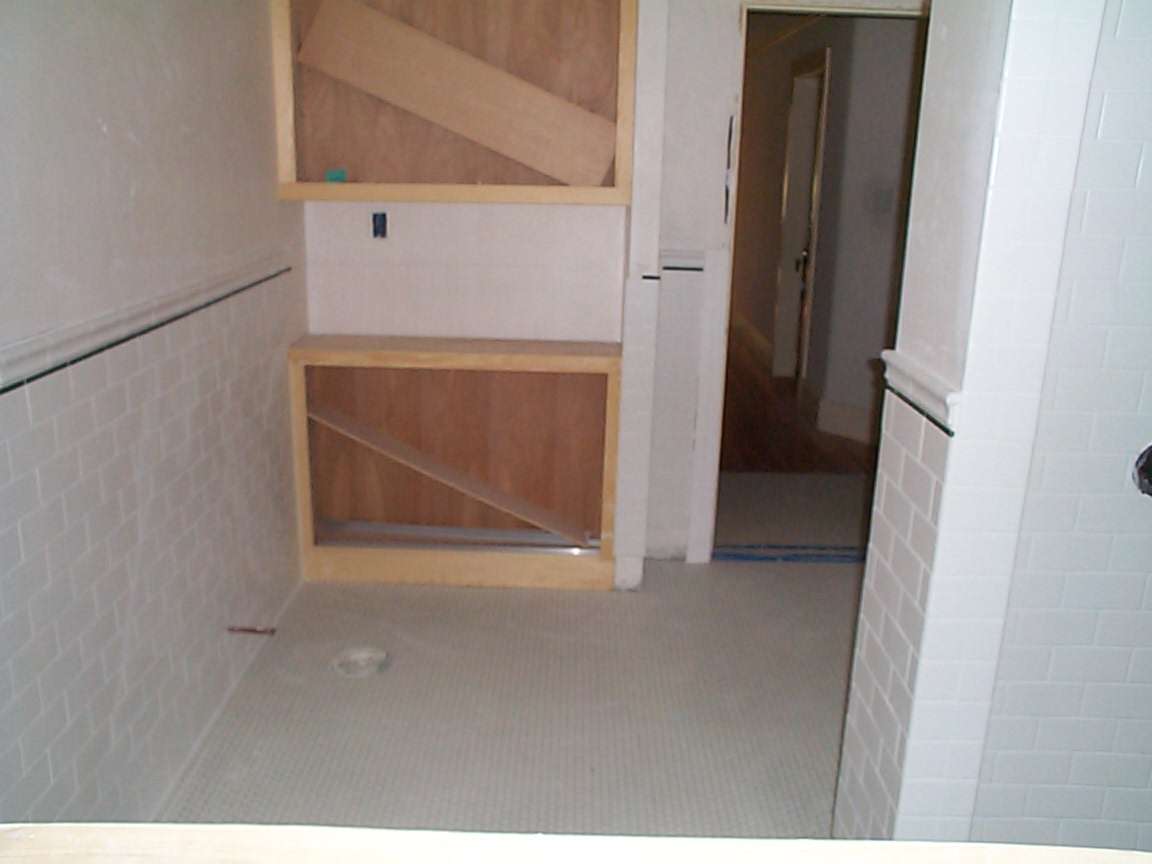
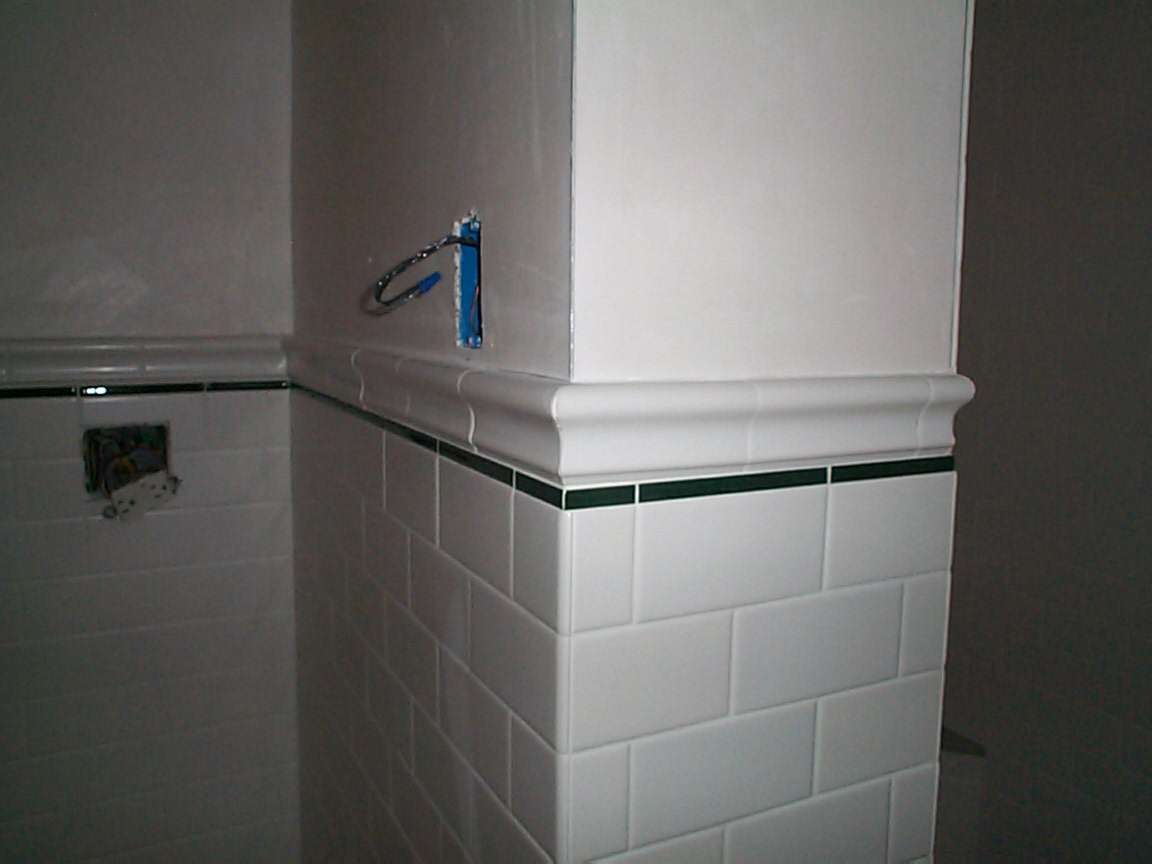
From the top – the view from the hall door. You can see the cleaned, repaired and repainted radiator, the pipes for the bathtub, and the new window frame into which the original stained glass will be fitted. Next is the shower, followed by the view from the window. No I didn’t crawl out on the roof to take this – there’s a sleeping porch on the other side of the window. And finally, a close-up of the tilework’s green pencil line and chair rail – just for Kathryn, who has confessed to extreme bath envy.
If you’ve written to me in the past two weeks and haven’t had a response – apologies. I’m still munching my way through my inbox.
UPS AND DOWNS OF VACATION WEEK
Back from our annual no-computer vacation on Cape Cod. Seven days of blissful nothing in North Truro.
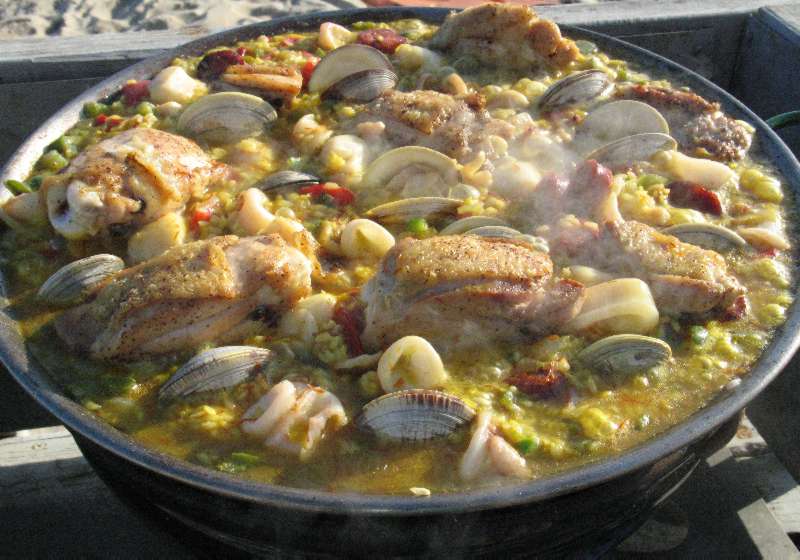
This year’s round of nothing included lots of knitting and reading time, a whale watch, some golf, watching the opening night of a thoroughly enjoyable Much Ado About Nothing, a couple of excellent dinners out, plus several equally excellent ones we prepared ourselves. Including paella on the beach – cooked on the grill against a Provincetown sunset:
The only less than ideal moment of the week was the last voyage of the Feckless, seen here in happier days:

Our Gannet II model two-person open cockpit kayak was swept away from the beach behind the Top Mast Hotel in North Truro by a pre-dawn storm on 5 July. We searched Beach Point, and the Provincetown area surf and mud flats for two days, but never found it. The loss has been reported to the Harbor Masters at Truro and Provincetown, and to the police in North Truro. In the remote chance that there’s anyone on the bay side of the Outer Cape reading this, there’s a finder’s reward out for the Feckless, please keep an eye out for it.
In knitting news, I spent the week working on a small baby blanket. I’m using Lana Grossa Merino 2000 (aka Cool Wool) – an extremely soft multi-strand machine washable Merino, in a weight somewhat between sport and DK. It’s well twisted although like any yarn made up of huge number of tiny plies, it can split. Stitch definition is superior thanks to its spring and almost tubular construction. I’ve adapted yet another pattern from the Duchrow series. This garter stitch based double zig-zag pattern has particularly nice eyelet roses in the center of each diamond. It was meant as a strip insertion. I’ve used it three times across my blanket, separated and framed by plain stockinette. For the edging, I added a garter stitch adaptation of a large eyelet border, shamelessly plucked from Heirloom Knitting, but altered a bit to better match the garter stitch all SSK eyelet texture of the main body. Also, I’m attempting to miter my corners on the fly. So far I like the second one I did, but not the first (I may rip back the edging to that point and re-do #1 now that I understand how to do it better. Second corner is shown in detail below:
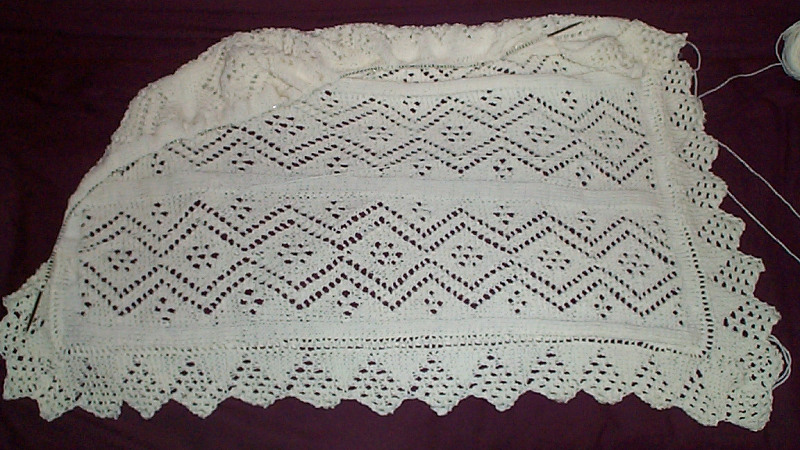
I probably won’t be posting this pattern here because there hasn’t been very much interest in my recent pattern posts, and also because I’ve been working without making notes. The corners in particular would be difficult to explain.
So there you have it. Where I’ve been and what I’ve been doing. Standard post vacation let-down here, contemplating the 51 weeks before I get to do it again.
CORRECTION AND BATHROOM STATUS
I posted a correction to the companion border for my shawl, previously posted a couple of days ago. To minimize confusion, I’ve updated the files on the original page, rather than re-post them here. I’m up to Row 15, and in working it – spotted an error mid-row. All fixed now.
On the home front, we’ve got walls and the beginnings of a tile floor now in our new bathroom. Everything is working along swimmingly. I’m happy just seeing the fresh hex tile on the floor in place of patchwork scuffed, curling, mustard yellow vinyl.


Next step is grouting and sealing the tile floor, then it’s on to the tiled wainscoting and built-in storage cabinet (on the partial wall, dead ahead in the left hand image, above).
EN PASSANT
Some (minimal) progress on my lace shawl, knitting from the framing area chart presented in my last post. Other than that – a quick post in passing, because I’ve been stacked at work with little time for knitting in the evenings or weekends.
So far, the corner miters appear to be working. The blue marker below indicates a corner point. There’s one plain knit stitch on either side of it, making a column radiating diagonally out from the center basketweave area. Moving away from the marker, the yarn overs immediately adjacent to those two stitches are the ones highlighted in my chart. The green YO coming just before the corner, and the blue YO right after it.

You can also see the double YO insertion between the basketweave area and the more solid areas above. I like that detail, too.
Once work chaos clears, expect a sojourn in blocking land, because I’ve got a totally full to-be-blocked basket. Also reports on the baby blanket still in swatching stage.
 String-Or-Nothing