MORE NEW VOCABULARY
More words that though not new, are new to me as I read local newspapers and advertisements, and learn more about Pune, and India in general.
Guntha – A measure of area, about 10 x 10 meters, roughly equivalent to 1/40th of an acre. It’s common to see magazine articles noting the reservation of a certain number of gunthas, to be dedicated to parking or some other specialty use.
Dabbas – Lunch boxes. These are the Indian version of bento boxes, traditionally carried by school children or workers. There’s even a whole industry dedicated to speedy transport of dabbas from home to office workers, or to supply catered dabbas for those who need non home-cooked meals, ensuring a hot, fresh-cooked lunch when and were it is needed. Note the multiple compartments for keeping several items warm and separate until they are eaten. I’ve also seen these called tiffin boxes or tingkats.
Gutka – A word from the tabloid papers. An addictive, chewed stimulant based on betel nuts, plus other substances. Apparently there is a thriving trade in this illegally manufactured, untaxed, carcinogenic, (and often dangerously contaminated) stimulant. Every now and again there’s a piece on the arrest of a maker, transporter or gang of distributors.
Gram Panchayat – A village council, or local government body at the village or town level. Panchayat representatives are elected from panches – the village wards or districts. A proportion of each local panchayat’s seats are reserved for women representatives. Panchayats can levy taxes on some local activities, and are responsible for civic activities, including street lights, public education, drinking water, sanitation, and population records. Sadly, not all seem to serve in the public interest though, because occasional newspaper pieces talk of isolated cases of voter coercion, misapplication or misappropriation of funds, or naive choices with unforseen outcomes. Not unlike local governments in other places.
Techie – A member of the “New India” workforce, especially one working in an engineering or technical field. The tabloids especially seem to have a fascination for young professionals and their doings. Many are 20- and 30-somethings with disposable incomes, far away from the watchful eyes of their families. Not surprisingly, occasionally they or come to harm, either self inflicted through careless behavior, or through victimization; or they commit crimes of passion. These especially are reported with breathless detail.
Tatkal Tickets – These appear to be railway tickets booked in advance like airline tickets, as opposed to tickets that are purchased at the train station. There’s a surcharge for advanced purchase. And since it’s probably now clear that my new words are largely furnished by the sensational crimes section of the local papers, there are occasional pieces on folk who have figured out how to hustle the system, and scalp tickets. Photo ID is now required for passengers boarding trains with pre-paid tatkal tickets.
How do I like it here? My friend Osa was right. Every day is an opportunity for limitless learning and the development of infinite patience. Small challenges can be daunting (like finding someplace to buy the very unusual light bulbs used in the apartment) but while accomplishing these quests may take time and present transient frustration, the sense of accomplishment, and joy in new things is palpable. In short, I’m having a great time.
RIGHT ON TRACK
A semi-quiet weekend here at String.
First, progress on my Dragon Stole, which I’ve modded to include the central undine from its pattern’s ultimate ancestor:
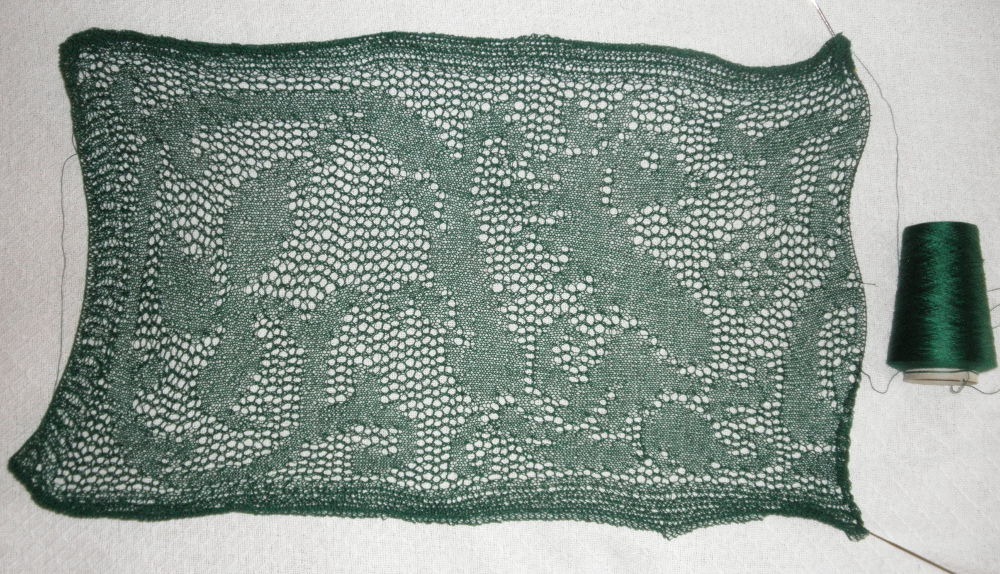
Mods include the star above the beastie’s eye, the large flower in front of it, and beginning of the mermaid at the right.
You can see that my spool of Valley Yarns Tencel 8/2 has been barely diminished by all this knitting. The tencel is quite easy to work with, a bit slippery compared to cotton (which for me is a good thing), but less slippery than rayon. It doesn’t roll back on itself to kink, even coming off the cone. Being about half done at this point, I estimate that my cone, claimed by Webs to have 3360 yards on it, will be ample for 8-10 shawls of this size. At around $25 for the cone, I’d rate it as a very good buy. Aside – if you’re budget challenged or packing for an extended stay somewhere, consider taking up lace knitting. Lace offers the most knitting satisfaction per dollar invested on materials, and per square inch of suitcase space.
Then, coincident with the Indian nation’s Republic Day, Younger Daughter’s school had their annual field day – a morning of track and field events pitting the Indus International School’s various houses against each other. Phoenix, Orion, Hercules, and Pegasus have vied all year for points in academics, debating, deportment, and sporting events, just like at Hogwarts. Field day is the culmination of the annual competition.
Assignment to the houses appears to be pretty arbitrary, no sorting hat here. Younger Daughter was shuffled off to Hercules on the whim of the admitting administrator. Hercules took first place in the day’s marching. Here they are, behind their blue flag:

Perhaps the most fun of the day was the kids vs. faculty tug of war, where (no surprise) the myrmidons of the massed houses triumphed over their long-suffering teachers. Younger Daughter’s sense of triumph is palpable:

Phoenix house won the 2012 house trophy. I hear the kids are already plotting new domination strategies for 2013.
10,000 SNACKS
France may be the land of 500 cheeses, but India is the land of 10,000 snacks.
They take their snacks very seriously here. There appear to be micro-regional specialties, and a dizzying variety of basic types – far beyond the chips (crisps for my UK readers), pretzels, tortilla chips, and smattering of other items seen in American supermarkets. I suspect if a new vegetable or grain were to spontaneously appear, the US FDA would study it for two years before decreeing wholesomeness, the European Union would ban it because there is no established tradition of farming or cooking it, but India would throw open her arms and overnight it would appear in fifty new packaged fried snack foods, each with a distinctively cheerful bag.
We’ve been trying some as our weekend treat, and we’ve barely scratched the surface of what’s available at the Hypermarket down the street:

Yes, those are potato sticks. The particular variety we tried is (like much of India) perfumed with cumin. Potato (aloo) sticks come in dozens of varieties, some spicy/hot/salty, some herbed, and some plain. We really liked this one, they’re easy to nibble and go great with roasted little red-skin peanuts, smaller than those in the US, but tastier.
Oh. I forgot to mention, combining these nibbles into one’s own custom snack mix appears to be a national pastime, so we’re following suit, mixing and matching these as whimsy overtakes us.
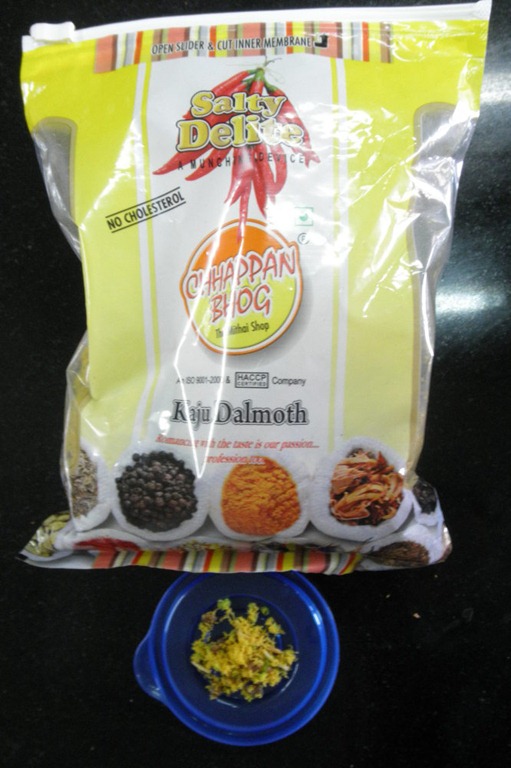
This one is a bit messier to eat. In texture, it’s like fuzzy dust studded with little bits of roasted lentils, cashew nuts, and other seeds and spices. It’s so fine it almost needs to be spooned. It’s also intensely spicy. I love the product tag line “A Munching Device.” A good mixer to use with other, less intense varieties.

These are The Resident Male’s favorite. They’re crunchier than Cheetos, and flavored with onion and chili instead of Mystery Orange.

Puffed wheat! Very roasty tasting, and a perfect background foil to these other hot and spicy treats. I knew a little about the variety of Indian foods and was prepared for that exploration, but the wealth of casual nibbles here took me by surprise. I find it a very amusing arena for small discoveries. I’ll post more about these as we try more.
On the needlework front, I’ve made a bit of progress on the Dragon Stole:

I’m just about up to the body, half way through the first dragon.
And I’ve unpacked my stitching. I’ve set up my big green sampler.
Unfortunately, there’s no good place in the apartment to work on it. I need very bright light, and even though we finally found the exotic flavor light bulbs used in the fixtures here, and have more than one 40 watt light source in the living room, there’s still not enough light to work it by. So as a stop gap, I’ve started the Sarah Collins kit I picked up at Winterthur in 2011:

I’ve never done a kit before, preferring to muddle about on my own. I am having mixed feelings about this. It’s cumbersome, with a zillion large scale detailed charts that require constant cross-referencing. The design is pleasing, the colors are o.k., not my faves, but well suited to the design. The linen is nice, and working 3×3 is a refreshing change, quite large compared to what I’ve been stitching of late. I opted for the cotton rather than the silk threads, in part because the silk kit was expensive. That’s why I’m working it on the padded round frame. Were this silk, it would fight for space on my flat frame with Big Green.
Oh, and yes – I’m working on T2CM, too. I’m up to the exquisitely boring part, where I add proofed counts to each pattern.
KITCHEN TOOLS FROM ANOTHER WORLD
No, this alarming looking device is not a Vogon marital aid:

It’s a coconut reamer – the perfect tool needed to produce fluffy grated fresh coconut from a whole nut. Grated coconut is a common cooking ingredient, and the best is obtained by buying the coconuts and shredding them yourself. And if we choose to save the husks, I’m sure we’ll have enough to outfit an entire clip-clop cavalry detachment by the time we return home.
In knitting, Dragon Stole continues to grow:

You can make out the tail section in the center. Long time needlework pal Kathryn is probably right – the graphed pattern used in this MMario Knits design has a very Renaissance look, and resembles several patterns in the various editions of Siebmacher’s modelbooks. I’ve been through his 1597 pattern book on line, and didn’t find it, but recourse to my library is a bit constrained over here in India, so I am not giving up yet. (Aside: Kathryn provides a selection of the 1597 patterns in her collection Patterns from Renaissance Germany, available on Flowers of the Needle).
IN WHICH WE WANDER ABOUT
We’re still learning the ropes of our new adopted home, but we took off some time last week before Younger Daughter started school today to explore some of the sights of the Pune area. Thankfully, Elder Daughter was armed with her camera, because I’m pitiful at taking pictures.
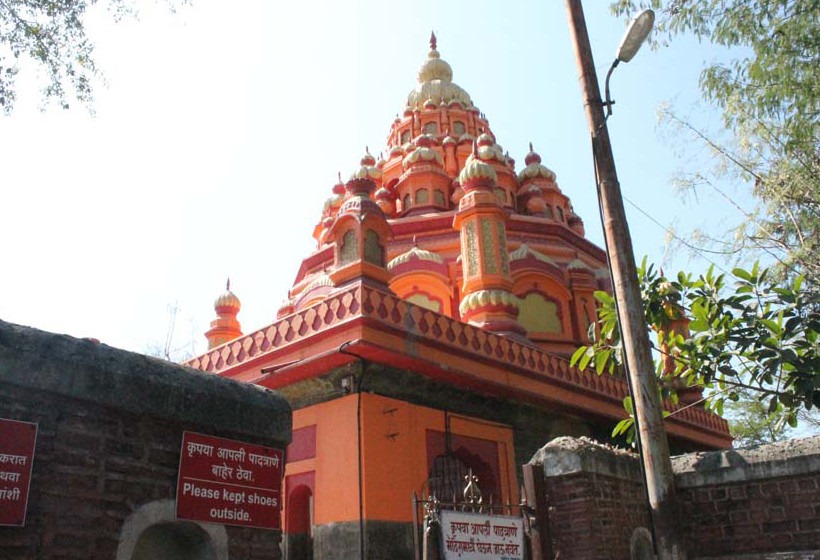
On Wednesday we visited Parvati Darshan, a temple complex on a hill in the middle of the city. Structures at the complex date to the mid 1700s, and were constructed by the Peshwas, the royal rulers of the Maratha Empire, formerly centered in this area.
There was a small cultural museum at the base of the hill, displaying Peshwa dynasty artifacts, including weapons, portraits of the ruling line, coins, and everyday items. The climb to the 2,100 foot summit was a short uphill hike ascending wide ramps and stairs, with stonework to either side.
The Vishnu temple at the top is spectacular:
And the view of the surrounding city is also well worth the ascent, although I don’t have any snaps of that to hand.
With the quick climb behind us, our driver Rupesh suggested additional exercise – this time a hike up to Singhagad, one of the massive fortifications ringing the city. These forts also date back to the 1600s and 1700s. They changed hands many times and were the sites of historic battles, sieges, and massacres as the Maratha forces vied with the Mughals for control of the region.
Singahad Fort’s summit is over 4,300 feet – about 2,625 feet above the surrounding country, an imposing presence with a commanding view. To be entirely fair, we didn’t hike from the base. There was a twisty switchback road about 1.75 car-widths wide that took us most of the way. One side of the road was the cliff, the other a haphazardly defined margin of scrubby bushes, with a deadfall just beyond them. Since this was a two-way road with occasional bus traffic, it made the day all that more exciting. The last several hundred feet though was on foot, up another series of ramps and stairs, winding around the top of the hill.
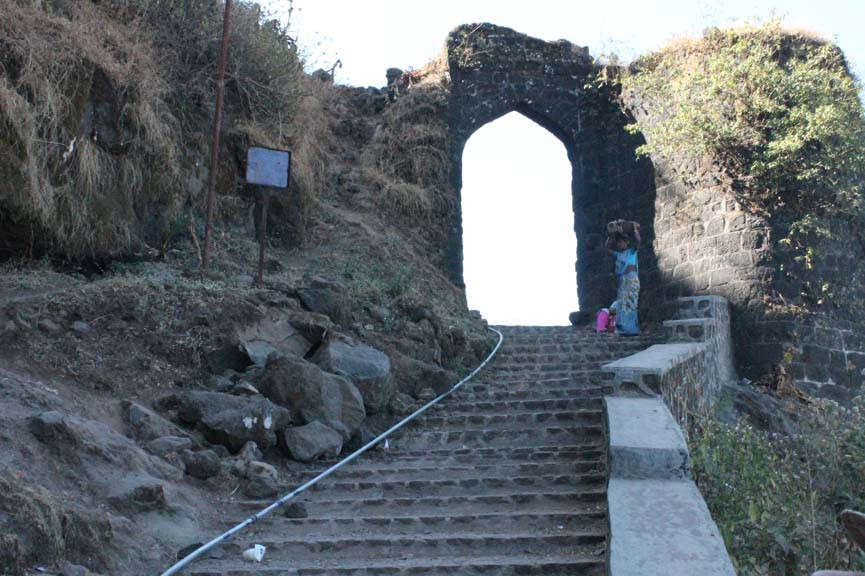
The climb does not dissuade path-side snack sellers, who ply their trade at every landing and vista on the way up. The white city in the distance is Pune.
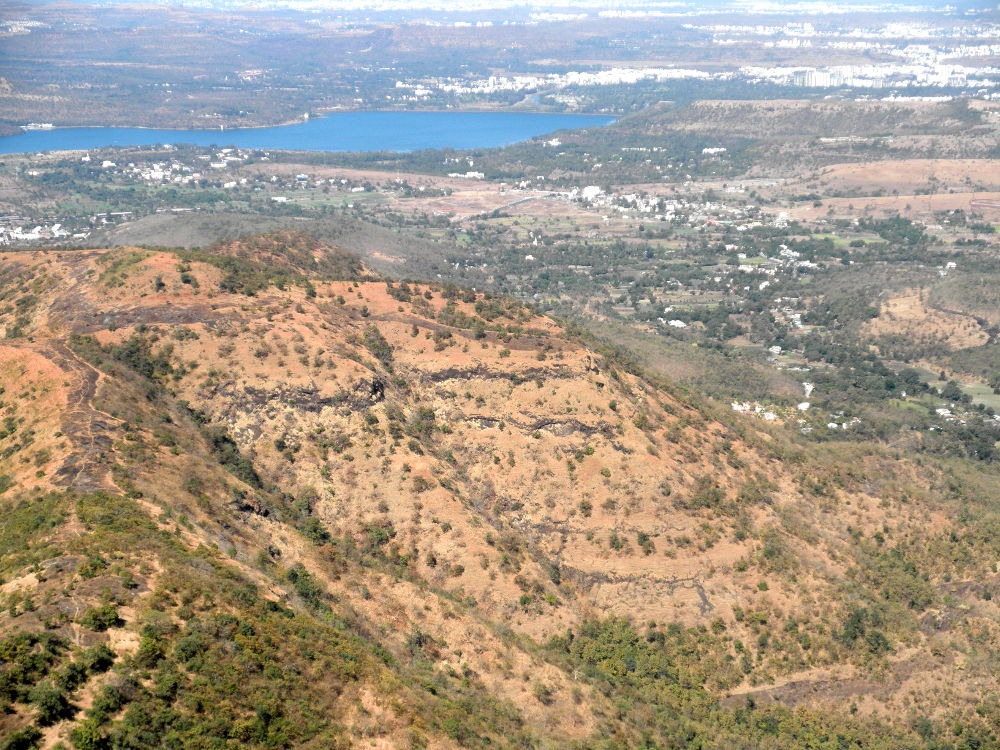
Around every breathless bend was another spectacular shot:
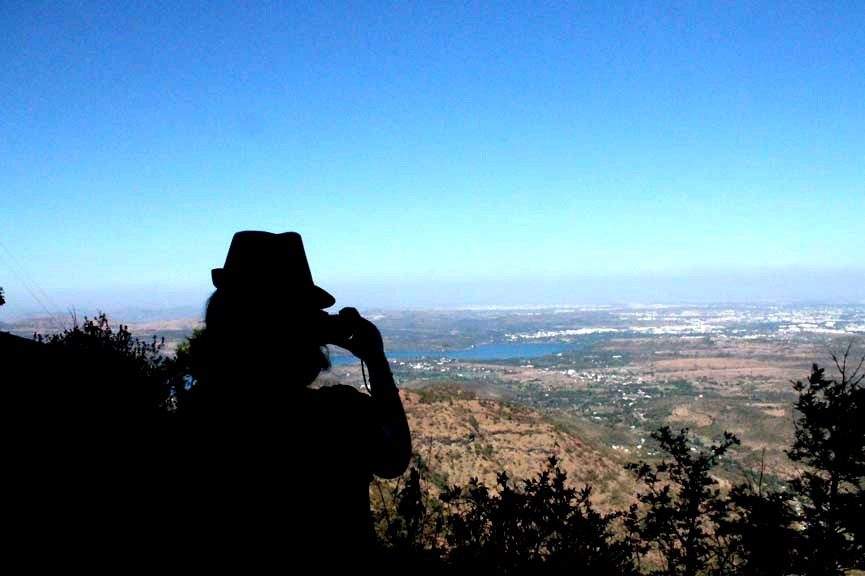
We went out touring again on Saturday. First we went to the Rajiv Gandhi Zoological Park. We went early, just as it opened. The morning was cool and breezy, and the zoo was quiet and shady, compared to the bustle of the streets. The larger animal exhibits are well spread out, and we enjoyed strolling along the zoo’s lanes to find them.
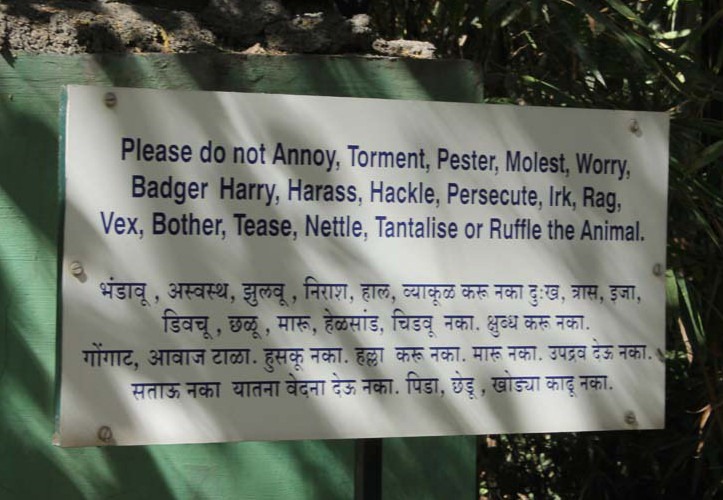
Having been warned, we avoided the thought of ruffling the tigers, guar, wolves, and hoofed stock. Snake hackling was also right out.
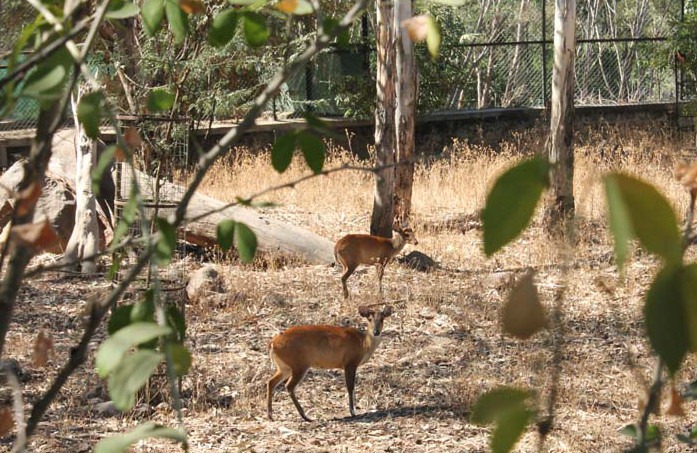
You’ll have to take our word for it though that we saw elephants, macaques, and cobras, too – but all were camera-shy.
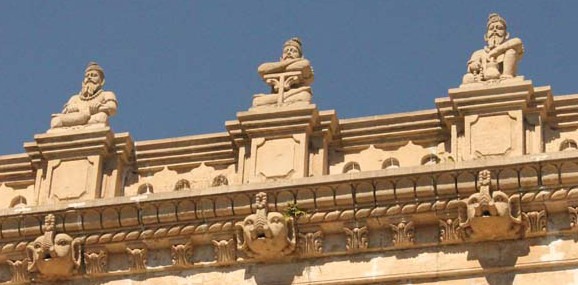
After a pleasant morning strolling about, we went to another historical venue. This was a memorial to Shinde Chhatri, a heroic general of the Marathas, who served the Peshwas from 1760 to 1780. The building has been recently restored, inside and out.
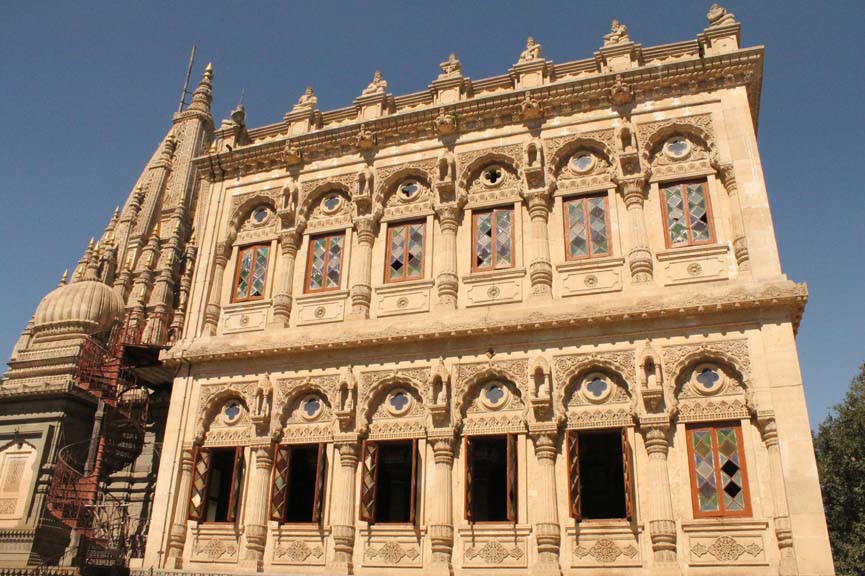
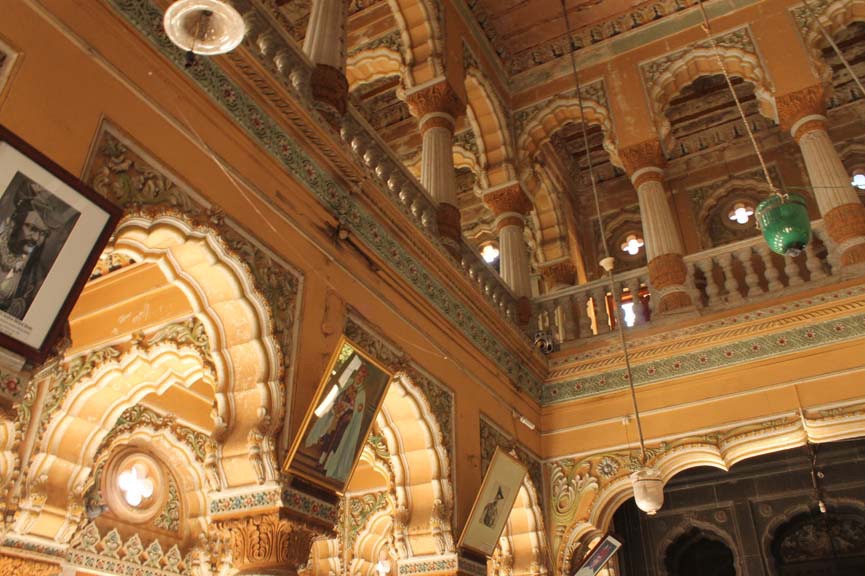
The caretaker explained to us (as best he could) that the line of notables descended from the general and his family (the portraits lining the walls) persists to this day, and remains active in governance and politics.
Needless to say, I’ll be reading more about India’s pre-Colonial history, especially that of the Maratha Empire.
THERE (BUT NOT BACK AGAIN ANY TIME SOON)
We’ve made it to Pune!
The flight didn’t set any high bars for comfort or food – in fact the tastiest item served on both Virgin Atlantic flights was called GU.

It was a prepackaged chocolate/banana pudding thing, the only edible object on the tray. In general, Lufthansa should rejoice. Amenities were so poor on Virgin that the German carrier has been promoted out of my basement ranking for long haul fights.
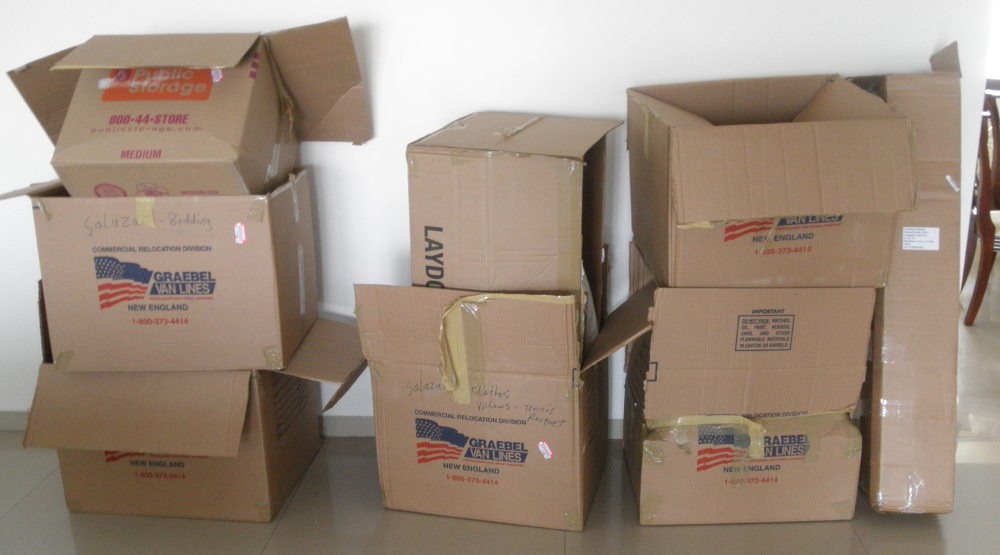
But you aren’t reading this for airplane food rants. Not only are we here, but after two days of aggressive power napping interspersed with cleaning and unpacking, we’ve managed to achieve relative sentience and order. Proof of the unpacking:
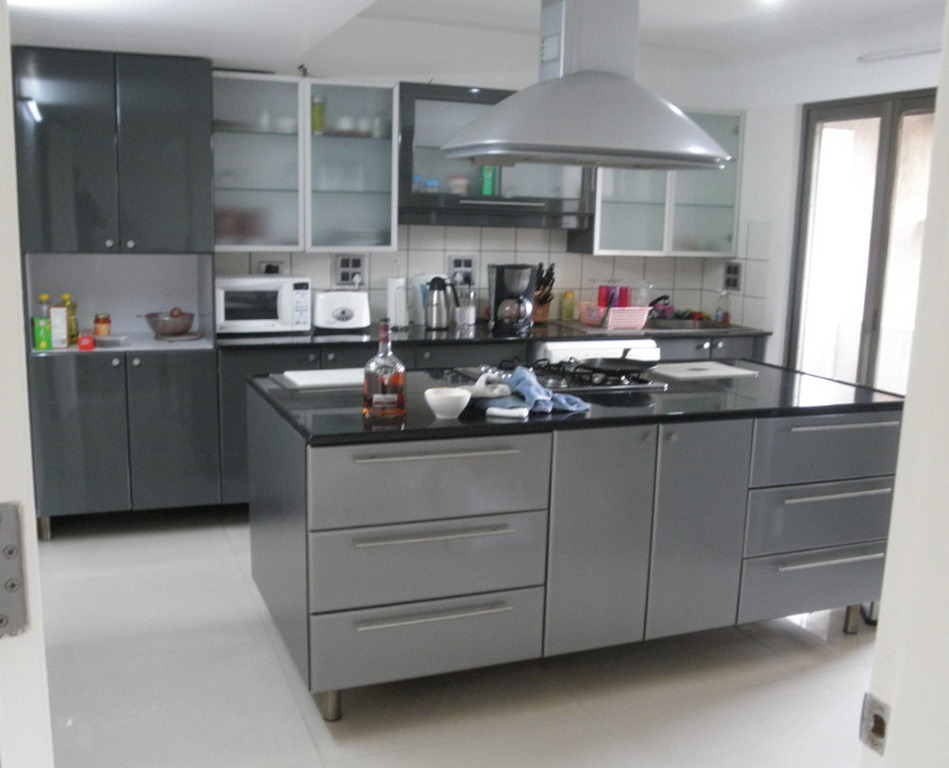
Proof of relative sentience and a virtual apartment tour, not necessarily in that order. First, the kitchen, with the soon to be infamous Pigeon Porch at the right.
The living room, with legacy non-working TV left by the landlord:

A couple of offspring-infested bedrooms:

Younger daughter is already entertaining herself with the paint set she brought with her.
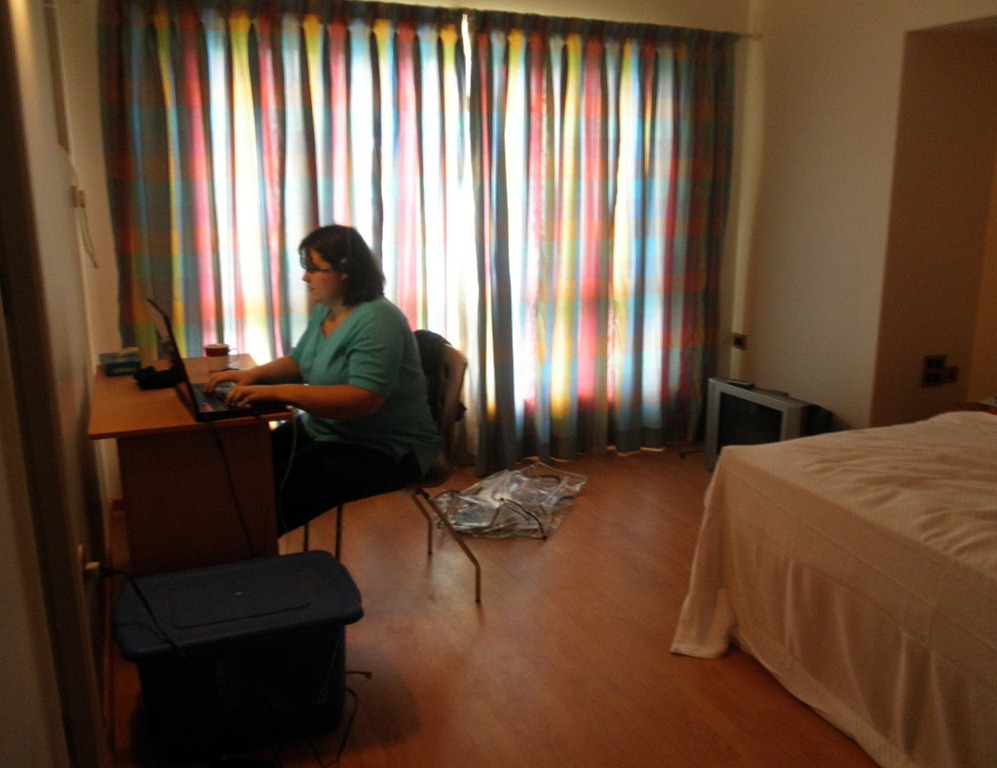
Elder daughter, doing what comes naturally. Note my knitting and stitching stash bin in the foreground, and yet another landlord abandoned dead TV in the background. Our bedroom is the same, a bed, a wardrobe wall that includes both hanging space and shelves behind wood and mirrored doors, and a king size bed. No student desk in ours, though.
The Resident Male needs to do a lot of work after hours, synching up with colleagues on US time, so we’ve turned the fourth bedroom into an office:
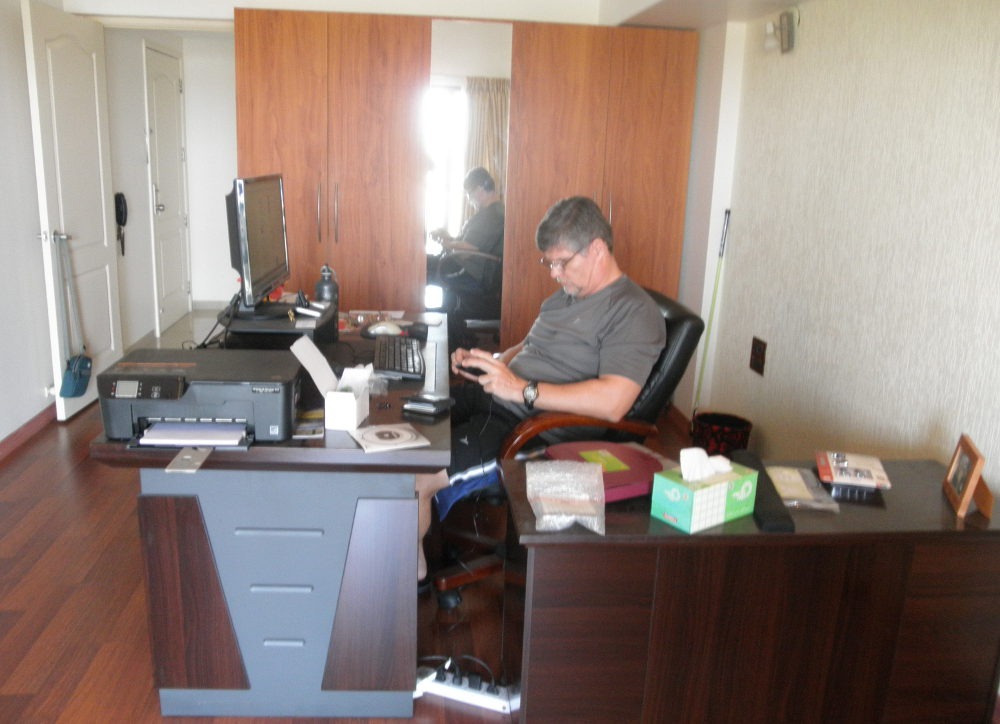
The office is off the entry vestibule, on the far side of the living room, so he can do phone meetings without disturbing the rest of us. I’ll spare you the pix of the dining room, in which I sit and type this; maid’s room, turned laundry room, with its curiously mobile washing machine and drying racks; and of all of the bathrooms. Every bedroom comes equipped with its own, with a separate one off the laundry room.
And finally – the view off the balconies:

There’s no road behind the building – just a strip of shrubby ground between us and the Indian Army’s athletic training facility. Most mornings there are groups of cadets out there doing dawn calisthenics. On a couple of mornings they’ve had loudspeaker music accompaniment. Other mornings a full military marching band has rehearsed, complete with bagpipes. I haven’t seen them yet, although we can definitely hear them. I suspect they are training on the field on the other side of the grandstand.
So there you have our post-settlement tour. We’re here, finally (mostly) adjusted to local time, feeling out local resources and schedules, and starting to branch out on adventures. More on those to come!
WHAT WOULD YOU PACK?
I have sent off our second shipment of household goods. With luck they’ll arrive at the apartment in Pune, India by the end of November. The flat is furnished, so there was no need to send furniture, but it’s a spare and barren space. The Resident Male is fixing that, but it will take time.
In shipment #1 we sent pots and pans, some linens, a TV, and other items of immediate need. This second shipment is mostly clothing for Younger Daughter and me, plus linens for more beds, some bits of kitchenware that we forgot before, and most important of all – Survival Boxes. Younger Daughter and I each got one.
What’s a Survival Box? It’s a box full of the hobby, reading, or idle time amusement things intended for maintaining familiarity and sanity far away from home, where supplies might be difficult to come by. That’s not to say that we wouldn’t be able to find hobby things at our destination, but I rather suspect that selection and proximity will both be limited.
Younger Daughter packed painting and sketching supplies, including paints, pens, and paper. Also some selected books, and crochet yarn and hooks, along with a book on intro amigurumi (Japanese inspired small soft toys, usually knitted or crocheted).
What was in my box? Really – you have to ask?
In all truth, packing the thing was the hardest move task to date. What to take and what to leave behind? On one hand, I want to have a variety of things to do because I work on stuff at whim. It’s hard to predict flights of whimsy for the 18 months to come. On the other hand, there’s no point bringing a ton of stuff because whatever I bring, I have to schlep back.
Here’s what I settled on:
1. My unfinished North Truro Counterpane. It’s about 40% done right now, destined to be queen bed size when completed:

The pattern is here, if you’re interested.
2. My giant green sampler. I packed the frame stand, but not the sampler and stretcher frame. I’m still working on (albeit slowly) and it will accompany me in person.
3. Lace yarn. I’ve got a huge hank of black merino lace yarn, plus a big spool of hunter green, some blue, and some accent threads that go well with the hunter. Not sure what I’ll do with them yet, but I am bringing my copy of the Sharon Miller Princess Shawl, just in case I want to attempt an impossible project in an unconventional color.
4. Extra ground cloth and threads. I rounded up my stashed bits of cotton and linen even weave. They range from 26 to 50 threads per inch. I’m bringing white and black DMC linen floss, plus a pile of red, black and green cotton floss. Just in case inspiration strikes. I don’t have a stash of silk floss and didn’t buy any because of everything that I use, that’s the most likely thing to be available in India.
5. Sock yarns. About four pairs worth. The best in my stash, including some hand-dyed, and a ball of (near) solid Zauberball in deep emerald.
6. Lots of knitting needles, holders, embroidery needles, a pair of sewing shears, a couple of hand-hoops, my magnet board folder (thanks Kathryn!), my swift and ball winder (absolute necessity with the lace yarns) and other notions.
7. The stitching kit I picked up at Winterthur, to make a reproduction of the Sarah Collins sampler. Still not sure if I’ll do this myself, but it’s a self-contained project and easy to transport. Compared to the stuff I usually do it doesn’t look like it will take very long to stitch up.
8. Selected reference books. I can’t bring my whole library, but I did pack a few big-bang-for-the-volume pieces – my Duchrow trilogy, a German knitting stitch treasury, and TNCM. Plus some others on a thumb drive.
With the exception of a couple of balls of sock yarn and the accent threads, this is all from my stash, accumulated over the years. Which is why we have these hoards in the first place. Right?
So.
Given a trip for up to two years away from home, to a place where distraction would be appreciated and supplies might be hard to get, what would YOU pack?
STILL MORE WORDS FROM ANOTHER WORLD
Having sent off our household goods shipment in advance of our great migration, here’s another installment of words and usages from India that are new to me. Again – these are skewed to the sensational and seasonal because my main sources are all newspapers, which there like here tend to lead with grabbers on taxes, violence, scandal, tragedy, alongside gossip and pieces on communal celebrations.
Hoardings – Large scale printed media advertising, especially billboards, although the extra big, freestanding ones appear to be called “gantries.” Trucks whose body is a large sign rather than a cargo payload are “mobile hoardings.”
Tender Rate – Hard to tell from context, but this appears to be a tax rate or licensing fee. I found it in an article on government crackdown on illegal hoardings (above), in which a higher tender rate was recommended, coupled with increased enforcement, including removal of illegal (unpaid) displays.
Lakh and Crore – Indian currency (rupees) are individually quite small in value. At the time I write this, the exchange rate is roughly 1 rupee = 1.9 cents US. Therefore prices for big ticket items – cars, houses, jewelry – are expressed in very large numbers. One lakh = 100,000 rupees, or at today’s exchange rate, about US $1,886.79. One crore = 10,000,000, or US $188,679.00. It’s very common to see headlines like “Rs 1.5 lakh of jewelry stolen,” or “Rs 4.3 crore seized”. The abbreviations are lk and cr.
Names for cardinal numbers – Numbers in general in Hindi and Sanskrit (two of many languages there) are handled differently than in English. We have unique number words for numerals 1-12, then use a combo form to make the rest of the teens; then have a unique word for tens place numbers (20, 30, etc.) but form compound words for the numbers in between them (21, 33, 67). In India each number to 100 has a unique name.
Body offences – A broad legal class of crimes that appears to cover the equivalent of the US terms “Bodily harm,” and “aggravated assault” although the definition also includes armed robbery, extortion by threat of injury, poisoning, slavery, and kidnapping
Various common British usages – Thrash instead of beat (“Dacoits thrashed the victim with a stout rod”); shift instead of move (“I shifted the furniture, but I didn’t think you’d mind.”); dustbin instead of trash can; attach instead of confiscate (The Enforcement Directorate attached all remaining funds, after the embezzler was identified.”)
Ota – Earthen platform or raised mound. A temporary structure used as a platform for devotions, especially during religious celebrations.
Pandal – A structure or enclosure erected for religious purposes. These can be permanent, but at this time of year, festival season in India, many are temporary. The legal definition includes structures that serve business purposes, too, although newspaper citations I’ve seen have all been about temporary shrines erected for celebrations, where they are, or what provisions/fees are being levied for electrification, or other infrastructure and public safety support for them.
MORE WORDS FROM ANOTHER WORLD
Here are some more words and terms I’ve stumbled across during my India-migration preparations. Again – I point these out not because they are laughable or substandard, but because they are new to me, and illustrate the fact that English while common bridge among many speakers, can befuddle as well as unite. Please note that my sample is skewed to the sensational, because most of my sources are newspapers.
Here are three from local news coverage that all have to do with social action. There’s probably nuance or hierarchy of severity here that I’m missing. I’m inferring definition from context, and I don’t have tons of data points to figure out finer shades of meaning. Please chime in with corrections if you have them.
Bandobast – I love the sound of this one. From the usage it appears to be an ad-hoc group pursuing a common purpose, especially a grass-roots one, as opposed to that of a standing organization. There appears to be a nuance of self-organization, individual action, and spontaneity to a bandobast. A group of volunteers picking up litter after an arts festival or handing out water to marathon runners might be considered to be bandobasts. But not all bandobast actions are benign.
Morcha – A morcha seems to be used when a group of people self-organizes to pursue a specific social or political agenda. Although I see traffic-blocking street protests referred to using “bandobast,” “morcha” seems to be used more for organized actions we’d call labor strikes or work slowdowns. I’m unsure if the Occupy Movement’s actions in various US cities this year past would be considered bandobasts or morchas.
Bandh – This appears to be a major form of organized protest – a universal strike, in which the entire population of a region stays home, eschewing all work, school, commerce, or travel. It’s a powerful tool of civil protest. I’ve found through further reading that it has been banned, although calls for bandh actions are still made.
And some more general terms:
Godown – From context, seems to be a storage facility or warehouse district. I’ve seen some articles that use ‘godown’ to refer to industrial buildings of indistinct past use but large size, now repurposed to serve civic needs.
Octroi – I know this one from Medieval history. In historical usage, it’s a tax, levied on the goods moved between states; not exactly a customs duty, it’s more like a custody transfer tax. In the India context I’m unsure if this is a commercial tax, paid by corporations and possibly by municipal entities, although I think it is – as opposed to a direct tax paid by individuals. (That’s not to say that costs aren’t trickled down.)
Corporators – the closest I can figure is that these are local representatives. In the US, depending on the type of local governance and size of the local area, these might be ward representatives, town meeting or city council members. I am unsure if Corporators are appointed or elected. More reading is warranted.
Scheme – this is a nuance difference in usage. In the Indian newspapers, scheme appears to be used as a synonym for plan. For example, municipal corporations (city governance organizations) can have schemes for handling various civic challenges. However in the US, a scheme would have a sinister connotation, with an undertone of illicit secrecy. It’s a word used in the US more to designate the plans of evildoers and malcontents, than it is used to describe honest and forthright actions taken to benefit others.
I’ll keep on posting these from time to time, to entertain and edify. Perhaps some future expat will find these posts useful.
A NEW VOCABULARY
As part of the preparation for our grand India adventure, I’ve been reading everything I can about Pune and the surrounding area. This includes on-line editions of local newspapers, history books, and blogs. I’m learning a lot, finding facts, trends, and rumors – the hard and soft aspects of our soon-to-be home and its stew of cultures.
My primary sources are the web-available English language newspapers. I admit that they provide a skewed viewpoint. I know that I would not want someone to draw vast conclusions about the US by reading any one or two papers here (especially the tabloids or political slush papers). Still, slanted as they are in reporting eye catching, sensational crime stories, or presenting views tinted by biases I do not yet understand, they are a fascinating source of words, turns of phrase, references, and names of institutions that are new to me. These usages are just as current, legitimate and topical as any writing or speech anywhere else. I am reporting these not because they are strange, but because they are novel to my ear.
Dacoity – This one was reported by the Resident Male. In the US it would be called “armed robbery” or in an older time – alleybashing. Someone sticking up the local convenience store would be a dacoit.
Sharp weapons – Also reported by the Resident Male. We’d say “edged weapons.” Knives, mostly. Seems to be the favored arsenal for dacoity.
Nullah – A steep sided gully through which infrequent (but dangerous) storm water surges flow. If a natural feature, depending on the part of the country here we’d call it an arroyo, canyon, gully, gulch, or gorge. If man-made it might be a culvert or storm drain.
Housing society – In the US it would be a housing cooperative or “co-op” for short. A building or neighborhood in which the owners share the pooled cost of common area maintenance and general services for all. Like here though, there are maintenance fees and (when needed) special assessments. “Society” is also used to mean the grounds of the housing complex itself, especially enclosed communities formed of single family houses with walled gardens, inside a larger gated perimeter.
Overbridge – Overpass, like a highway overpass or a traffic fly-over.
Municipal Corporation – Depending on the size and organization of the city or town in the US the equivalent would be the city or town council and mayor’s office. I’m still working this out, but it appears that civic governance is not by direct election of representatives to the municipal corporation, but I may be wrong. More on this as I learn myself.
E-Way – The equivalent here would be a expressway, major highway or turnpike, probably a major Interstate or state route.
Lokshahi din – Grievance sessions held by a Municipal Corporation. Citizens with a compliant about municipal function or services delivery can submit it in writing, then go to a hearing where a municipal commissioner can render a judgement, to which all parties are bound. These tend to be held by civic zone (what we’d call city ward or district).
Jawan – I deduce this is a security guard, policeman, or soldier on security detail. Jawans are deployed on the trains to maintain security and order. I’m unsure if the male uniformed guards checking bag contents and running metal detectors outside of most public buildings would also be called jawans, or what (if any) the equivalent term for a female officer might be.
Chowki – This one caught me by surprise but shouldn’t have. It’s a local police station or jail. I’d always wondered where the Brit/US slang “chokey” for the local slammer came from. Now I know.
Chowk – by contrast, this is a town square. I guess in India, Arlington Center would be known as Arlington Chowk.
I’ll continue to vacuum up what I can, posting occasional vocabulary updates as my linguistic dust cup fills.
 String-Or-Nothing