LINES, EDGES, AND BELLS
I am back from over a week of waiting on lines at the government visa office to renew our residence paperwork. Let’s just say I’m relieved not to be up close and personal with the bureaucracy today. Sadly, I was unable to take my knitting with me to civilize all those hours. It would have helped.
Here’s my latest progress on the big blanket knit from Marble. The current state is on the left, the previous attempt is on the right.


You can see that true to my word, I’ve narrowed down the edge treatment. I’ve also eliminated the mitered corners in another bid to conserve yarn. Instead I just ran the I-cord along the edge of the corner unit diamond. Much faster and simpler that the previous treatment using short rows. In order to prevent cupping, I did do a couple of rounds of I-Cord “free” at each corner point of the diamond, to provide extra ease. I’m at roughly the same point in yarn consumption as my earlier attempt (seen on right, above), but you can see that I’m further along the march around the piece. Fingers are crossed, but with what I’ve got left, I think I’ll be able to finish. I do prefer the older treatment though, and if more yarn was available, I’d have continued with it. Those extra four stitches between the fill-in diamonds and the I-Cord, plus the thicker I-Cord and mitered corner made a smoother, more uniform presentation, and “absorbed” some of the natural rippling that happens when the fill-ins are made. So it goes…
Monsoon continues here, with heavy rain days interspersed with misty, overcast days. The humidity is through the roof. I’m experiencing a bit of climatic dissonance. We do get long periods of grey, dank skies in New England, but they are in the dead of winter, usually when temperatures are down in the low teens or below (that’s -10ºC and under for you Celsius folk), accompanied by intermittent snow. To have this many dark but warm days in a row is new to me.
In spite of the greyness, the omnipresent mud and the acne-like spread of potholes in the imperfectly footed brick surface streets, I’ve mentioned the up-side of the monsoon before. Everything is quite lush, and the city is transformed. Even the dusty, trash-strewn vacant lots in town are covered in deep growth, with occasional splashes of wildflowers. This weekend past we went to a patio restaurant, where we dined under a large open air tent. There was a large tree just outside the tent, hung with dozens of child-size umbrellas and spans of tiny bells. Rain fell throughout dinner, making music as the drops hit leaves, umbrellas and the bells.
Today we travel out into the surrounding hills where Younger Daughter’s school is. Because we went back to the US before her last semester ended, she had special dispensation to take her 9th grade finals all this week, before school resumes at the beginning of August. I’m looking forward to seeing what effect the rains have had on the countryside and hope to take pix to share. And in addition to my camera, I can bring my knitting!
BACK TO PUNE WITH THE RAIN
I can report that our Great Migration was successful. We’re now re-installed in our Pune flat, having arrived mid-monsoon. We’ll be here until next summer. I was astounded at how the arrival of the rains has changed everything. The region is now green. Very, very green.
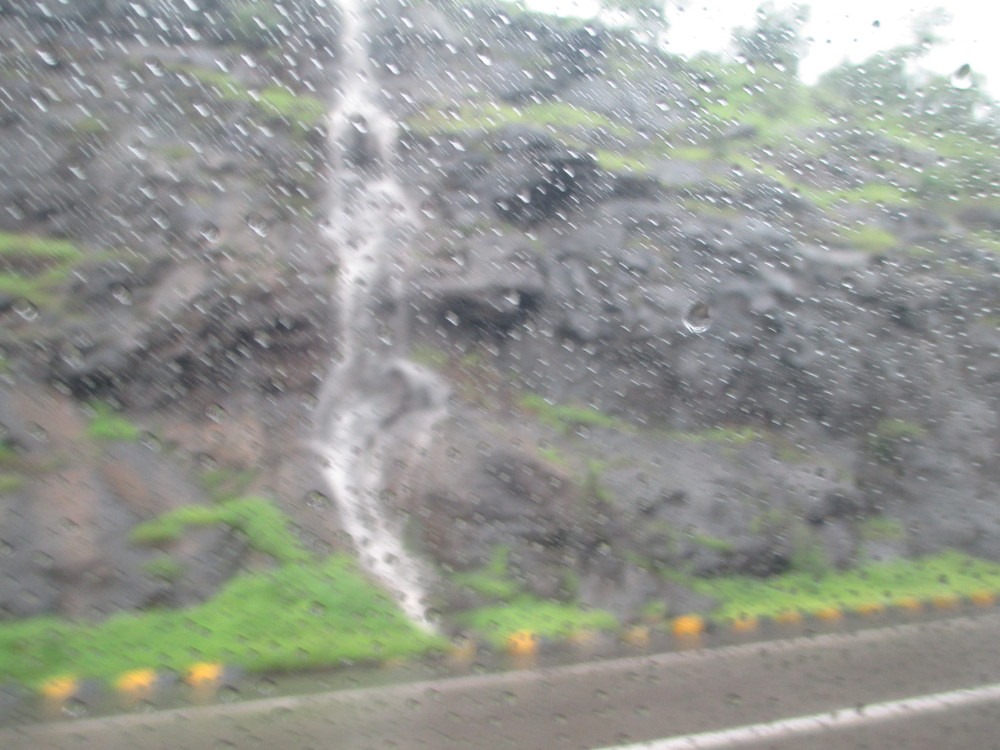
First, on the car trip from Mumbai to Pune, inland and up the ridge that marks the edge of the Deccan Plateau (Pune is at about 1800 feet above sea level), the dry and scrubby hills were transformed. Where before there was dust, some sprigs of tenacious, prickly looking shrubs and cacti, are now pillows of lush vegetation and soft grasses. Rocky ledges are now waterfalls, with greater and lesser cascades threading down the slopes, joining to make fast-moving creeks. Dry stream beds that were little more than stagnant puddles and sand shoals are now broad brown rivers, filling their channels bank to bank, and running fast enough to make rapids. We saw newly sprouted fields, and families out planting rice in flooded paddies in village areas. In the cities I saw older people tending the vegetable patches and potted plants which have appeared everywhere a scrap of space can be found. Unfortunately, all of our attempts to take photos showing the waterfalls and green fields were unsuccessful. Here’s the best of the lot:
Through the heavy but intermittent rain people were going about their business as usual, but wetter. The scooter riders were still out in force, but soaked to the skin. Likewise the pedestrians. So were the cars, but on waterlogged, slippery roads. Reduced visibility, road construction pothole puddles, and wet pavement make driving here even more hazardous than usual. I was very thankful that Mr. Rupesh was at the wheel. We did see many accidents and breakdowns on the road, mostly mini-cars that had bottomed out when their tiny wheels tried to swim through deep puddles, or heavy lorries with flats or broken axles from encountering potholes at speed. Sad to say, we did pass a couple of serious accidents with injuries, where two-wheelers and larger vehicles collided.
In spite of the rain, people here are happy to see it. They don’t seem to be all that inconvenienced. In the US, if it rains on our vacation, we’re sad and annoyed. Here the rain is seen as a blessing. Families plan vacations and outdoor activities FOR the rainy season, and TV commercials are full of happy children, frolicking with family in downpours. However embracing the rainy season does occasionally end up in tragedy. Monsoon is also a season of thanksgiving and religious devotion. Earlier this month thousands of unfortunate pilgrims were swept away or stranded by floodwaters in the northern provinces. But in even in the face of terrible loss, the rains are the lifeblood of the land, and are very welcome here.
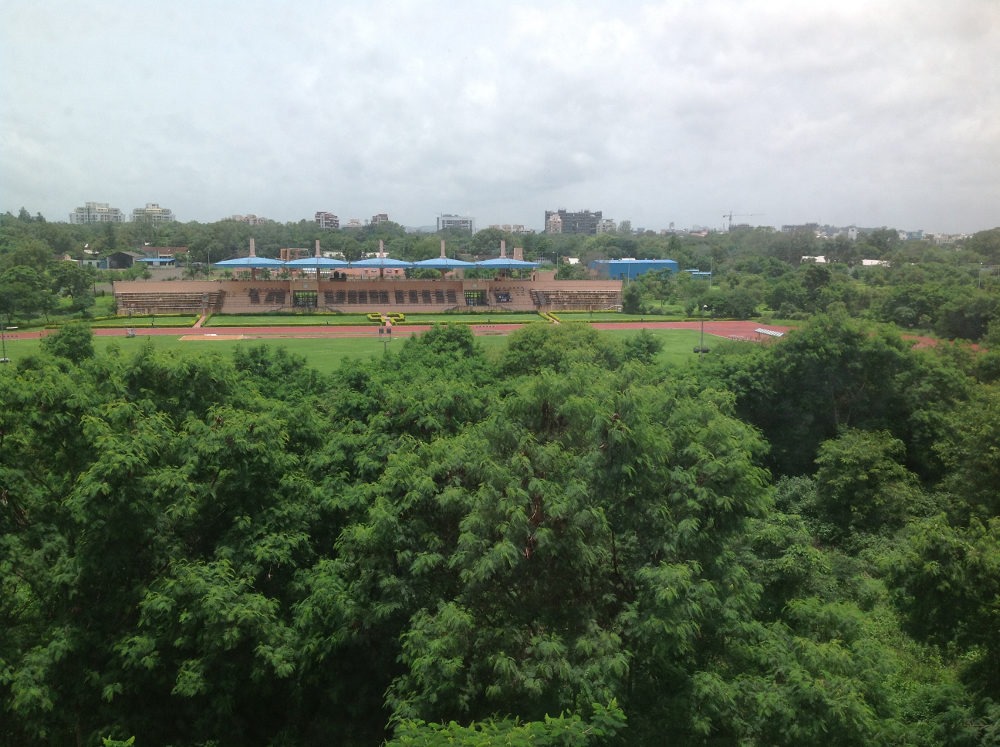
Finally, here’s the view from our balcony. The shot of the sports festival on the left was taken back in late April, just before the rains. The one on the right, not ten minutes ago:

WORLD IN AN ONION
So, I’ve been back in the US now for roughly four weeks, with several more to go before returning to India for a year. I’m seeing things differently, with the new perspective afforded by the five month stay just completed.
Take the humble onion. Onions are everywhere, and just about every really tasty recipe in just about every food tradition starts out with “take an onion…”
Onions in Pune are small and red-skinned, with white flesh. If you find one the size of a billiard ball, you’ve found a giant. They’re neither as sharp nor as sweet as selected varieties here. But they’re very tasty. And it doesn’t matter where you shop for onions. The same variety is available everywhere, from the most exclusive supermarkets catering to the well-heeled elite, to the smallest street vendor’s basket. I’ve also seen the same variety, picked when the bulbs are barely there (but larger than scallions here), and sold as spring onions. Now to be fair, there may be more available after monsoon season, and what I saw may be just the tail end of the agricultural year.
In contrast, I counted the variety of onions available in our local supermarket here in Arlington, Massachusetts. It’s a plain old supermarket in a standard suburban area, and not a fancy gourmet store. There are plain yellow keeper onions, big white Spanish onions, huge red sweet onions, Vidalias, tiny white boiling onions, the small, ovoid yellow Cipollinis, Bermuda onions, ordinary white onions, scallions/spring onions, shallots, and leeks. Plus several of these varieties are also available as “organically grown.” Counting the organics, that’s about 15 separate and distinct onion types, for sale side by side.
One or two of these might be considered local. The Pine Island area of New York near Hudson Valley is still considered a major onion growing area, but by and large – this embarrassment of onion riches is trucked here from all over the country, and some of it is even imported from Mexico, or even flown in from South America or Europe. That means there’s a huge perishable-goods transport and storage network, enabled by cheap shipping, and established distribution channels.
India is evolving very rapidly, but it still has a long way to go before it can match the infrastructure required to support this variety. Produce there is local. Intercity roads and trains exist, but what’s there isn’t sufficient for major distance transport of perishables. Even the sturdy onion.
For example, Mumbai and Pune are major cities, about 95 miles apart – about six miles closer together than Boston and Hartford, CT. Googlemaps shows the travel time between Boston and Hartford as being about 1 hour, 45 min. Having done this trek many times, I know it’s 4-6 lane interstate highways all the way, and (unless it’s rush hour) most folk exceed the mostly 65mph speed limit where they can.
The road from Pune to Mumbai is well traveled, and is considered a major toll highway. It’s 2-4 lanes throughout, with some interchange areas a bit wider, and for India is pretty uniformly paved. It twists and winds a good bit, ascending up steep hills, and goes through several rock-cut tunnels. However, traffic moves extremely slowly, even on this best-of-roads. Traffic moves slowly, winding around lumbering trucks, three-wheeled goods transporters (Tempos), and a sea of two-wheeled vehicles. On parts there are even local three wheeled taxis and animal carts, although other parts of the highway are restricted. Googlemaps says that it should take about 2 hours and 25 minutes. However cars even in uncrowded times would be lucky to 80kph (about 50mph), tops, and that only on the few straight sections with good visibility, if no slowly lumbering trucks are around. The trip rarely takes less than three hours, and often significantly longer, with mammoth multi-mile traffic jams of the type seen in the US mostly on holiday weekends being the daily norm.
Now, if travel on this best of highways is “twice as far” in terms of travel time compared to US roads, you can begin to see the logistics challenge. Add to that the high cost of fuel, the lack of refrigerated trucks, the average size of a farm’s plot being something smaller than a third of a football field, lack of distribution centers, and the challenges really pile up. For a supermarket just to obtain onions in a quantity sufficient for its sales, it would have to deal with a middleman who collected produce from several smallhold farmers. Then the goods would have to make their way over land to the city. Slowly. So it’s no wonder that eating in India is a localvore’s experience, that produce is only available in season, and that varieties are limited.
I’m sure that there are other cross-cultural lessons to be learned by peeling back the layers of this onion – land ownership and transfer, relationships between agricultural and urban areas, the economics of small vs. large scale farming, how limited transportation on the part of consumers shapes retail buying, and the like. But for now, I look at the wealth of onions and marvel at the profligacy and indulgence, and have a First-World Guilt moment as I mince my way through some while cooking dinner.
CHECKING IN
Where have I been? In Pune, but now home in the US for a brief visit. What have I been doing? Mostly wallowing in ennui. For whatever reason, I have not been motivated to do much, not working on projects, researching, or writing here.
I can report that aside from the transoceanic trip, we did do one major thing. We hosted a “happy hour” party for 25 of The Resident Male’s coworkers, holding it at the apartment. I did all of the prep and cooking. I made samosas, falafel, hummus, guacamole, and Chinese scallion pancakes (adding some minced hot peppers to the scallions). I also improvised a mixed olive salad, and paneer with a Thai-style peanut sauce. Everyone had a good time, and using consumption as a barometer – the snacks were well received. The scallion pancakes in particular were prime, and a do-again, for sure!
There is some minimal progress on my latest shawl. I test-knit a new MMarioKnits product, but others were far speedier than me. Most of the corrections I found were posted by others, and my finished project was not completed in time for photography for the cover of the pattern. The main reason for this was a major lace disaster. While photographing the piece, I managed to drop upwards of 90 stitches, and needed to ravel back to a solid point and re-knit. After coming in so slowly for completion, I decided to punt the official as-written, minimal bind-off treatment, and add a knit-on lace edging. I selected a simple one from Sharon Miller’s Heirloom Knitting, picked both for complimenting the lines of the shawl’s main motifs, and for being a multiple of 12 rows, and began. I’m about two-thirds of the way around my circumference, and hope to be done soon.

However, just because I’ve been a slouching, IPad/browser game playing slacker, doesn’t mean the rest of the world stands still.
I’ve said before that I get an enormous kick out of seeing what people do with the patterns and designs I post. Occasionally, folk write to me to ask questions, or send me photos. Other times, I track links to my pages back to the point of origin. If I stumble across something I ask the owner if I can repost their work here, with links or attributions as they desire. Here are the products of two people who sent me pix of their stitching this month.
Elaine from Australia delighted me with these two projects that include filling motifs from Ensamplario Atlantio:
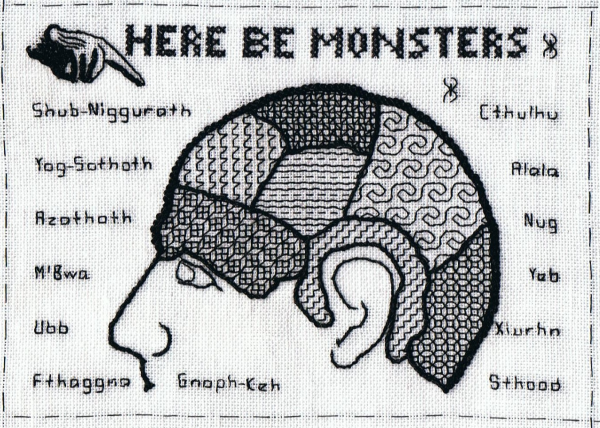

Both were presents for friends. I’m not sure which one I like more – the piece for the Kiwi audiophile, or the one for the Lovecraft aficionado.
Meanwhile, Jordana in New York used two of the Ensamplario designs for the cover of a charming two-sided needle case. Here are her photos of the work in progress, and the finished item:
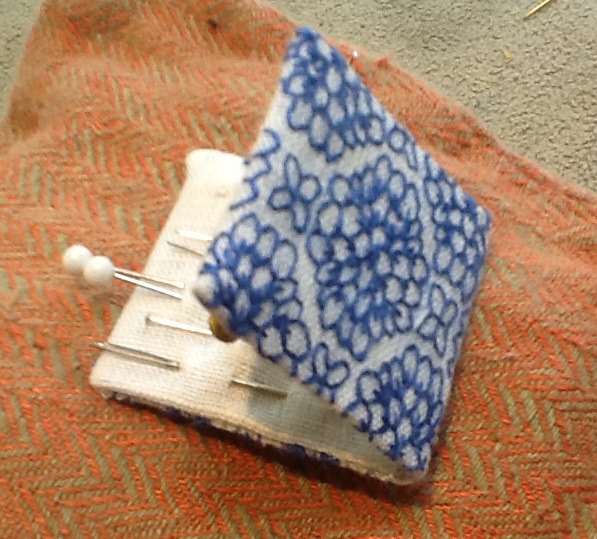
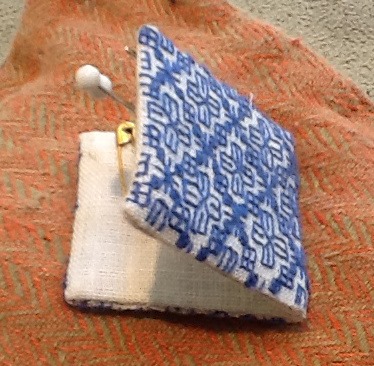
Well done to Elaine and Jordana! Special thanks to both of them for making my day!
MINAS TIRITH?
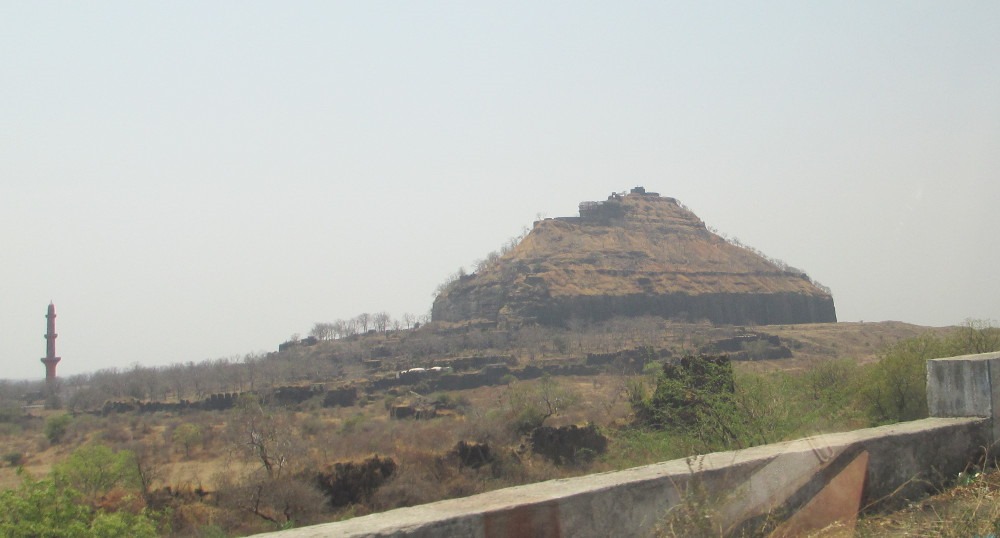
Now that I’ve got your attention, this weekend past, during a trip to see the sights around Aurangabad in Maharastra, we climbed up to the top of Daulatabad Fort (aka Devagiri or Deogiri). It’s a vigorous hike up 200 meters (656 feet) of uneven stone steps and steep ramps, winding through dark passages, up to spectacular views of the surrounding countryside.
Daulatabad and its fort have a long history as a key military and economic stronghold, dating back to the late 1100s. Devagiri was a fortress of the Hindu Yadava dynasty kings from the late 1100s before being seized by Moslem rulers around 1300, who saw its advantages as a military headquarters, and moved their capital to it in 1328. Water and resource shortages later led them to relocate back to Delhi. However it continued to be a center of power and contention for the next several hundred years, passing back and forth among various earlier Hindu, Mughal, Maratha, and later Maratha Peshwa rulers. These struggles, alliances, and inter-ethnic détentes are the foundation of Maharashtra province’s cultural mix to this day.
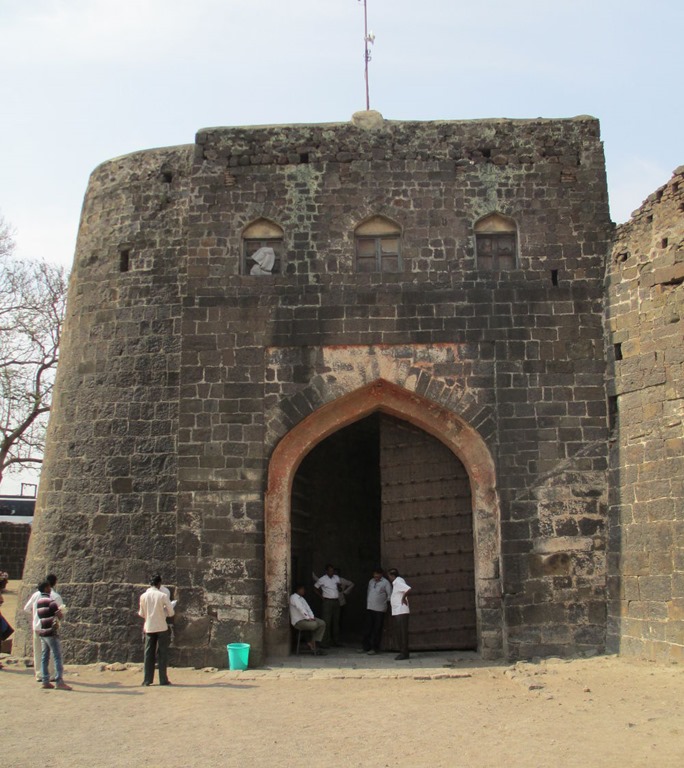
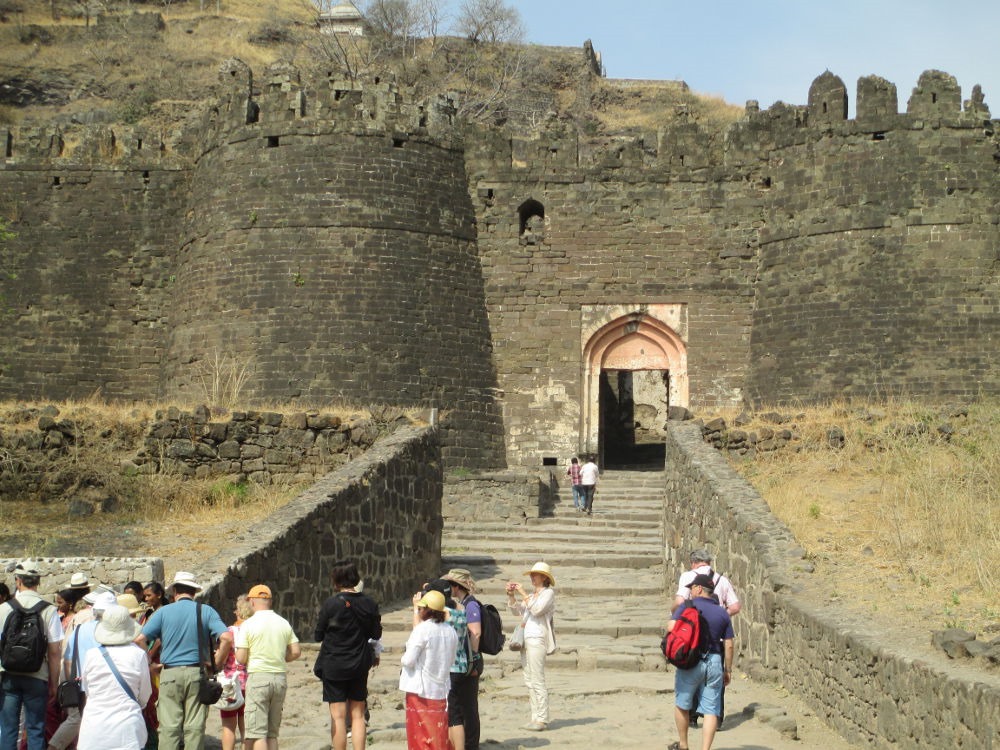

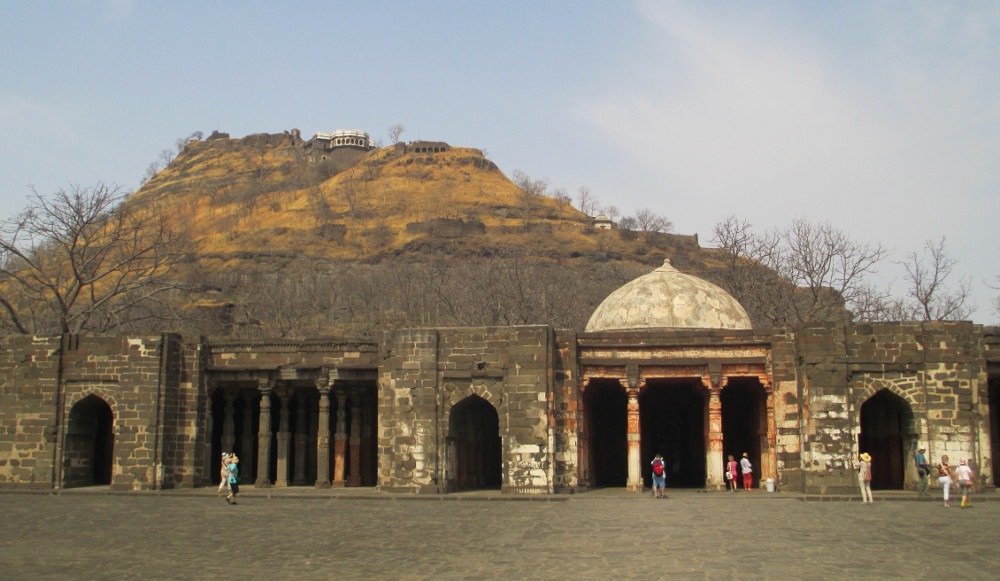
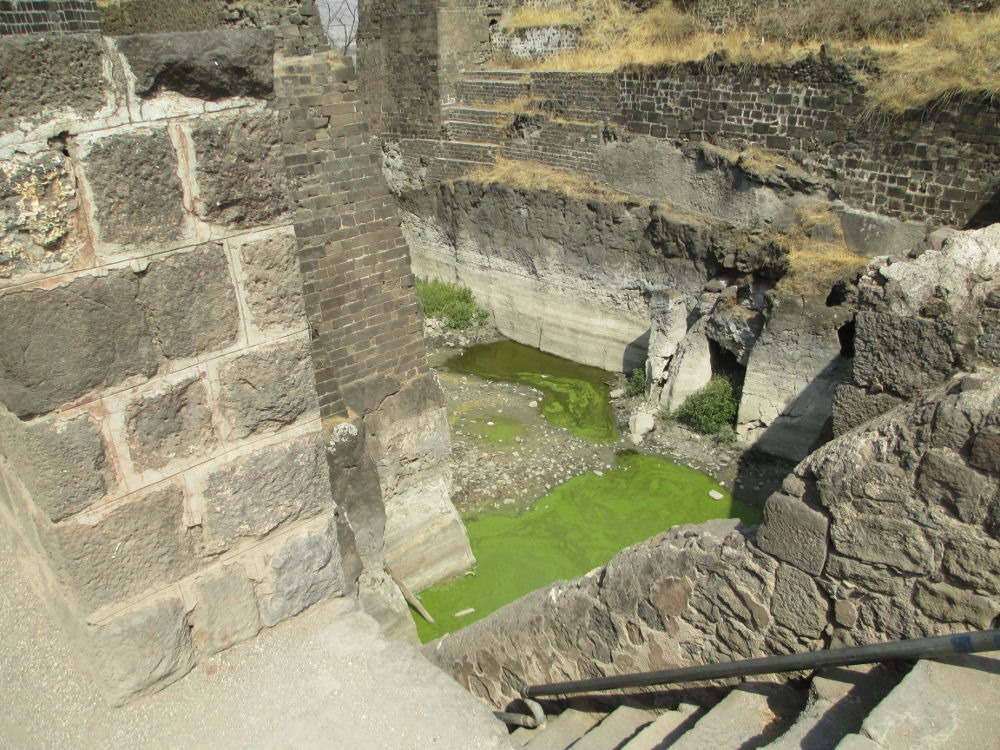
Devagiri’s defenses include many fortified gates, watchtowers, and multiple moats, one of which used to be spanned by a retractable leather bridge, traversable only on foot. Today’s bridge is sturdy iron and wood, a good thing because the moat still retains water, green with algae in this drought.
There is a twisty, steep and in places – a very dark passage on the main entry route, with deliberate drop-offs and false paths to lure invaders to their doom (thankfully roped off to protect clueless tourists).
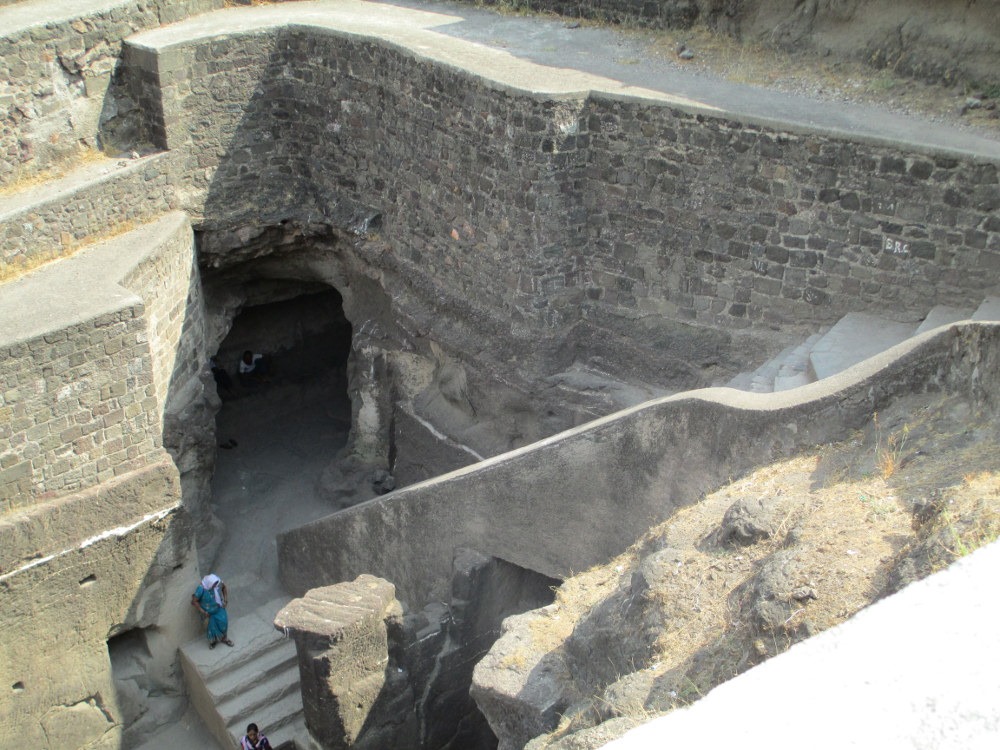
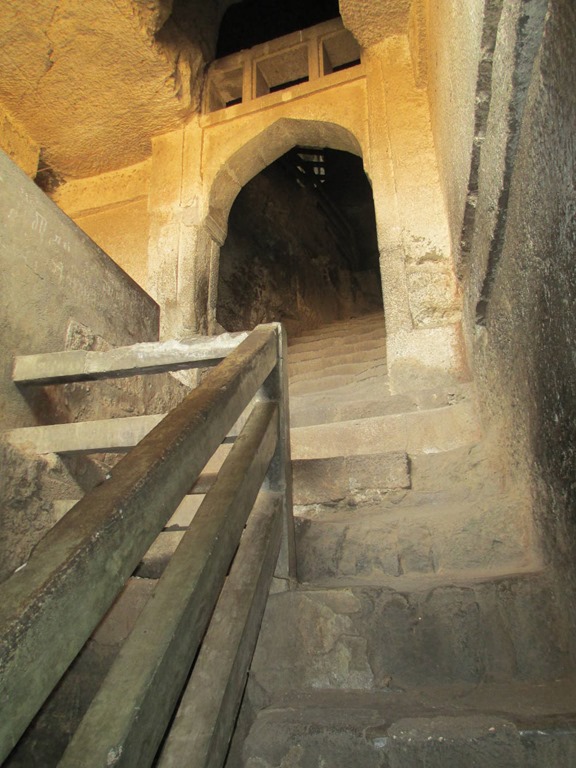
There are sluice gates through which rocks, scalding water or burning oil could be dropped on the unwary; archer holes, hidden sally ports, and cliffs hand cut and polished to make climbing impossible. Later defenses included gigantic brass cannon (as long as a van) mounted on towers. These are cleverly balanced on center pivots so they could batter besieging armies coming from any direction.
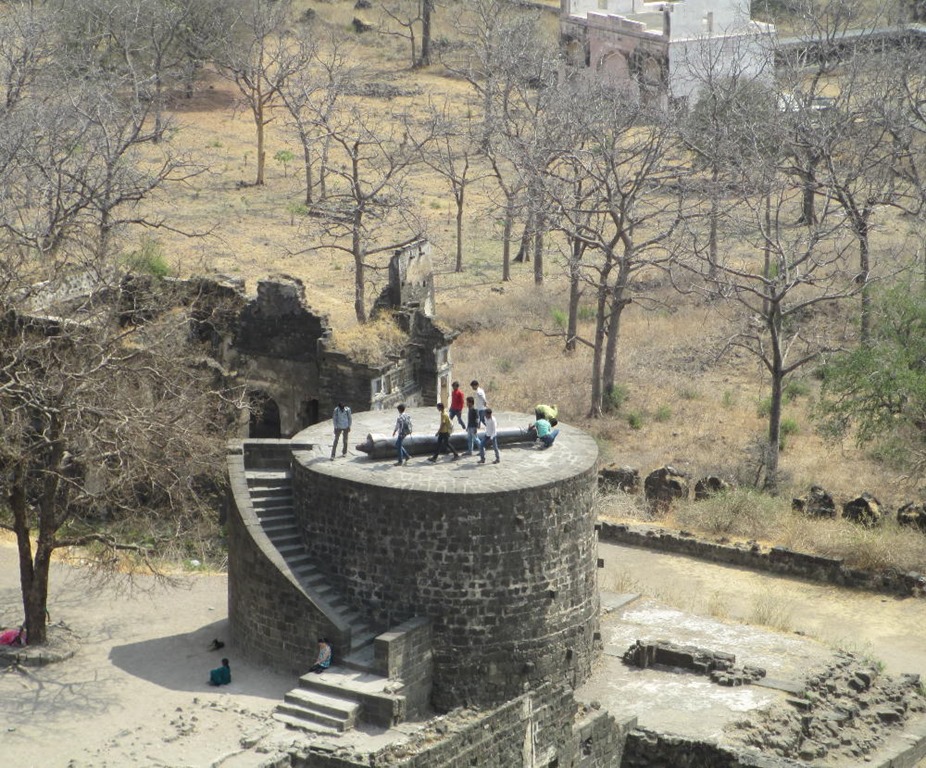
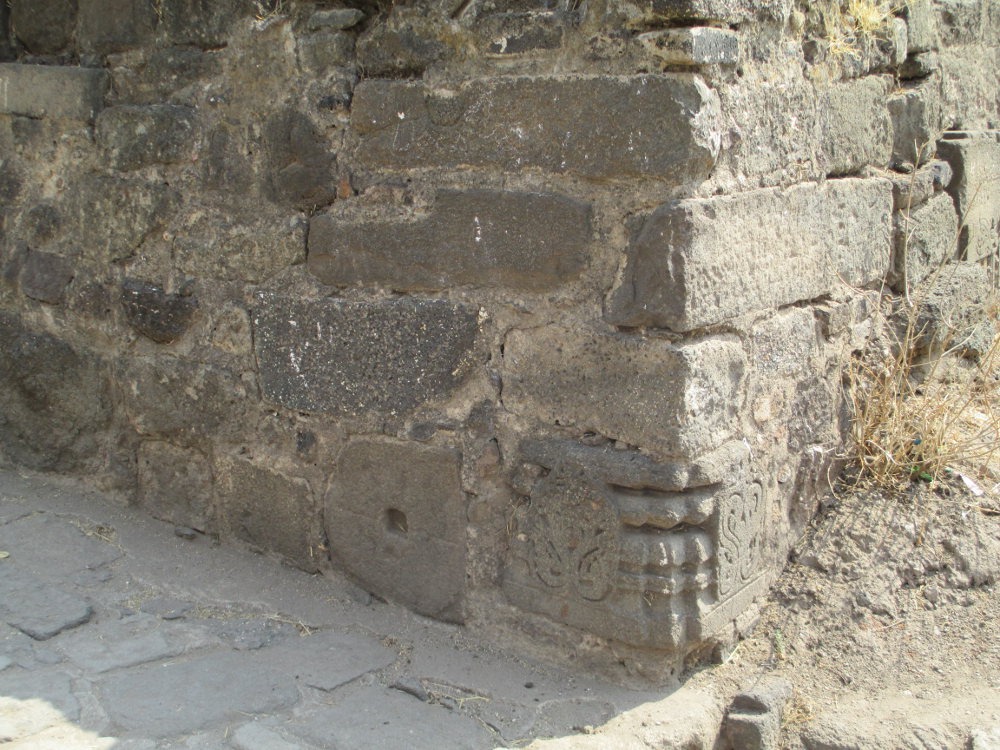
The ramparts are massive, cut into or assembled from the hard basalt stone of the region. Building across the entire site clearly shows multiple periods of construction, ranging from the mighty initial citadel, to later Moghul palaces of graceful stonework, decorated with imported Chinese porcelain tiles and painted stucco.
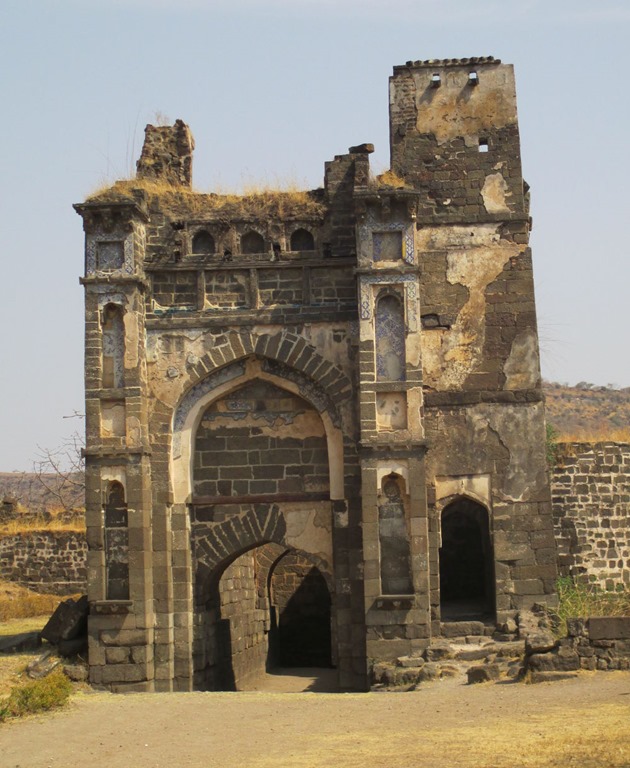
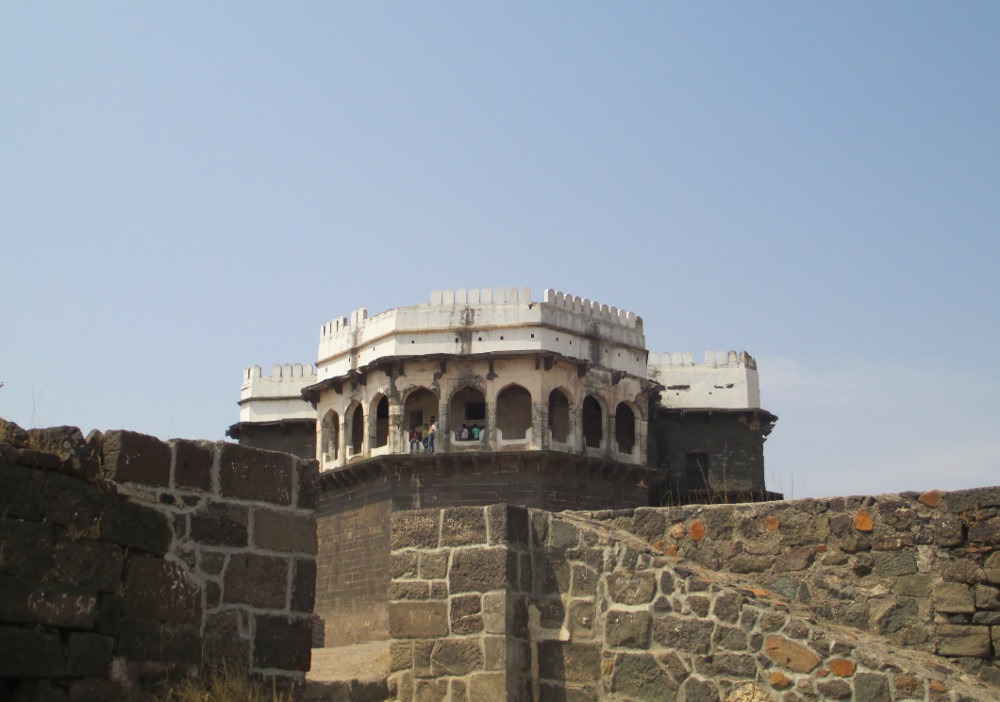
Re-use of older fragments in newer construction is common:
Now why did I invoke Minas Tirith for this post? I’m no Tolkien scholar, but to my novice eyes Devagiri presents some strong parallels to his descriptions. For one, Devagiri is chiseled into a butte-shaped rock outcropping, a freestanding mesa overlooking the surrounding lands. The fort itself is built into, on top of, and around this massive prow-shaped stone:

The fortifications are nested in winding layers, with gates widely offset to delay attackers, and to lead them past ambush points. There are quarters, cisterns, and storehouses all the way to the summit. The lower circles of defense sport wide avenues that circle the hill, passing through defiles that could shelter large numbers of defenders ready to pounce on any incoming troops. Many of the towers, shrines, palaces, and walls (with the exception of a later brick-red minaret) were once covered with white stucco, and must have been an imposing presence, a multi-tiered, gleaming set of ramparts on top of the hill’s sheer, black, hand-chiseled cliffs.
Of course there are many differences, too. Tolkien describes a much larger city, with more circles of defense, and an entire population living inside. There was a town to support Devagiri, inside the outermost circle of fortifications, but it was arrayed at the base of the hill, rather than on the hill itself.
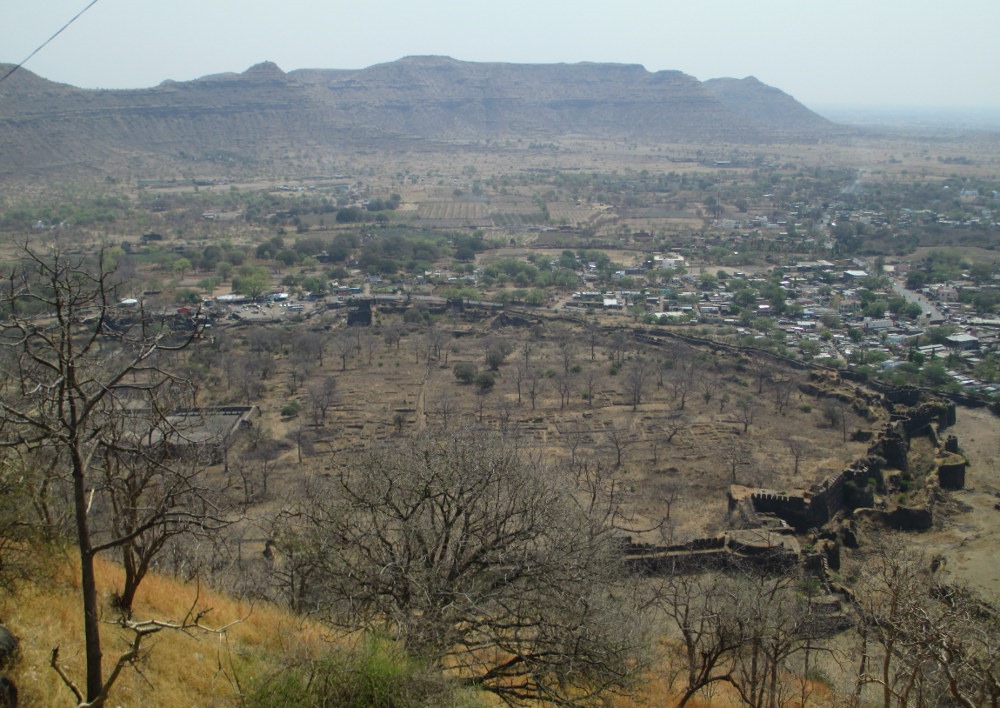
Dautalabad itself is far inland, up on the Deccan Plateau – on an arid high plain punctuated with other hills of similar configuration. There is no navigable river or port for ships, be they from Dol Amroth or Umbar. And while there are far-outer rings of defense enclosing what may have been support lands for agriculture or fodder-lands for war horses and elephants, there is no great wall of Rammas Echor enclosing a Pelennor-sized expanse before the gate.
Devagiri was well-known to the British, and was widely described and depicted as early as the late 1820s, although by the time they arrived it had past its glory, and was no longer a military stronghold. I would not be surprised to learn that the professor had read about it, perhaps as a boy learning the history of Marathi Empire and the three Anglo-Maratha wars that culminated in the British consolidating power over the majority of the Indian subcontinent. Perhaps some student of literature will take this idea as thesis fodder and delve more deeply into it…
No longer the contended redoubt of fierce warrior poets, today Devagiri is the slowly crumbling home of tour guides, elderly temple wardens, souvenir hawkers, gray langur monkeys, stray dogs, and clouds of bats. Romance and idle speculation aside, visiting the fort has taught me much about the area’s history and onion-like culture, with layers of influences laid one on top of the other.
I marvel at the scope of effort and breadth of power a monument of this size still represents.
SAMOSAS AND STUFF
An eventful week here at String India, punctuated by the refusal of Windows Live Writer to run without crashing, which explains the lack of posts.
First, I present the results of a local yarn crawl. Local Ravelry KnitPal RedHeadedWoman and I went on a yarn and stitching supply locating expedition to the center of Pune. We crawled in and out of tiny shops that offered the most amazing variety of trims, beads, sequins, pre-stitched blouse yokes, and brocades. No where on earth does bling with the variety and joyful elan of India. Yarn was harder to find, and real wool or silk was unicorn-rare. But there were lots of colors of man-made fibers in various weights.
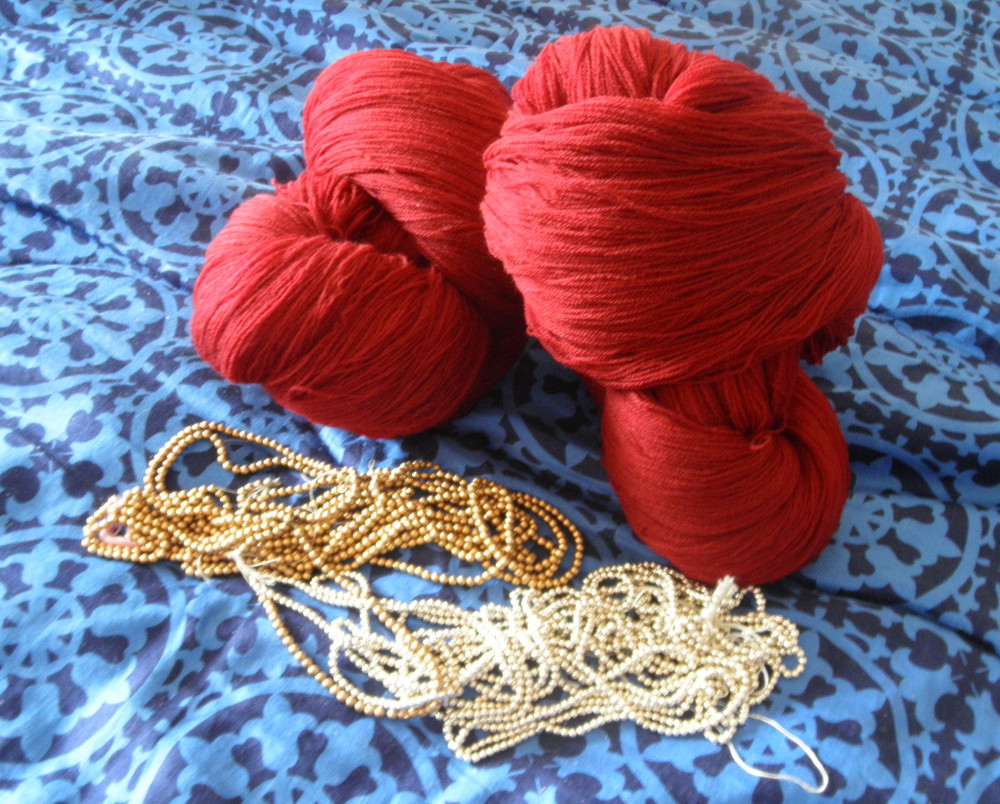
I came away with some crimson laceweight. It’s about a 2/20 weight and in all probability, either all acrylic or an acrylic/nylon blend. I’ve got roughly 400 grams (about 14 ounces), so I’d estimate that I have in the neighborhood of 4,500 yards. I also got two fistfuls of small metallic beads, one silver tone, and one antique gold. The princely haul below set me back about 600 rupees, roughly $11 US.
Special thanks to RedHeadedWoman for the fun of poking around the market stalls!
Second, I present a happy food triumph of the slightly misshapen variety: Samosas.
Samosas are one of the 10,000 snack foods for which India is famed. It’s a highly adaptable fried or baked turnover, turning up with all sorts of fillings, in all sizes, and at all venues, from the most posh cocktail parties to street food stands. About all I can see that unites them is a vaguely triangular shape and the happiness with which they are greeted.
I tried my hand at one of the most common types – a “truck stop size” samosa, filled with potatoes, peas and onions, spiced with lots of garlic and masala (a spice mix that varies from region to region and cook to cook). We had ours with soup for dinner, but this is the type that’s most commonly available as street food, at roadside rest stops, or other places where food on the go is appreciated.
I started with this recipe, but quickly veered off on my own. Note that the filling can be prepared way ahead and fridged, then brought back to room temperature before stuffing the samosas and frying them.

Therefore, not pretending to offer up anything remotely resembling “authentic,” I present my own version.
LATE BREAKING UPDATE: IF YOU WANT TO MAKE THESE IN A WESTERN KITCHEN, USING WESTERN INGREDIENTS, I HAVE POSTED A REVISED RECIPE HERE.
One American Chick’s Sort-of-Samosas
Makes 16 “truck stop lunch size” filled fried pastries
Outside pastry:
3/4 cup white all-purpose flour (maida)
3/4 cup whole wheat flour (atta)
2 Tbsp ghee or butter – MUST BE SOLID, NOT MELTED
1/2 cup water
1 tsp salt
1/2 tsp baking powder
Oil for deep-frying
Filling:
2 medium size onions, chopped
2 Tbsp oil for sauteeing.
8 cloves garlic, minced fine
2 cups frozen or fresh peas
5 fist-size potatoes, peeled
2 tsp garam masala*, or other spices to your taste
1 Tbsp salt
Instructions
1. Peel the potatoes, chunk them into two or three pieces and set them to boil until tender. Drain the potatoes and salt them.
2. While the potatoes are cooking you’ll have some time. Mix the two flours, the salt and baking powder together. If lumpy, sift. Work the hard ghee or solid butter into the flour mix with your fingertips or a fork, as if you were making scones or pie crust, until all the butter is incorporated, and the flour looks crumbly and grainy – past the point at which you’d stop if this was pie crust.
3. Add about half of the water to the flour/butter mix and combine. Keep adding water slowly and mixing until the dough can be gathered up and briefly worked into a smooth mass. Do not over-knead or the shells will be hard as rocks. Set the dough aside under a damp cloth or in a plastic box.
4. Take about half of the cooked potatoes and dice them into small chunks, about 1.5 cm (1/2 inch). Precision isn’t important, you just want them to be small but noticeable bits in the stuffing. Rough mash the rest of the potatoes with the back of a fork or large slotted spoon.
5. In a large frying pan, saute the onions in the oil until light golden. Add the minced garlic and saute for a minute or two more, until the garlic is fragrant, but not brown. Sprinkle the masala mix onto the onions and saute for another minute or two. Toss in the potato cubes and let them get coated with the oily spicy oniony garlicky mix. Then toss in the mashed potatoes and stir all together. When incorporated, stir in the peas. Taste it and add more salt if needed. Let the stuffing heat on low for another ten minutes for the peas to thaw and cook, and for the flavors to meld. Stir occasionally to scrape up any yummy bits from the bottom back into the filling, and to keep the potatoes from sticking to the bottom. This fully cooked filling can be made way ahead and fridged until needed, although I suggest taking it out and letting it warm up before stuffing and frying the samosas, to ensure that the center doesn’t remain cold.
6. To assemble – have your filling ready. Have a small rolling-pin ready. Take the rested dough and divide it into 8 equal parts. Put the parts back under the damp cloth towel or back into the plastic box until needed. Take the first lump of dough. Flatten it into a pancake and pat it into some loose flour. Roll it out into a circle, as large and as thin as you can (mine was about 10 inches around, and about an eighth of an inch thick). Take a knife and cut the circle into two halves. Each half will make one samosa.
7. Try to follow this video’s folding logic. Moisten the straight edge of the half circle with water, then pat it into a cone. Hold the cone in one hand and fill it with the other hand, patting the filling in to make sure there are no air holes. Pinch the top of the samosa closed in the center (where the cone’s seam is), then pinch the seam shut left and right of that point. Finally, fold the left and right corners of the newly formed seam together and pinch them, too. The professional samosa chef does this by plopping the thing down on the counter and using the side of his hand to make the second seal, at the same time giving his pastry a nice, flat, triangular bottom. Mine were more free-form, looking sort of like the back end of a fleeing chicken. In spite of the laughably unorthodox shape, mine did stay closed while cooking, which is what counts.
8. As the samosas are done, place them on a plate or rack, making sure that they do not DO NOT touch each other. If you are forming them ahead of time and intend to refrigerate before frying, this is an absolute necessity. You can stack them in a large plastic box, but if you do, make sure each one is separated from the others, and waxed paper or plastic wrap between layers is highly advised.
9. When the samosas are all formed they can be either baked or deep-fried. I have no oven and have NOT tested my variant of the pastry for baking. I fried mine, two at a time in a small, deep saucepan, and drained them on paper towels.
* Masala just means spice mix. Garam masala means hot spice mix. There are as many masala mixes as there are Indian households and cooks. The one I dipped into for the potato filling was a home-made gift from Driver Rupesh’s family. It’s a mix of red chili powder, anise, cloves, coriander, cumin, cinnamon and lord knows what else, pan roasted together and ground into tasty goodness. I have another one that’s a home-made gift from work colleague Bavouk’s family. It’s very different, with a subtle lemony/astringent perfume, and is especially delicious on vegetables and chickpeas.
BLINTZES IN BHARAT
Yes! Blintzes! Bharat being the name of this land to those who live here. Perhaps missing comfort foods just a tad, I had a Stranger in a Strange Land kitchen interlude today, and share my results.
Long time readers here may remember that I shared my grandmother’s blintz recipe a while back. Making them even in the US can be problematic because workable cheeses can be hard to find. I’ve experimented with lots of different cheese mixes over the years, because the ones my grandmother used were not always available where I was living. But inspired by paneer, which is like a super-dry farmer cheese, I was determined to make them here in India. And make them, I did, with excellent success!
Here’s a modified blintz recipe, adapted to local ingredients and availability, and halved in quantity from my for-freezer storage original. For the record, the paneer, dahi (an unsweetened thick yogurt) can be found in every market in India. Mascarpone (a soft, spreadable cheese in the cream cheese family) was found in Auchan Hypermarket – the supermarket a couple of blocks from my apartment. I’ve also seen it in Dorabjee’s.
Please note that blintzes are dairy, but not totally vegetarian, because both the crepes and the filling contain eggs. For equipment you’ll need a grinder/blender, although a hand-held electric mixer would work even better, also a non-stick slope-sided omelet or crepe pan, a paper towel or basting brush, a couple of clean non-fuzzy/non-terry kitchen towels, and a ladle or scoop of some type.
Bharat Blintzes
Makes about 28-30 or so
For the crepes:
10 enormous heaping table tablespoons (as opposed to measuring spoons) of all-purpose flour (pile these so high that more can’t balance on the spoon)
3 pints of water
6 eggs
2 tsp salt
Vegetable oil for frying
For the filling:
600g paneer
200g mascarpone cheese
1/2 cup dahi
2 tsp salt
1/4 tsp ground black pepper
3 eggs
Directions
Making the crepes
Using the grinder/blender, and working with only HALF of each quantity above at a time (due to small blender carafe capacity), Combine water and flour until completely smooth with no lumps. Blend in the eggs. Repeat with the other half of the ingredients, and mix the results of the two batches together. This should give you a very runny vaguely yellowish batter. It will be a bit frothy at first – let it sit for about 15 min to disperse some of the foam.
Spread out one clean kitchen towel in a safe spot near the stove. Pour a VERY SMALL quantity of oil into your omelet pan, wiping most of it out with the paper towel. Reserve the towel because you’ll use it again between crepes. Set the pan to heat. When the pan is hot, take it off the heat and ladle just enough batter into it that when the pan is swirled, the bottom is covered. Set the pan back on the flame. The edges of the crepe will release from the side of the pan and curl in, and the top of the crepe will eventually look dry and less shiny. When that has happened, take the pan over to the towel and inverting the pan and rapping it on the towel, turn out the cooked crepe. If it landed folded, spread it out to cool, with the cooked side up. Wipe the pan with the oily paper towel.
Keep making crepes until you run out of batter. It should take only a minute or two for each new crepe to cool. As they cool, stack them in a pile with the cooked side up. The crepes should be thin enough that any pattern or printing on the kitchen towel should show through. If they crack or are totally opaque, they are too thick. You won’t get 28-30 from the recipe. The crepes can be made ahead and left to sit, covered with another kitchen towel, but they should be filled on the same day as they are made. If they are fridged between making and filling, let them come up to room temperature before you attempt to separate them.

Making the filling:
I made the filling in three batches, again because of the limited capacity of my blender/grinder. If you are using an hand-held electric mixer, there’s no reason not to do it all at once.
Using a third of the filling ingredients at a time, blend all together until smooth. Combine the three batches and stir them together, just in case the division was less than perfect.
Filling and cooking the blintzes:
Place a crepe in front of you, cooked side up (you want the cooked side of the crepe to be in contact with the filling, and the uncooked side to be on the outside of the blintz) . Spoon one or two tablespoons of filling onto the bottom third of one side. Fold the bottom edge up over the filling. Fold in the left and right sides. Roll the crepe away from you to make a cylinder roughly the size of a Chinese eggroll. The filling should be entirely encased.

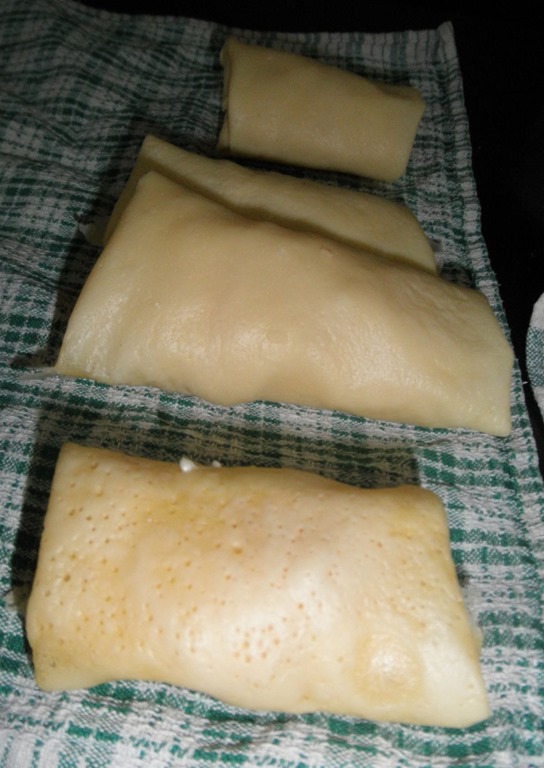
These may be frozen or refrigerated at this point – both of these processes work best if the blintzes are not touching each other. Otherwise they might stick and the outsides might tear.
Saute lightly in vegetable oil starting with the “flap” side down. Blinzes are done when the skin is golden and the filling is firm. Serve with dahi, sour cream, or with applesauce or another sweet condiment. This being India of course, any manner of savory, hot and sweet chutney might be used.
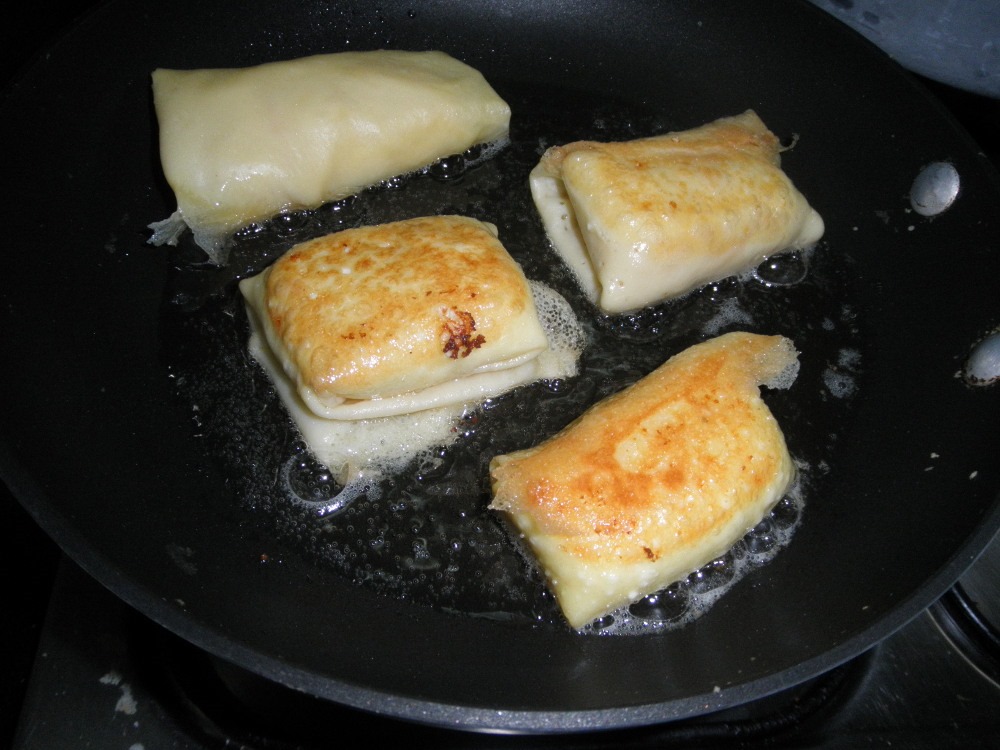
Moral of the story: where there is a will (and cheeses) there is a way!
PRECISION IN ALL THINGS?
First, for Davey – the wildly loud sofa pillow covers to coordinate with the wildly loud rug:
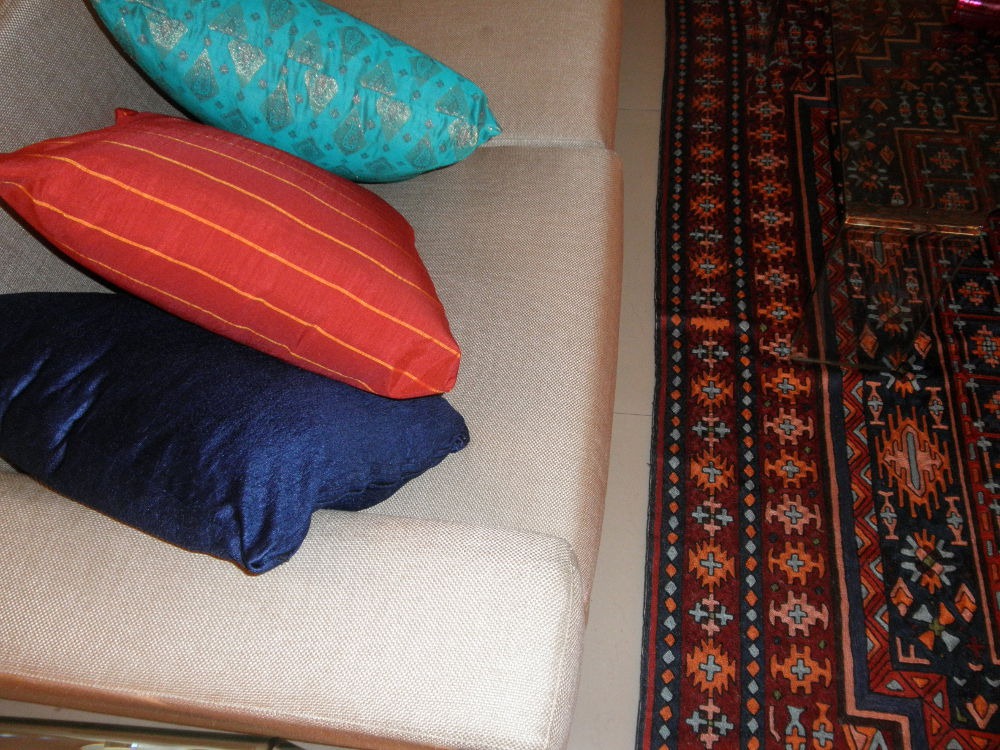
I picked the blue, red/orange stripe, and turquoise/gold from memory, and they work, even in spite of my equivocal photographic skills, and the flash-wash that makes the red pillow look paler than in real life. There are six pillows in total, two of each fabric.
Moving on, here’s progress through Row 103 of the Dozen shawl that I’m test-knitting:

It’s growing into a feral, interlaced dahlia of a design, which you can begin to see in this rough pin-out. Additional width will be more of the same.
And then there’s the Sarah Collins sampler kit, upon which I’ve started but have made no real progress:

Maybe I’ve ridden at liberty for too long, working at whim instead of direction. Maybe I’m too much of a tinkerer to do a stitched design laid out by someone else, or I have a touch of compulsive perfectionist in my soul – but for whatever reason, this kit is already driving me nuts. Don’t get me wrong, it’s a complete kit, thoughtfully laid out and as a reproduction, extremely well documented. The unruly element is me.
For example, it pains me to mindlessly duplicate the mistakes laid down by the original stitcher. See that twist column to the left of the frame? That’s verbatim to the pattern’s directions. But I tried, and tried, but just couldn’t let it sit that way. See the twist inside the frame, with the completed centers? I **had** to do it. I’ll probably pick out the offending imperfect twist and re-do it to match the edited bit.
There’s also working up the double running for this panel in two colors of sienna. The blue flower doesn’t bother me, I find that adorable. But using two threads for the framing spiral, alternating colors is maddening. It’s clear to me that dear Sarah might not have marled and finger-spun her threads properly, or perhaps ran out of one of the two shades, and that’s why the panel is done in alternating two-tone. It’s all I can do to grit my teeth and work as directed, because if I don’t, I risk running out of a color before the kit is done. Getting more matching thread, especially here, would be difficult in the extreme.
And then there’s the format of the charts. They’re huge, and orchestrate a stitch for stitch path, with every single one numbered. There are sufficient map pages in the thing to chart one’s way from Boston to Mumbai by rail (including the sunken parts via Atlantis). Paging through them is an exercise in where-the-heck-is-page-2b-left-got-to-now?” – then finding it under the sofa.
I’m also not fond of the indicated stitch logic. The paths described are not the ones I would choose. I tend to key off established bits, so that I can proof new sections against clean counts as I work. There’s too much “where no man has gone before” in this piece, with extremely long runs worked in advance of the growing body of work, and no way to confirm fidelity as one progresses.
Is there a moral to this story? Perhaps, not. But I have to admit that today’s post reveals that I’m a ruthless stickler for detail, caught up in color matching from memory, precision adherence to knitting patterns (where forays into originality are better left for after one has grokked the source design); but temperamentally incapable of similar fidelity to oh-so-obvious stitching directions. Mark it up as another character flaw, pass me a glass of wine, and move on, please.
IN WHICH WE BUY RUGS
I’m sure that ever since humankind first wiggled toes on a bare floor, and decided that something colorful and soft would be nifty to stand on, no rug dealer has ever lost money on a transaction. That being said, I am quite satisfied with value we bargained for today.
Our apartment here in Pune is very white. White unadorned walls, hard white marble floors, neutral color furniture and curtains, all blend together to make the comfy but totally featureless box in which we live. I did bring bright color sheets and towels, but we certainly could use more visual contrast here. So today we went out looking for area rugs to bring some color and brightness to the place.
After a minor comedy of misunderstanding with our driver (“rug” here means bed covering or bedspread), we ended up at a store specializing in Kashmiri handcrafts, where we looked at lots of small and mid-size carpets (aka “Orientals” in local English). We ended up selecting two items, to use here and then to send home to use there. Both are about 6’ x 9’.
One is an all wool hand-knotted rug in a traditional pattern:

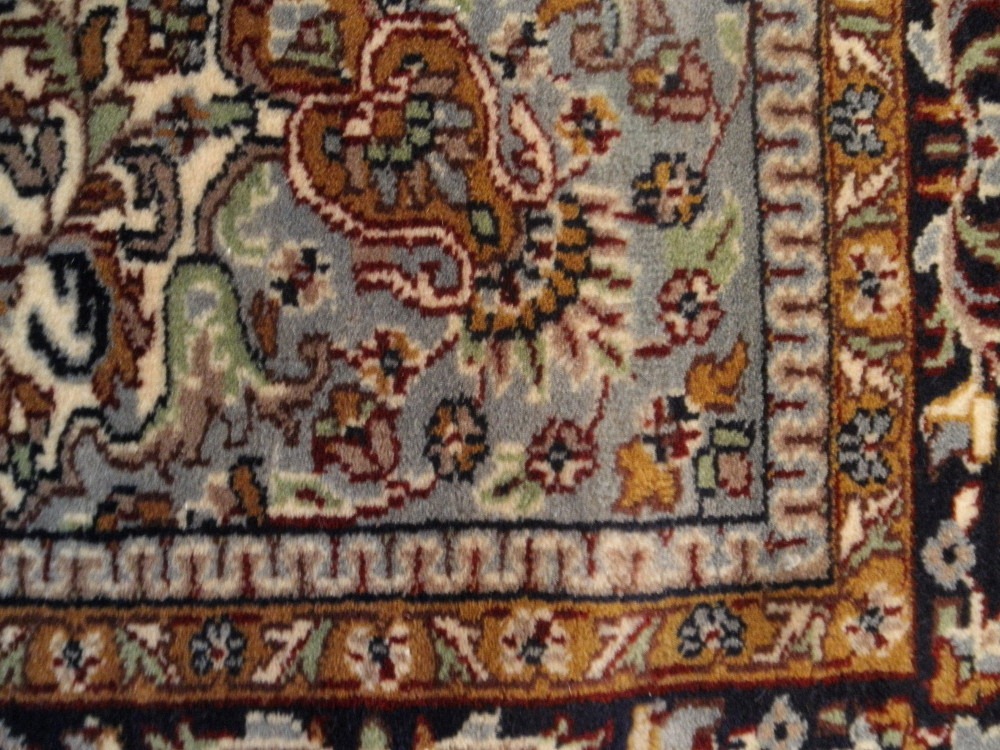
The main colors are oxblood, steel, and tan, with accents of celadon and ecru. It’s plush and thick, and a joy to walk on. I can’t remember the knot count, but from the unofficial hierarchy of all-wool rugs, this is an A-grade. There were a couple that were even finer, but not in all wool. I really like the minor variations in the pattern repeats – something that brings the design to a life not achieved by machine made rugs.
The other is a type less commonly seen in the USA. It’s all cotton, done entirely in tambour (ata needle) embroidery. The stitching is so dense that it totally covers the ground cloth with work that closely resembles chain stitch:


Also handmade, it’s backed with a second layer of heavy cotton. The colors are garnet, sapphire, gold, and orange, with accents of leaf green, baby blue, brown and white. It’s no where near as thick as the wool rug, but it shines like a jewel. It won’t last as long as the knotted rug, and isn’t suitable for heavy traffic areas or for under chairs that move around, but it’s perfect for our living/sitting area with its fixed furniture.
Next I go to a textile vendor to buy some similarly brilliant yardage, to sew new covers for the brown and ecru throw pillows on our sofa (or have them sewn by a local sewing-shop).
I feel brighter already!
SO MY STOLE DOES GROW
I’m in the home stretch now, well past the line of reflection in the center. The figures at this point are straight repeats of those already accomplished. Plus I’ve long since aged off the line by line prose instructions. It’s far easier – for me at least – to keep track of where I am and spot check my progress against a visual chart than a mass of line by line directions.
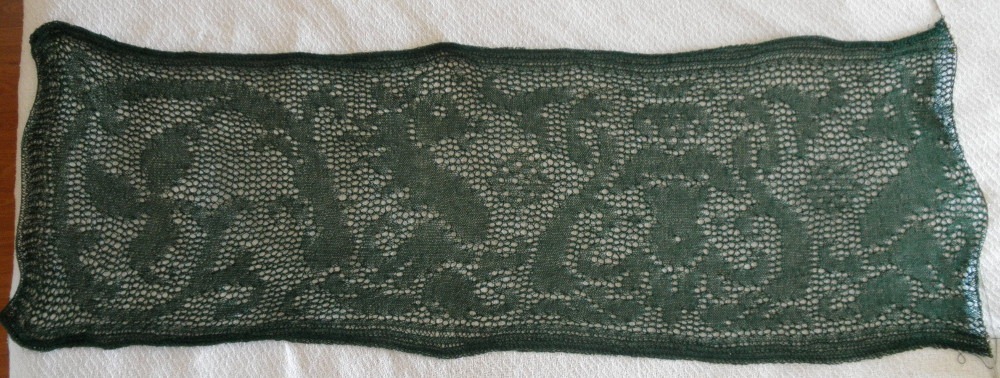
And here’s a close-up of the center mermaid for Kathryn and Hastings:

The first shot above was taken with the stole patted out on my bed. It’s worth noting that it’s a king-size bed, and the stole as it is right now stretches almost entirely across. I don’t know how I’m going to block it here because I can’t pin it to the marble floors. I might have to wait until we get a rug, provided of course, the rug is large enough.
In other news, India continues to delight and baffle me. A new found friend gave me a flyer for a western-style bakery that does home delivery. Tired of supermarket bread and my own feeble attempts at roti and parathas, we chanced it. “Look! Bagels and Danish!” Here’s what we got:
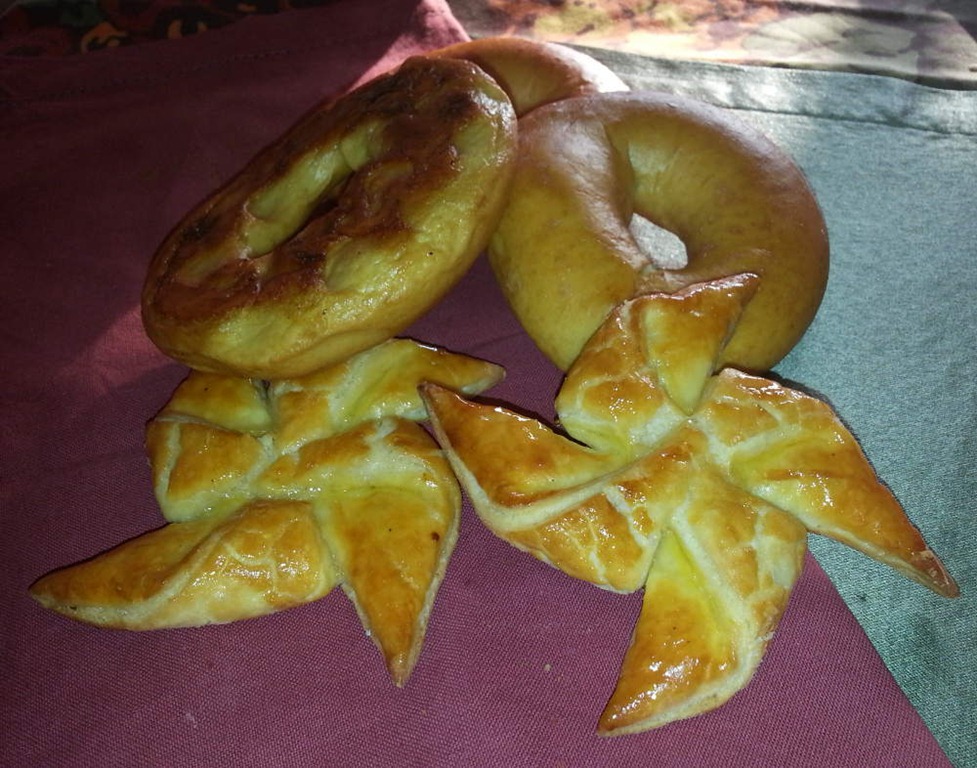
The Danish were nice – flaky, but very sweet. These are fruit. The cheese ones were also flaky, and being less sweet, even better.
The bagels though were open to wider interpretation. As a toroid breakfast bread, they were fine grained, more like a pierced Pullman loaf than a bagel, clearly made from a raised dough with more butter in it than the bagel standard. Also they were neither boiled nor crusty. However they did go nicely toasted, with butter and cheese. The verdict – o.k., certainly a better start to the morning than the local equivalent of Wonder Bread, but are perhaps an bagel incarnation informed only by pictures, conceptualized and baked by someone who has never eaten one. But labels are only labels. I say pass the “bagel” – tomorrow’s will go great with Nutella.
 String-Or-Nothing