THIRD TIME IS THE CHARM
I’m still plugging away on the Mixed Wave pattern scarf for Elder Daughter: It’s based on a cowl pattern of the same name.

Now, why has it taken me two full rip-back and start again cycles on this one? Mostly because I can’t resisting tweaking here and there when I work from a pattern.
In this case, the recipient and I decided that a narrower piece was more desirable for wear with the target coat. So I removed a ten-stitch unit. Then we jointly decided that instead of two contrasting colors, we wanted to use three, in combo with our neutral color (black). It’s hard to see here, but I’ve got a cranberry red, a maroon, and a variegated that ranges from cranberry through maroon, with shots of turmeric here and there. After that it was the traditional matter of Not Paying Attention, forgetting to move counting markers, and getting incredibly tangled from all of the flipping as the short row segments (the almond shapes) are formed*. And let’s not forget the last forgetting – neglecting to make sure that stitch count was stable after every left and right edge segment pair.
But I’ve got it well in hand now. I’m even beginning to remember to alternate left and right leaning almonds, along with choosing which segment to work as an almond, cycling through the colors, and remembering to work the row-beginning decreases and row-ending increases that give the piece its rhomboid slant.
I will continue on this piece, making it a bit longer than the original, and eventually either graft it into a true infinity scarf, or finish it off as a straight scarf with pointed ends. We’ll see how my well my composure handles the all-too-frequent stopping to untangle.
* Yes, I know the trick of always flipping clockwise on front side and counter-clockwise on wrong side rows of the short row sequence. It isn’t helping.
IT’S GETTING CLOSER!
Don’t look behind you and duck, I’m only talking about The Second Carolingian Modelbook. Here’s the tentative cover

It’s getting closer to publication. I am NOT ready yet to take pre-orders, but when I am, I’ll post here.
What it will have:
- 180 or so pages, including 75 plates of graphs – 50 line unit, 25 block unit.
- Over 250 individual patterns, with museum citation sources, degree of fidelity to the source, and (when available) date and provenance, plus height and repeat width stitch counts.
- Articles on stitching methods, commonly used names for the styles, etc.
- Index, source bibliography, research bibliography
- Photo illustrations of some of the patterns, worked.
To chivy myself along towards completion I post my to-do list:
- Finish the description and how-to photos of the meshy stitch, so often used as background in historical voided pieces

- Finish the last few entries in the index
- Correct some of the earliest drafted pages, updating a typo in the background frame
Once these things are done I can do final prep for electronic publication, and finish up the legal/infrastructure needs of setting up the business end of the offering.
I know everyone has been VERY patient. I promise the thing will be worth the wait.
FLYING HIGH
Regular readers here know I rarely post anything work-related. Today however, I make an exception.
The team here at CyPhy Works has launched a kickstarter for a new photography drone – the CyPhy Worsk LVL 1 – a hex-copter simple enough for anyone to fly. LVL 1 is the first drone for absolutely everybody.

Click on the photo above for a cool video, or here for the full Kickstarter page. I’m enthused about the thing because I’m really proud of and impressed by the men and women here who invented it.
LVL 1 is controlled with a simple Smart Phone app. It employs a novel flight technology, so photos and videos stay steady and true. There’s a whole raft of tech features including geo-fencing –the ability to pace off a flight arena, to keep the thing corralled in a manageable area, and the ability to post your pix and vids to your social networking platform of choice in real-time. It’s a ton of fun to fly, and even has practical uses beyond hobby, nature, and family photography. For example, it can be used to check out roof damage after a storm, or to inspect solar panels, gutters, or other inaccessible home or business areas.
Plus, as Helen our Fearless Leader says – “Robots are cool!”
IN WHICH WE BUY EMBROIDERIES – PART I
Just back from a five-day Diwali break trip to Agra and Delhi. In Agra we toured the Taj Mahal, Agra Fort, Ram Bagh (a magnificent Mughal era garden), and Chini Ka Rauza (mausoleum of Shah Jehan’s prime minister Afzal Khan Aalmi, himself a noted poet). In Delhi, we did a hilarious, whirlwind auto-rickshaw tour of Government center area, including the India Gate, houses of Parliament, and the embassy area; then a day in the National Museum, the Crafts Museum (a must-see if you are a weaving or textiles fan), the Red Fort, and at the end – a shopping trip to Dilli Haat. If you are ever in Delhi, insist on going to Dilli Haat. Your driver may try to steer you to a different crafts or souvenir store, but stand firm. You’ll find better quality goods at much lower prices, and without the “foreigner tax” so often encountered elsewhere.
The week was unforgettable, and I’m sure I’ll be posting some select tourist pix over the coming week. But folk here are reading for needlework content, so I’ll lead with that.
I wanted to bring home examples of Indian needlecraft that are a bit more interesting than the usual items sold to tourists – the hastily stitched pieces of sketchy construction in lurid colors. I had wanted to find examples of Kasuthi, of course, but so far, I haven’t. Perhaps when we go a bit south in Maharashtra later in the spring I’ll find some. But other than the iconic piece at the National Museum, pictured on the cover of my Kasuthi book, I haven’t seen a single example. Nor did I find quality shisha (mirror) work, although I did see a couple of pieces locally here in Pune that I may go back to buy. In crafts, like in all other areas of economic opportunity, bad drives out good. It’s hard to find honest quality pieces when less well executed items command the same price. But I did look hard, and we did buy several items, almost all from government designated regional or ethnic artisanal cooperatives in fair trade markets or sponsored cooperative stores. Here is the first selection:
My dodo curtain. Now anyone can find elephants or peacocks,even tigers, on cloth here. They’re everywhere. But this cotton curtain (about the size of a king size bedspread) is totally covered with roundels inhabited by dodos. Why dodos, I haven’t a clue. But in addition to the pudgy charm of the off-beat motifs, it was the best stitched and best composed of the large pieces I saw. My big disappointment is that I didn’t get a provenance on it, but I suspect Uttar Pradesh from the style:


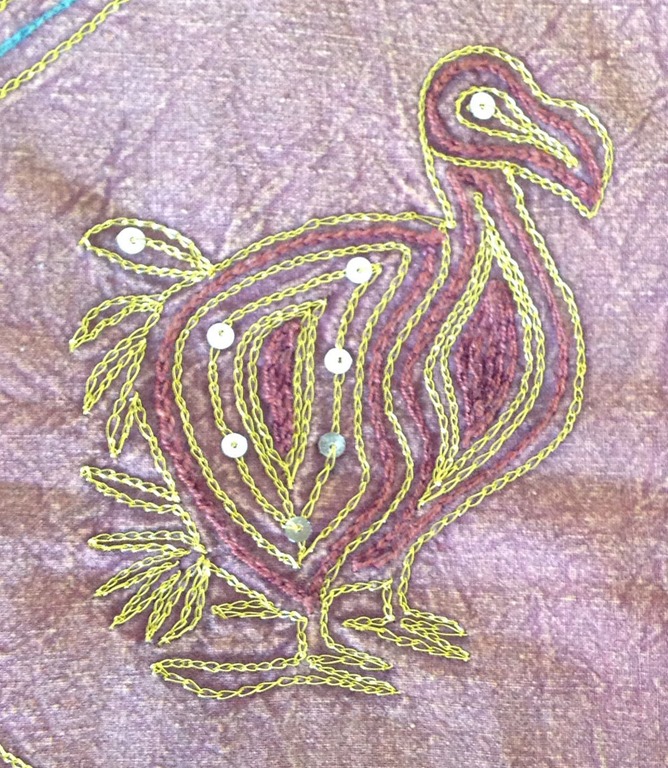
The pictures above look rather pinkish, but the actual background color is more dun than salmon or orchid. The dodos are worked in tambour-worked chain stitch in gold and brick, olive and mustard perle cotton on a double-thick cotton ground, then heavily washed. The sequins are affixed along the lines of the gold stitching. That along with the treatment of threads on the back clinches the working method for me.
I hope to mount this as a room divider curtain on a brass rod between our living room and dining room. Long ago there was just such a brass rod in that wide opening, and now I have something worthy of replacing it.
Long live the dodo!
IN WHICH WE WANDER ABOUT
We’re still learning the ropes of our new adopted home, but we took off some time last week before Younger Daughter started school today to explore some of the sights of the Pune area. Thankfully, Elder Daughter was armed with her camera, because I’m pitiful at taking pictures.
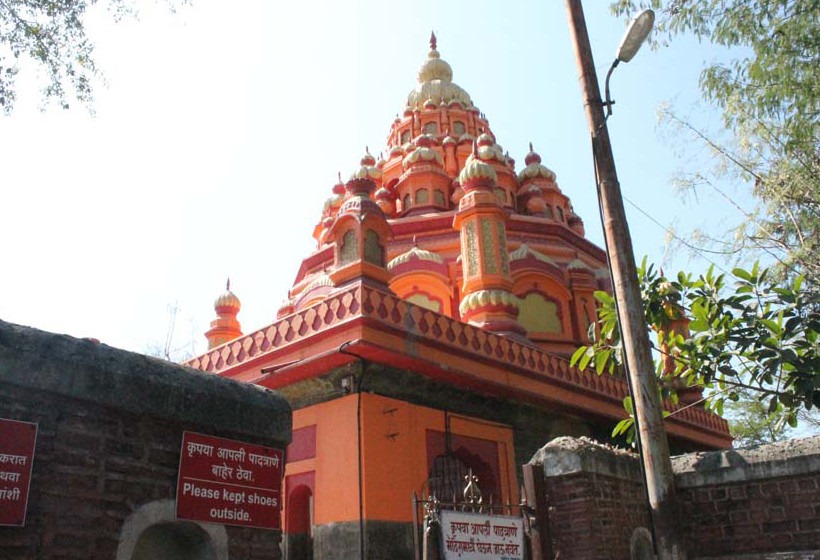
On Wednesday we visited Parvati Darshan, a temple complex on a hill in the middle of the city. Structures at the complex date to the mid 1700s, and were constructed by the Peshwas, the royal rulers of the Maratha Empire, formerly centered in this area.
There was a small cultural museum at the base of the hill, displaying Peshwa dynasty artifacts, including weapons, portraits of the ruling line, coins, and everyday items. The climb to the 2,100 foot summit was a short uphill hike ascending wide ramps and stairs, with stonework to either side.
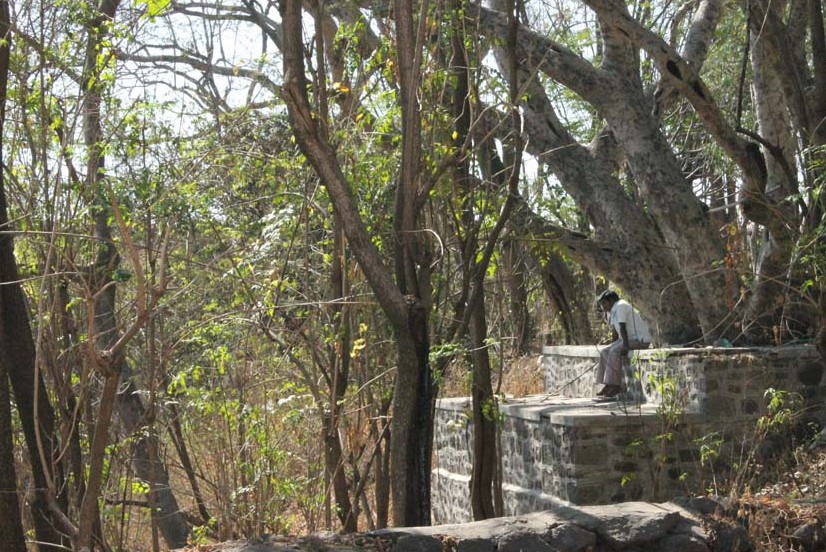
The Vishnu temple at the top is spectacular:
And the view of the surrounding city is also well worth the ascent, although I don’t have any snaps of that to hand.
With the quick climb behind us, our driver Rupesh suggested additional exercise – this time a hike up to Singhagad, one of the massive fortifications ringing the city. These forts also date back to the 1600s and 1700s. They changed hands many times and were the sites of historic battles, sieges, and massacres as the Maratha forces vied with the Mughals for control of the region.
Singahad Fort’s summit is over 4,300 feet – about 2,625 feet above the surrounding country, an imposing presence with a commanding view. To be entirely fair, we didn’t hike from the base. There was a twisty switchback road about 1.75 car-widths wide that took us most of the way. One side of the road was the cliff, the other a haphazardly defined margin of scrubby bushes, with a deadfall just beyond them. Since this was a two-way road with occasional bus traffic, it made the day all that more exciting. The last several hundred feet though was on foot, up another series of ramps and stairs, winding around the top of the hill.
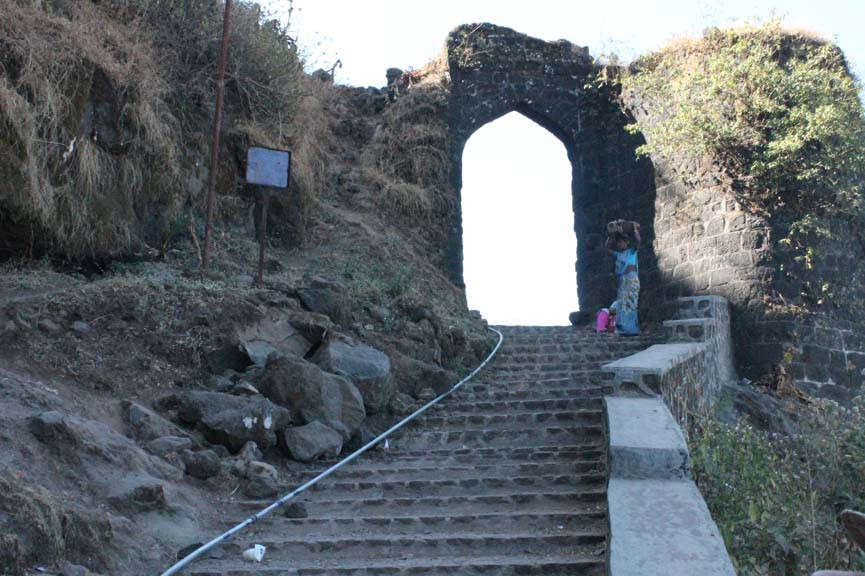
The climb does not dissuade path-side snack sellers, who ply their trade at every landing and vista on the way up. The white city in the distance is Pune.
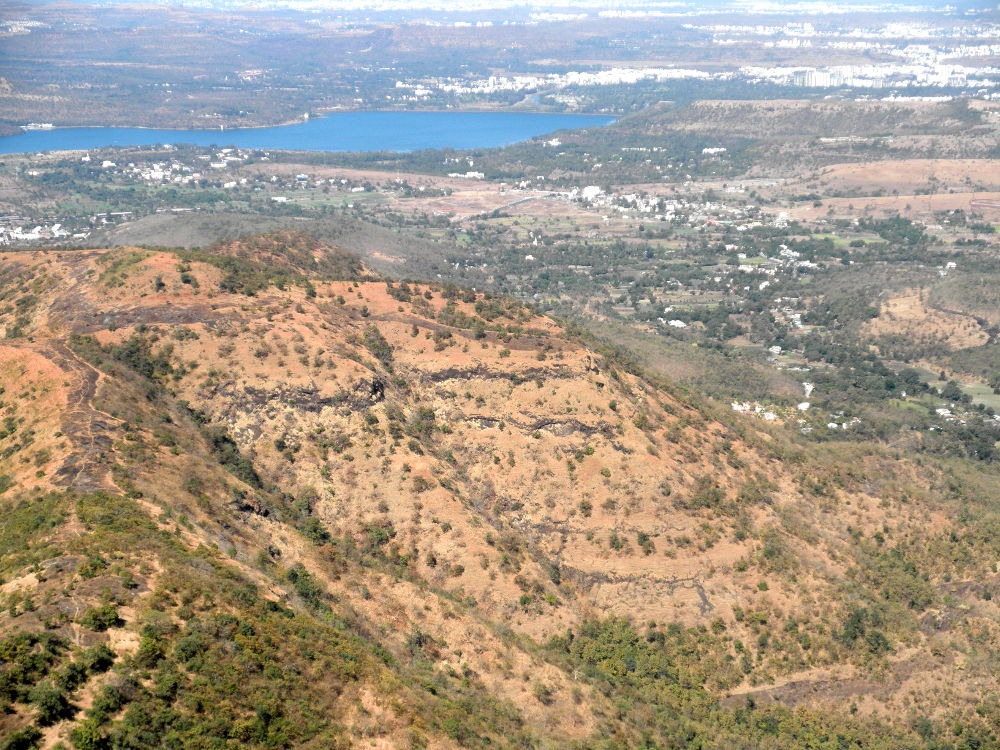
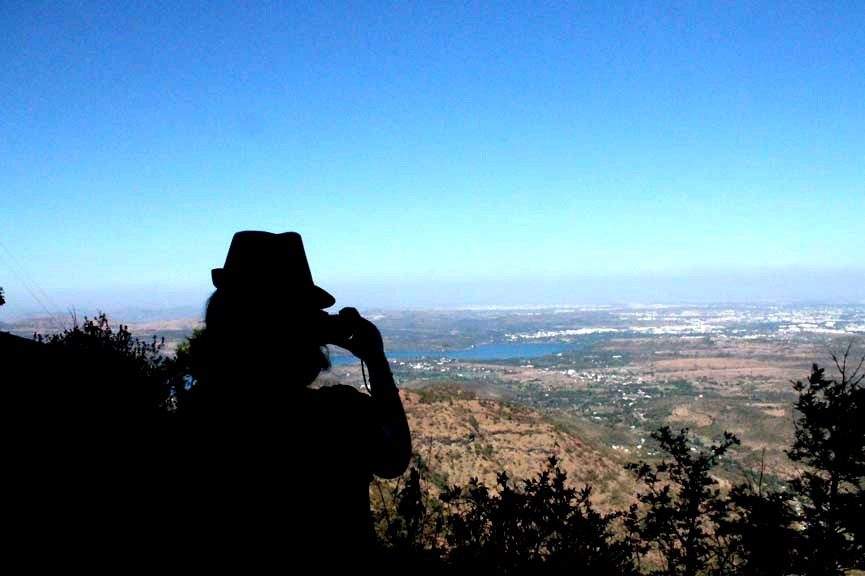
Around every breathless bend was another spectacular shot:
We went out touring again on Saturday. First we went to the Rajiv Gandhi Zoological Park. We went early, just as it opened. The morning was cool and breezy, and the zoo was quiet and shady, compared to the bustle of the streets. The larger animal exhibits are well spread out, and we enjoyed strolling along the zoo’s lanes to find them.
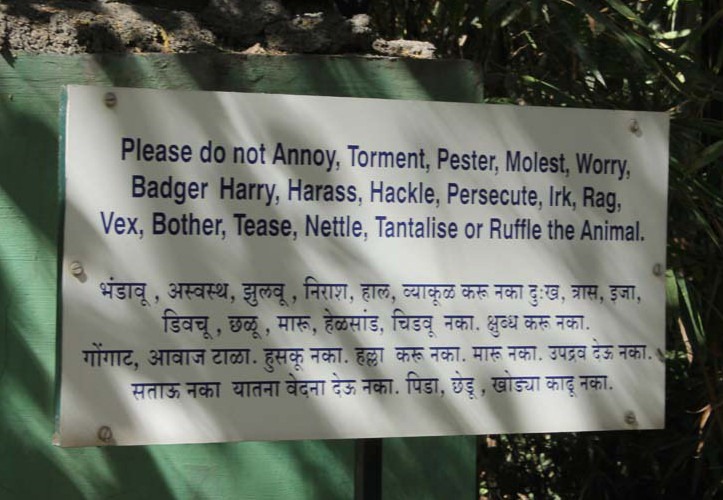
Having been warned, we avoided the thought of ruffling the tigers, guar, wolves, and hoofed stock. Snake hackling was also right out.
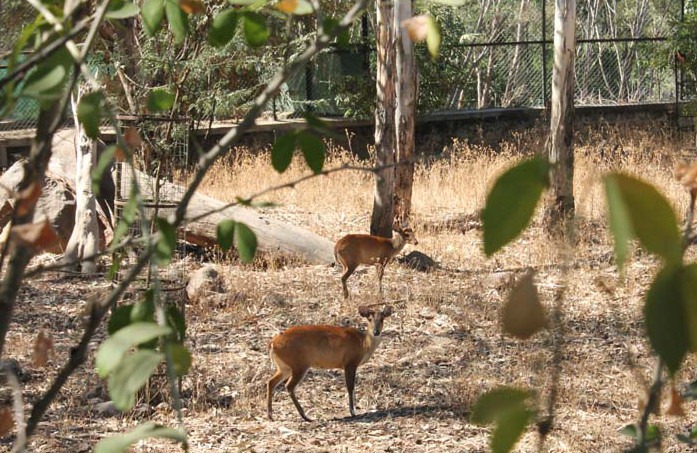
You’ll have to take our word for it though that we saw elephants, macaques, and cobras, too – but all were camera-shy.
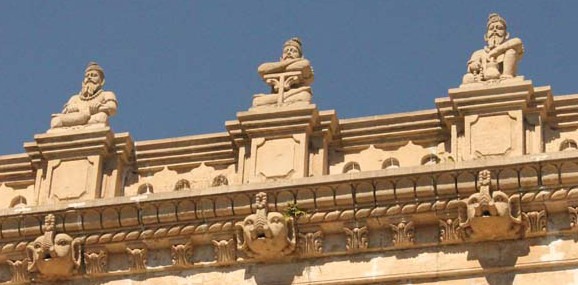
After a pleasant morning strolling about, we went to another historical venue. This was a memorial to Shinde Chhatri, a heroic general of the Marathas, who served the Peshwas from 1760 to 1780. The building has been recently restored, inside and out.
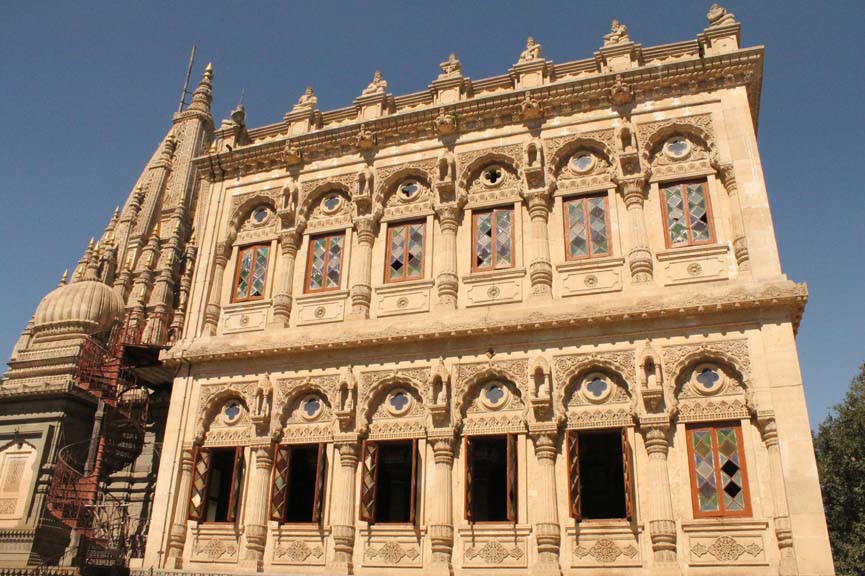
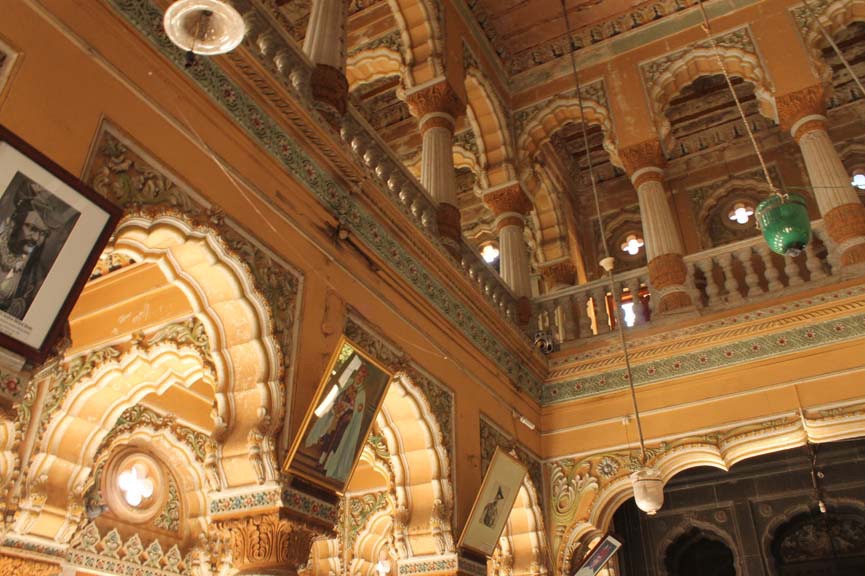
The caretaker explained to us (as best he could) that the line of notables descended from the general and his family (the portraits lining the walls) persists to this day, and remains active in governance and politics.
Needless to say, I’ll be reading more about India’s pre-Colonial history, especially that of the Maratha Empire.
MOTLEY DONE!
And it’s snuggly!

Not only is Motley officially finished:
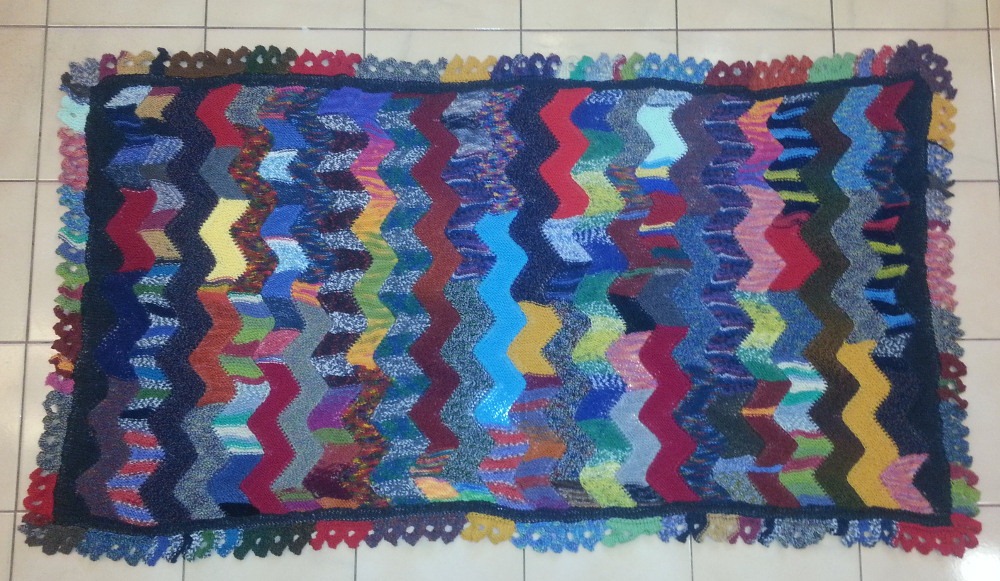
I’ve also posted a full pattern for it in the Knitting Patterns section, above. The pattern also includes directions for Hollow Point Edging – a new, quasi-original finish. Complete with a short-rowed turned corner, in both chart and prose.

How did the end of this project go? Quickly and not very quickly at the same time. Knitting this was a breeze. I cast on the week before Thanksgiving, and finished on Friday last, minus a week spent knitting fingerless gloves. That’s a rather large sofa throw in fingering weight in three weeks of evenings. BUT the last two days were a slog:

That’s one evening’s worth of orts from the Dreaded Darning In The Ends phase. No doubt about it – Motley had a lot of ends. I looked into various knit-in as you go methods, but I wasn’t convinced of their durability in a blanket, so I did it the hard way. Still, I had nowhere near as many ends as the look of the blanket presents. Remember, most of my yarns were leftovers from self-stripers. That means color changes without ends. A joy!
One last note – although I usually block my finished pieces, I did NOT block Motley. The reason I didn’t is because of the wide variety of yarn densities and gauges used. I was afraid that while everything is nice and flat now, if I were to block the thing, each fragment would behave differently, leading to cupping, sagging, or differential stretch. So I punted and let it it sit, as is.
I do hope that someone else attempts this one. It’s fast, it’s fun, and if you use up that dratted bag of leftovers that’s taking up space in the back of your closet – it’s practically free.
HECTIC!
It’s been a hectic several weeks here at String Central, encompassing major transitions and a very small crumb of Hurricane Sandy.
First on the transitions – I’ve left my job to concentrate on our India migration preparations. I’ve not made a secret of being a professional proposal manager, but I’ve avoided naming my former employer here to date. I will miss my colleagues at iRobot, where I worked on the defense and safety side of the house. I supported robotics research; and the various robots used for bomb disposal, infantry support, and nuclear clean-up. It’s hard to beat the combo of brilliance, passion, and creativity at a place like that, or knowing that the work you were doing helped people save lives on a daily basis.

In the midst of emotional upheaval of leaving, the recent storm provided a reality check.
We had it nowhere near as bad here as folks further south in New York and New Jersey. Shout-outs of support and sympathy to those in my childhood neighborhoods of Sheepshead Bay, Brooklyn and Teaneck, NJ (Bergen County); to Long Time Needlework Pal Kathryn in New Jersey and to Mathilde, also near the landfall area; and to all others suffering the storm’s aftermath.
AN ASIDE:
Please join me in offering assistance to those in need by donating to the charity of your choice, or to the American Red Cross: http://www.redcross.org/
Unfortunately, times like this bring out lots of bottom feeders. I strongly suggest heeding the advice here before unlimbering your wallet.
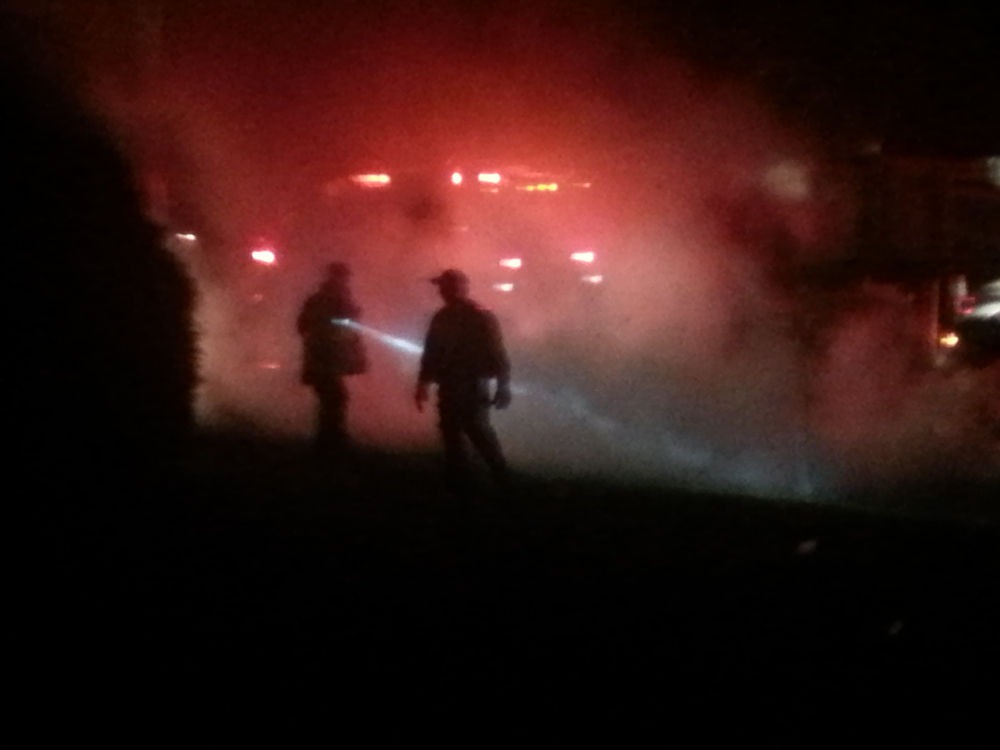
We were without power until Thursday here – the result of a small but spectacular power line fire in front of our house, that occurred at the height of the storm. It took about 2.5 hours before the utility had a truck free to turn off the electricity. In the mean time, we had a leaping, sparking power line; and a spreading turf fire. Luckily the ground was wet, so the fire burned down into the lawn instead of spreading the short distance to the house and cars, but it was so intense that the copper itself burned (green flames) and the turf vitrified into solid, red-hot masses. When the power was safely out, the fire department came to dig out and extinguish the blaze. The only casualties ended up being a swathe of grass, our collective nerves, and some refrigerator perishables that didn’t survive the lingering power outage.
Thanks to the first responders who came to shepherd the hazard and stayed with it through the worst of the wind, and to the crews that dealt with the fire and its aftermath.
We still have no land line phone, but that’s just a minor annoyance.
Halloween did happen here, although with a dark street, only the most intrepid and candy-hungry kids came to our door. But we were ready:

(Sadly, the head sensor gizmo on Younger Daughter’s pumpkin Dalek did not survive the first wave of trick-or-treaters).
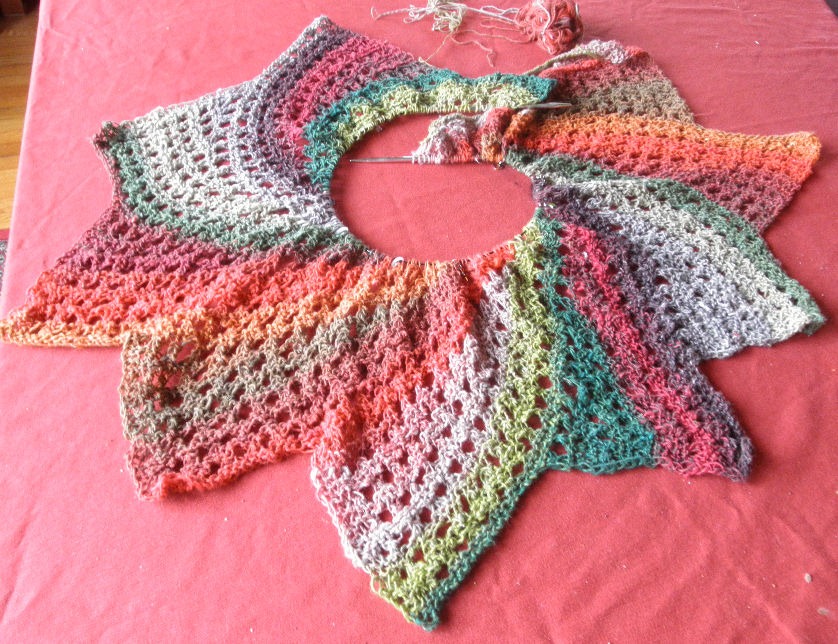
And finally, after all this blather – report on what needlework progress I was able to manage by candlelight:
The finish of the cotton Kombu Scarf:

And most of yet another Lattice Wingspan:
I plan to invest my new found daylight hours in additional post-storm clean-up, attending to India related preparations, fixing the vintage yarn chart/needle size chart for reposting here, studying Hindi, and working to get T2CM out the door. In more or less that order.
INTERNATIONAL GLOSSARY!
The international glossary of knitting and crochet terms formerly posted at wiseNeedle is back up! It will be a permanent part of the standing offerings here, accessible via button from every page.
Enjoy!
UPDATES CONTINUE
Added several more rescued patterns from wiseNeedle to the Knitting Pattern link above, including:
- Firefighters’ Socks
- Impossible Socks
- Pine Tree Toe Up Socks
- Jelly Bean Toe Up Socks
- Ch’ullu Hat
- Knot-a-Hat Earwarmer Band
- Spring Lightning Lacy Scarf
Will continue to plug away. Reminder – please, if you are thinking of linking to these, please link to the source page rather than the individual PDF. I can’t guarantee that the PDF links won’t change.
A MAGNUM OPUS!
I’m delighted to announce that my Long Time Needlework Pal Kathryn, aka Mistress Kathryn Goodwyn, OL (Kathryn Newell) has released her labor of love. She’s been working on re-issuing her Flowers of the Needle collection – reprints of seven historical embroidery pattern books from the 1500s. After years of labor, retouching the originals that made up her initial publication – she is done, and the series is ready. You can enjoy it here:
http://www.flowersoftheneedle.com
She has also reposted her German Renaissance embroidery book reproduction, and her treatise on voided style embroidery, known in its modern form as “Assisi Work.”
Best of all – she’s releasing all of her documents as free downloads. Pop on over there and be amazed at Kathryn’s diligence and bounty! You’ll find ample materials there for all sorts of historical embroidery and lace styles, plus lots of inspiration for modern reinterpretation in knitting, filet crochet, or other crafts.
Now we’ll all have to join her in her standard litany – “Too many centuries, too little time!”
Yaay, Kathryn!
 String-Or-Nothing