IN WHICH WE BUY FURNITURE
On Saturday past, for something to do, we wandered out to visit several antique and decorative item shops nearby. We’ve been looking for smaller items to bring back home:
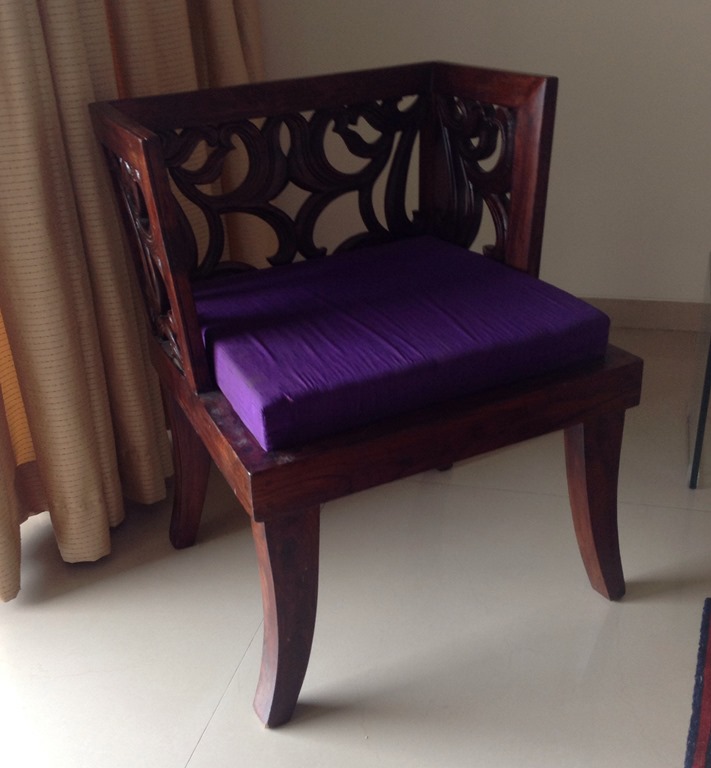
We’ve been looking for a second chair for our living room for a very long time.
We found this in Just Antiques, on North Main Road here in Pune. They specialize in pieces made from repurposed wood. This piece is aged teak. The back is a recycled piece of interior paneling or carved window screening. The origin of the legs and seat platform are less discernable.
When we get home we’ll lose the egregious purple foam cushion. I’m now on the lookout for a length of embroidery, a small weaving or lightweight rug that can be used to cover a sprung cushion. I think that a very thick knife-edge piece with a center button would look far better than the slab of purple cheese that’s there right now. Perhaps next week’s trip to Kerala and the beach will turn up something appropriate.
We also got a small shelf/coat rack at Ra in Kalyani Nagar. That is destined to go behind our front door, also in the living room. It’s a simple wood shelf, with antique cast iron side brackets sporting pierced ornamentation, and a wrought crossbar below the shelf to which is attached four large wrought coat hooks. We have no front or reception closet, and it will be nice to have a place to hang guests’ coats when they visit. I do not show pix today because it is securely wrapped for shipment, and I don’t want to undo its bubble-wrap cocoon.
SOME MORE SAMOSA
The Samosa Vest is marching along quite nicely. I’ve done it entirely ad hoc – no advance planning, no writing anything down (which is refreshingly liberating, for a change). It’s been sort of sculptural, with problems worked out on the fly. Still – there weren’t many. Here are the front and back views:

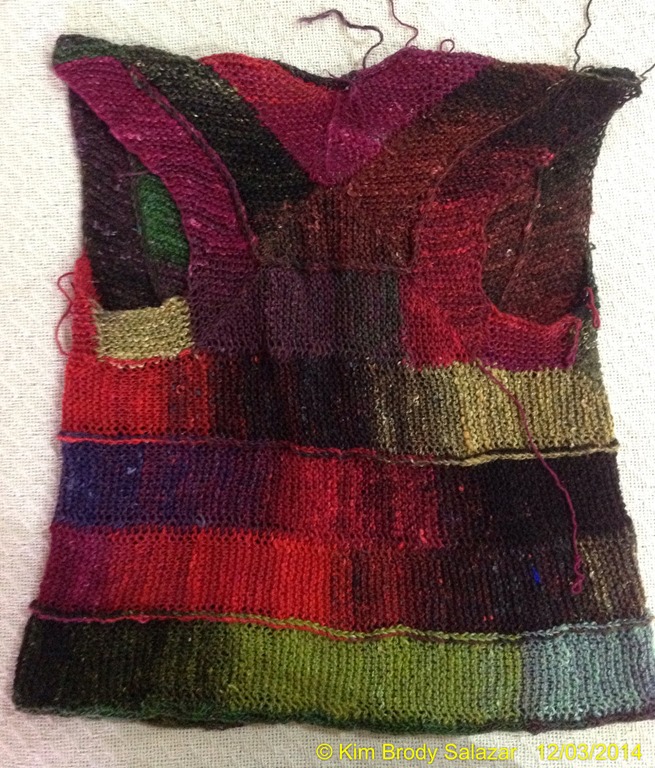
You can see that I’ve finished the body strips, wrapping the three primary ones around the front. I did some minor shaping on the fourth, to add a bit of of a bust dart to the general shape. Then I filled in two little patches under each arm. After that the front was substantively done. The next step was to pick up and knit the next strip, which outlined the upper back. I continued on from there, until the space in the center became too small for two mitered corners. At that point, I winged it – filling in the center back with a smaller shape, partially contoured with short rows, and a center-back join. The result is rather like a racer back, and is quite flattering on Younger Daughter (modeled pix when done).
I grafted off or picked up and knit the shoulders. Finally I worked an i-cord edging around the entire outer edge to give the body a bit more firmness, and for a more professional finish. It’s much nicer than the flabby chain selvedge edge that was there before.
Now I’ve got one last problem – there’s a Romulan (or Fire Kingdom) point at the top of each armhole. I picked out one side and re-knitted it, but the point remains. Time for some more noodling on possible fixes. Once I’ve got that repair done, it’s i-cord around the armhole edges, and I’m finished.
Suggestions for possible fixes would be most graciously accepted!
SAMOSA VEST PROGRESS
As you can see, I’m making quick progress on my Samosa Vest. Right now it’s just a single confusing strip of garter stitch knitting, with a couple of mitered corners and some angles thrown in. But when you pat it into shape, the concept emerges:

Ignoring the confusing letters for the moment, you can see the basic outline – the vee-neck, and the bottom edge that defines the width of the finished piece.
I cast on 13 stitches at A. I knit a garter diagonal band, increasing on one side of the strip and decreasing on the other every other row to achieve the angle. When my neckline was deep enough (B), I switched to working straight – a plain old 13-stitch strip until I was about 2 inches shy of my desired length. Then I worked a wrapped short-row miter, making the corner at C. I then knit across the bottom edge of the front, across the entire back (unseen, from D to E), then back across the front to the center point. Again, about two inches shy of the center point, I did another miter (F). After that I worked straight up to point G. I reversed the shaping of my initial angled strip to create its mirror image, from G to H.
Then exactly as I did in my Motley blanket, I cast off 12 stitches, added 12 and proceeded to work the second strip, knitting it onto the established edge strip as I went along. I worked miters again at points K and N. You can see I’m past O, headed back up to the shoulder where I initially cast on.
I will continue in this manner for one more strip. That will make the shoulders of the piece about as wide as the shoulders of the target tee-shirt I am using as my size model. At that point I’ll have to figure out how to fill in extra bits on the sides and in the center of the back. But so far the thing has come together exactly as I envisioned. And quickly, too!
JUST BECAUSE IT’S ALMOST DONE…
…is no reason to rip it out because some other fool idea has wrestled you to the ground, wrapped yarn tendrils around your brain, and has refused to let go.
So.
I started making a Lightning Shawl, one of the 10-stitch variant family of patterns posted by Frankie Brown.

I only have two skeins of Noro Taiyo Sock yarn. That’s barely enough to make a skimpy shawl. You can see I’ve got five strips done. I have enough yarn to complete about eight pattern strips (and maybe a bit more) – a couple strips narrower than the ten strips specified by the pattern.
You can see that I was pretty far along, well into my second skein, and the growing shawl looks pretty good. The drape is nice too. In fact I’d recommend this yarn for the Lightning Shawl, but preferably 2.5 or 3 hanks, so that the final piece is of generous proportion. But I digress.
This afternoon after knitting on the thing for a whole week, I ripped it out. Every stitch. All that’s left is a pile of yarn balls and my two needles.
I’ve got this mad idea that I have enough yardage here to make a cropped, boxy vest type thing. And I want to do it somewhat along the lines of my Taco Coat:

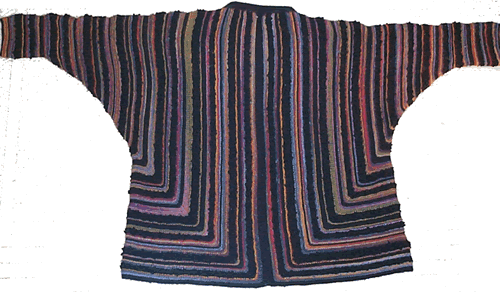
Now this isn’t going to be as huge as the coat (that’s big enough to be a blanket with sleeves); and I probably will make it in one piece rather than a right and left, joined at the spine. But it will use the same idea of the outside edge and in working logic. The first strip will proceed from the shoulder into a wide V-neck, and down the front center, then mitered at 90-degrees, across the bottom of the hem and all the way around the back, returning to the front, climbing back up the front center and ending at the opposite shoulder. If I do this right it will work out not unlike a Surprise Jacket, with the only seaming being across the top of the shoulders..
I have no idea if this is going to work or not. Nor am I going to draft up a pattern before I begin. I’m going to cast on for that outermost strip, and as I go, compare it to a t-shirt with the boxy fit I am looking for. And then just wing it.
If nothing else, this project (code named Samosa Vest*) should make for some entertaining reading here, with lots of Doh!-moments and a few painful lessons learned.
* Just because. I am in India, after all, and a first cousin to the Taco Coat should also have a wrapped-snack-food name.
NOTHING IS PERFECT
And foremost among the imperfect is me.
Case in point:
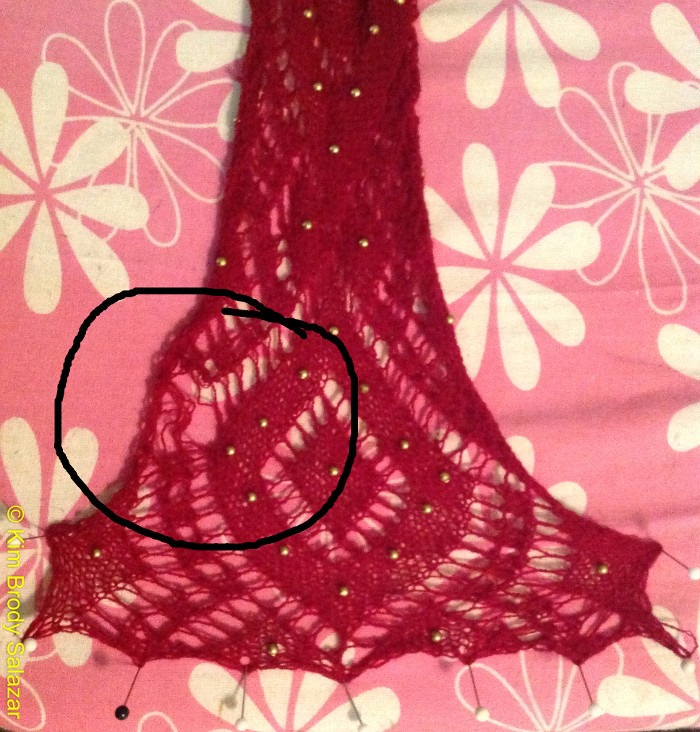
Here you see my beaded red lace scarf. I wanted to relax it a bit prior to adding on the deep lace edging, in order to make doing so easier. So I began pinning it out for steaming. Pressing it is right out because of the beads, but steaming should have set the acrylic nicely, smoothing out the selvedges for ease of access.
AAAGH!
It’s obvious that I as I was tooling along nearing the finish line I didn’t pay attention. I missed catching all three loops of a tricky double decrease. When I applied light tension with the pins, the unsecured stitches popped out.
The lace patterning is a bit complex here, otherwise I’d consider just mounting the fallen stitches on DPNs and re-knitting that little bit, securing the final stitch with a bit of darning. But I think that I’ll probably have to unpick the cast off row (here at the bottom of the photo), then unravel the final half motif or so, remount all the stitches, and re-knit. Provided of course that this is the ONLY mistake of this type in the entire 5.5 foot long piece.
Moral of the story – overconfidence is bad. Check your work. Give a light tug every now and again to make sure your stitches are true.
RECENT FINDS
Of course, you can’t be in Another World without exploring the retail options. India is a textile lover’s paradise, with all sorts of fabrics both hand and machine woven, ranging from the humble to the outrageous. I can’t buy it all. In fact, I can’t buy very much, especially compared to the vast volume I covet. But I am keeping my eye out for special items, with special purposes in mind.
First, I’ve written about Kasuti embroidery before. I’ve been on the lookout for an example, but so far, I’ve not seen anything. Not so much as scrap. Perhaps when we go to Kerala next month we’ll see some, but I suspect that given its intricate nature and simple presentation, it is not being made in quantity for sale any more, because other more showy work of less labor can sell for more.
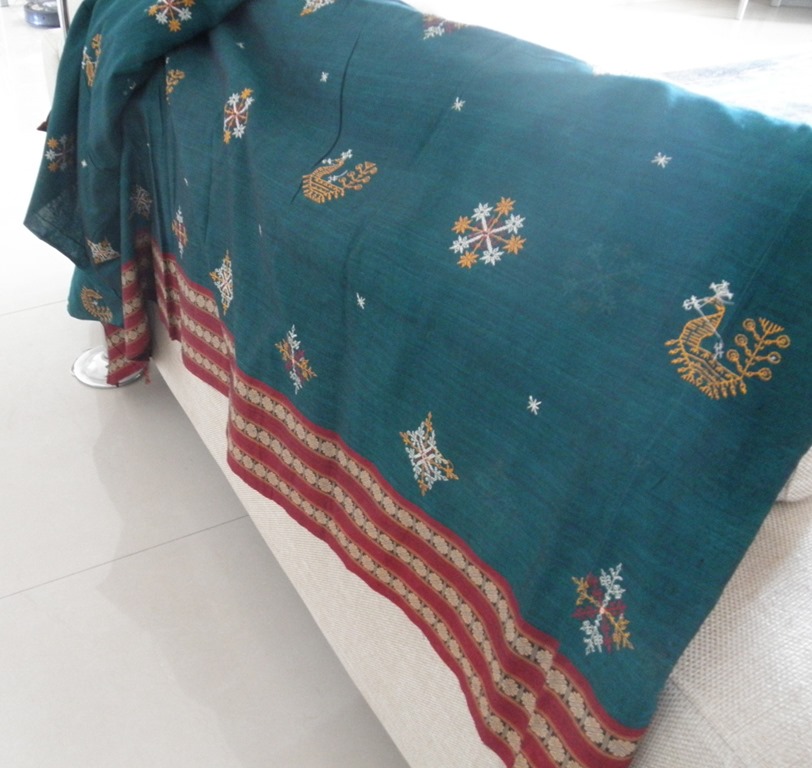
But I did find this piece. It’s NOT hand-made. It’s machine embroidered sari, using traditional colors and patterns on an all-cotton ground. In terms of scale, the stitches are about twice as large as the museum pieces I saw here in Pune, and in Delhi. But it’s unmistakably part of the heritage, and the seller was very surprised that I recognized it as such.
I have also found some trim for my long-delayed library curtain project. The 1 inch wide red paisley at the bottom is actually hand-stitched. I’m not sure what to do with the blingy gold at the top, but it was so over the top and of such a typical Renaissance configuration, that I had to buy it. A use will present itself, I am sure. Aside: most borders and trims here in India are sold in single piece 9-meter lengths, the optimal length for application onto a standard sari.

Also at the same store as the red trim, I found some silk embroidery floss.

This stuff is quite fine, with the individual strands being significantly thinner than Soie d’Alger, my go-to silk for countwork. I got a bunch in assorted colors, each big bundle containing 10 skeins, and the skeins being 10 rupees apiece. That’s about 16 cents US at the current exchange rate. I will probably go back and get more, although the range of colors was rather attenuated.
And finally, I got a yard of real silk canvas. My signet ring is shown for scale. 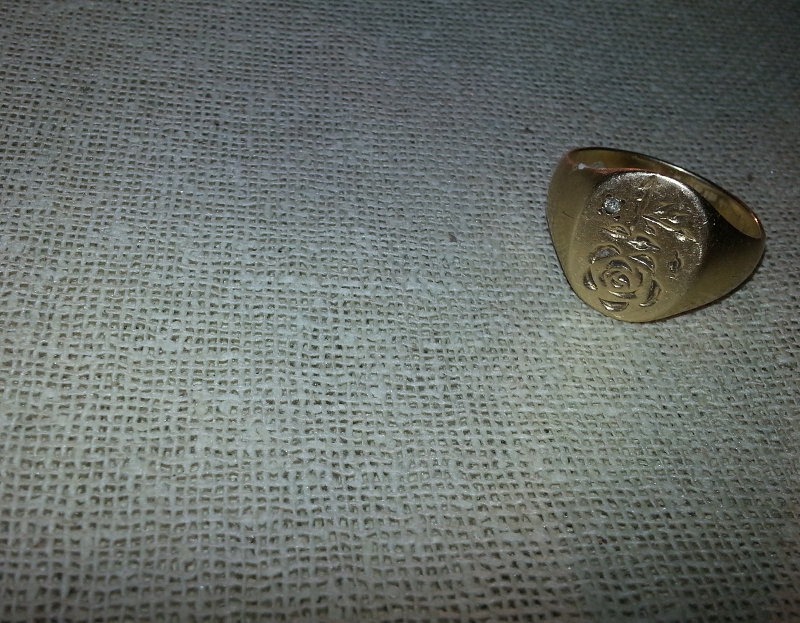
What to make of this? Given the silk threads above, I’m thinking of something along the lines of this piece:

This is a 17th century sampler in the collections of The Art Institute of Chicago (Museum #2008.627). It’s worked on a gauze ground in darning and double running stitch (among others). It’s not going to happen any time soon, but the materials are now in my hands and ready.
FOR SOMEONE DOING NOTHING, I SURE AM BUSY
It’s a fair question – “Where have you been?”
The answer is “Busy.”
I’ve been out fabric shopping with friends; trying to establish a regularly meeting needlework circle at a local mall on Fridays; battling the Sacred Dust of India as it tries to repossess the flat; writing a presentation and workshop on the style intersection between Kasuthi embroidery and Renaissance counted work; dealing with assorted technology annoyances; working on TNCM2; trying to parse out more interesting blog entries from my London pix; and playing with various stitching and knitting projects.
First off, I’ve taken up Big Green again. It’s tough to do here. I need very strong light, and even with a small task spot in the living room, the only place bright enough is next to a window in the middle of the day. I long for my comfy chair and spotlight at home.

It’s hard to spot the progress on this strip because it advances at such a slow rate, but it’s there.
Then there’s a new stitching project, as leggy and coarse as Big Green is fine. I bought a pack of ultra-cheap dishtowels at the supermarket, because I always seem to have run out of non-terry ones when I am looking for something to toss over rising bread. One quick wash later, and as expected for bargain basement Indian cotton – they’d faded and shrunk. But wait! That dark indigo one is now a pleasant, mottled chambray. And it’s almost even weave:

So into the stash for some ecru DMC linen floss (which I’ve now learned has been discontinued. It figures…) Because I’m stitching over 3×3 threads to even out inconsistencies in the weave, and because the linen thread is fuzzy with its own rustic character, I decided to play on that folksy appearance rather than going for crisp, tiny detail. The pattern is yet another one that will be featured in in TNCM2. This, when finished out, will be a strip decorating a pocket edge of a zippered stitching caddy. The entire outside of the case will also be worked in one of the larger all-over patterns in TNCM2. Without cutting up the dishtowel, I intend to origami it into a series of graduated pleats, then stitch perpendicular to the folds to make pockets opening “up” and “down”.
The final step will be to fold the entire thing in half, then take an over-long large-tooth jacket zipper (toddler size), and run it around three sides. This should make an organizer pouch that when zippered, lies totally flat. I may sew one of the smaller interior pockets shut, stuffing it with some sort of padding to make pin cushion (perhaps with a finer gauge fabric as liner, so I can put emery into it). And I may also stitch in a couple of pieces of sturdy felt, so it has an integrated needle-book on the inside. The details of this finishing are still idle speculation at this point. Right now, it’s just a quick doodle.
I’ve been busy with knitting, too.


I’ve finished the body of the beaded red lace scarf. I’m drafting up the companion edging, with more beads and mitered corners. I also have to “kill” the acrylic yarn so that it lies flatter. Not quite sure how I’ll achieve this, since the beads make ironing problematic. But I’ll figure it out, even if I have to do up a couple of sacrificial beaded test swatches.
Also in the photo above is the latest pair of socks. That’s pair #5 in the past two months. I work on them while we wait for the school bus in the morning, or any other time I’m waiting on a line, for a car, or find myself idle outside the apartment. After this pair I’ll have to get creative in combining the leftovers on hand. I’ve gone through most of the sock yarn I brought with me. I have a couple of balls of Noro sock yarn left, but I’d prefer to use that for some other accessory. The yarn is beautiful but I prefer wearing (and washing) other sock yarns, for comfort and durability reasons.
METAL LACE
Quality ironwork,, armoring, weapons work, and smithery fascinate me. Especially wrought, as opposed to cast iron. I am also fond of arms and armor. The precision, tracery, and especially the contrast between the hard medium and delicate forms speaks to me, with parallels to textiles and couturier design. Oh and the elements of fire and danger. Let’s not forget the purpose…
While there were many other famous textile examples on display at the Victoria & Albert Museum, The Tower of London, and the British Museum, most of my embroidery and stitching readers have already seen them. They’re the examples presented in just about every textbook or reference work on stitching. Instead, I’d like to take a cross-craft side trip and look at some of the things we saw that are less well known or documented in the hope of kindling some cross-pollination.
Today is wrought iron. The V&A has a magnificent hall of ironwork. How could one not adore this dolphin, so much like a calligraphic image?
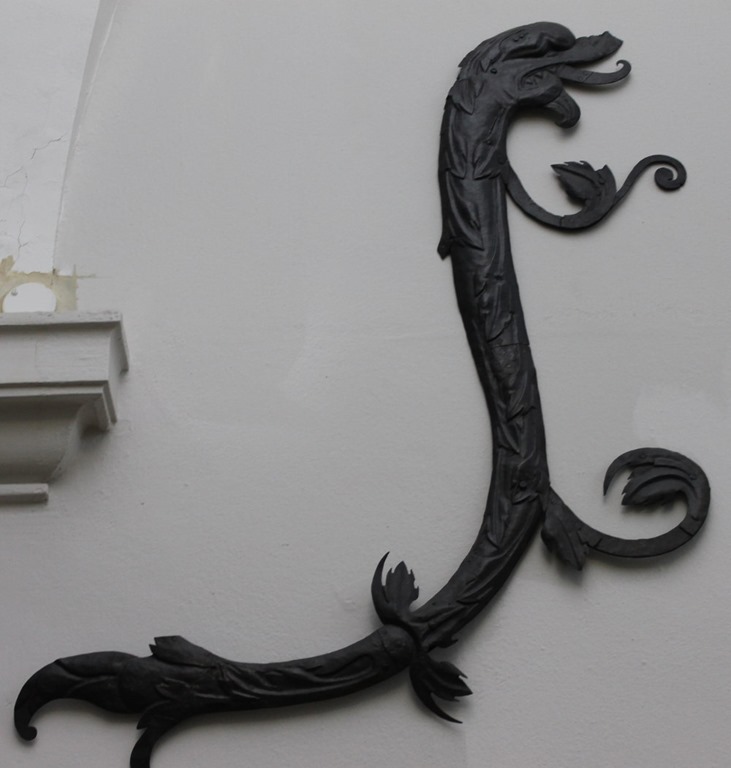
It is one of a pair. The V&A’s citation is Number 280:7-8-1879, and from that citation, it is dated 1520-1530, of Spanish origin, by Juan Francés, part of a larger altar screen.
I also love this pair of window grilles:
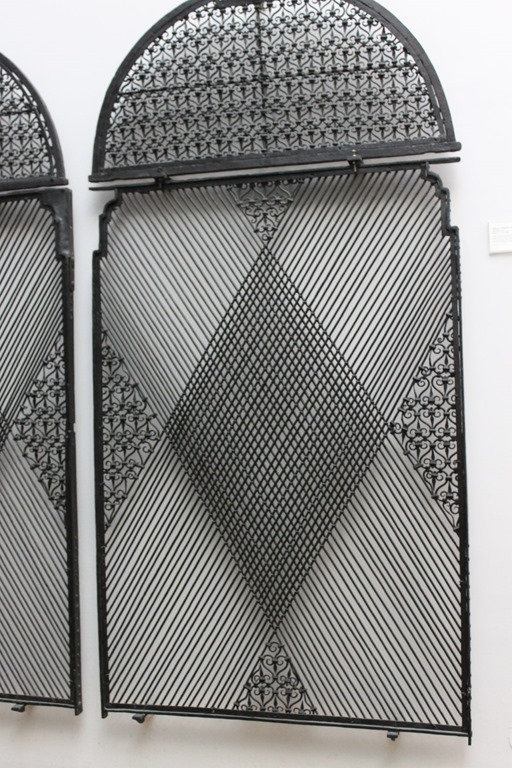
The thin bars that form the center diamonds are all independently forged to the frame and are formed and spaced with great precision. The contrast of geometric and organic traceries in the side triangles and arch are blackwork in iron. This piece is V&A Number 125-c-1879, from Italy, dated 1575-1600.
I fell down on the job and didn’t get the annotation for this piece, and I can’t find it in the on-line photo collection to provide provenance and date, but it’s in the same gallery as the grille above.

The play of curves and symmetry fights with my mental preconception of iron as unyielding and linear.
Finally two figural pieces. Fear the iron chicken, and the lion key-master!


The weathercock is French, dated around 1700-1725, made of wrought iron and copper. It’s Museum number 909:1 to 3-1906, and bears evidence of gilt and polychrome finishes. The wrought iron locksmith’s standard is German, dated around 1760 to 1800, and is Museum Number 545-1869. I would have thought that elements of the lion would have been cast iron, but no – they’re all wrought.
Now – why the side trip through metalwork? Because I want to show that the aesthetics of historical embroidery are even better appreciated in context. The forms of the late locksmith sign mimic those of Rococo laces and goldwork stitching. The earlier grilles echo contrasts, shapes and lines of Italian and French strapwork embroidery, done at around the same time.
Finally, imagine the shadows thrown by those window grilles – sitting in the afternoon sun made lace as it sifts through the iron, stitching oh-so-similar shapes until it is too dark to see.
CROSS STITCH
Stitching geeks – like those immersed in every esoteric discipline – love to argue; even when an issue is settled. Sometimes assertions bubble up again, are discussed with passion, and then go into remission. Occasionally these debates cycle back, usually because reference materials with outdated opinions are found by a new generation of hobbyists who take the authors’ words at face value.
One of these oft raised/oft settled debates involves the use of plain old common cross stitch in historical eras: was or was it not done before 1600. And the answer isn’t crystal clear, nor does it come with hard boundary dates. Let’s look at modern stitching and a dated example from the late 1500s.
Figural cross stitch isn’t new. It isn’t modern. But it has morphed into a recognizable modern style that has migrated from its pre-1600s cognates. The photo below is of a contemporary sampler designed by Marilyn Leavitt-Imbloom, for Lavender and Lace. It’s entitled “Angel of Dreams” and is widely available for purchase (a quick Google search will turn up retailers):
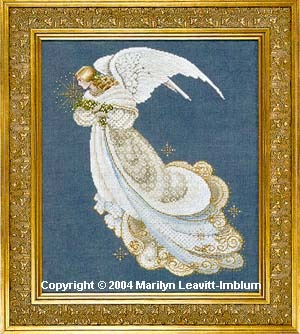
Ms. Leavitt-Imbloom’s work is pretty much the poster child for the modern needle-painted cross stitch style. Note the fluid forms, the subtle shadings that mimic painting, the half and quarter stitches and sparing (though dramatic) use of double running stitch outlines.
By contrast, here is one of the Oxburgh Hanging panels dated circa 1570, stitched by Mary, Queen of Scots (and/or Elizabeth Talbot, one of her ladies) during captivity. The first photo is shamelessly borrowed from the artifact’s Victoria and Albert page (Museum accession #T.33JJ-1955). The detail shots below it were taken by Elder Daughter on our visit there. If you click on the details, you’ll be taken to larger versions for closer inspection (patience please on the download, some are huge).

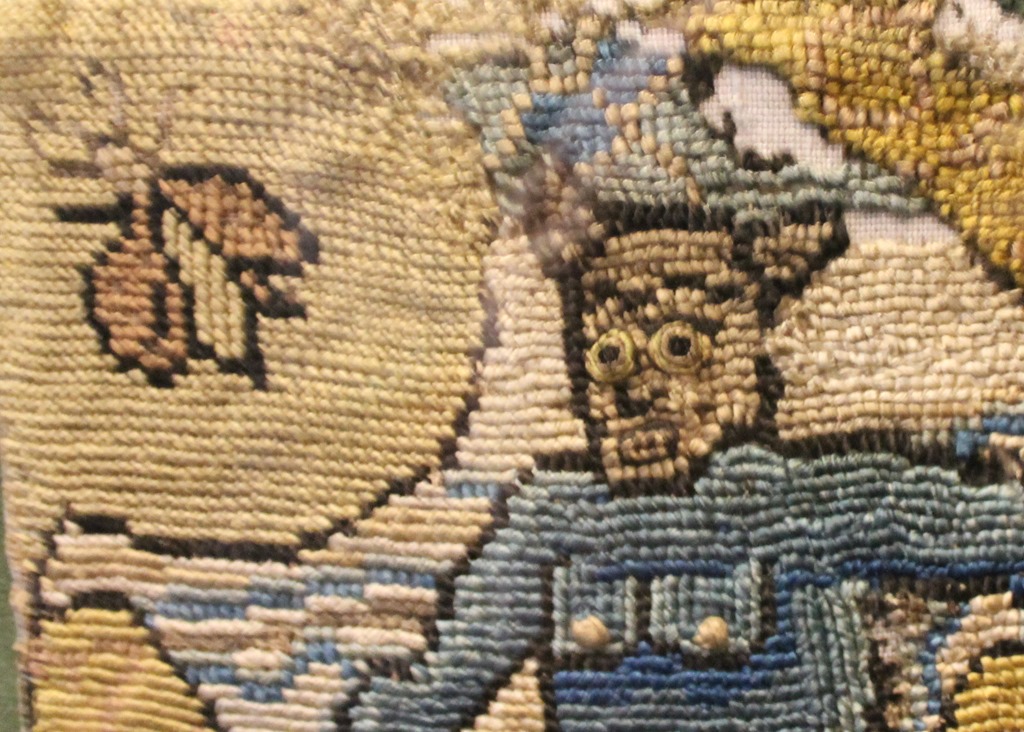

Now, the official descriptions cite “tent stitch” for all of the Oxburgh hangings. But if you look closely at the insect being inspected by the sea monster, it’s pretty clear that cross stitch was employed on this particular slip. Also note that the different parts of the insect were stitched with no regard for maintaining “the same leg on top”. Although some unworked bits just north of the Monster’s head can be seen and counted, we can’t rely on that because the bright white cloth peeking through the stitching is conservator’s ground, onto which the fragile stitching has been affixed. Fortunately, there is a small damaged area just north of the insect where we can see the original fabric:

Yup. Cross stitch, worked over a 2×2 thread grid.
On style – yes there are shadings, produced by marling a small number of colors of fine floss-fiber together to make threads of intermediate hues, rather than selecting pre-dyed solid threads of graduated color. But the shadings are far les subtle than the modern work. There are strong outlines also worked in cross stitch, probably related to the drafting methods of the time, in which the design was drawn directly on the linen prior to stitching. It is possible that black outlines were worked in part to cover those inked or otherwise drawn lines. I also think the outlines were worked first, based on the way that other stitches encroach upon them, with the colors added later – first to the foreground items, and finally to the background areas. Note that the lines do break in a couple of places, but I can’t say whether that is due to differential thread wear or they were truly omitted.
Now these all-over figural embroideries like the Oxburgh slips are not the only form of historical cross stitch. In fact, pictures like these are among the minority of surviving examples. Far more represented in artifact collections today are borders and strips in long-armed cross stitch or its variants. They’re not common, but cross stitched pictures did exist in the world of of the 1570s. And they looked rather different from contemporary figural cross stitched pieces.
ELIZABETHAN BLACKWORK SMOCK
O.k. I know a few of you want me to do a blow by blow travelogue of our London trip. But that’s not my forté. I’ll wander over and cover some of that material several posts, but mostly want to write about specific things we saw, this being one of the first times I’ve been able to get relatively up close and personal with historical artifacts. Besides, The Resident Male is a much better travel writer than I am.
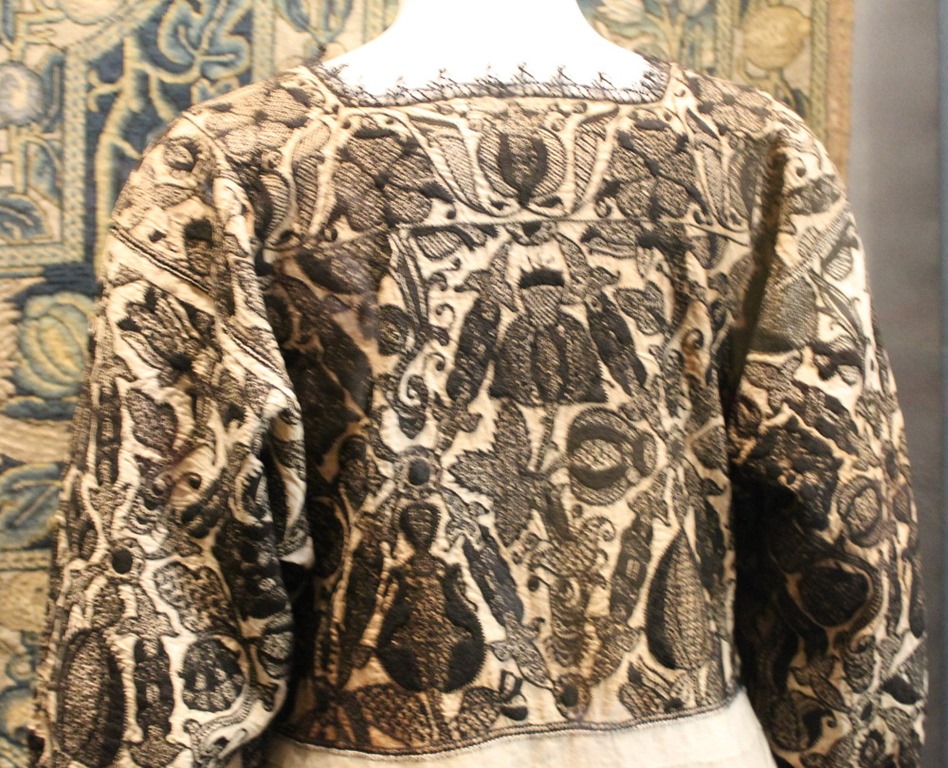
First off, to satisfy my stitching readers, is this blackwork smock, currently on exhibit at the Victoria and Albert Museum:

The full citation cites it as being of British make, and stitched some time during 1575 to 1585. They posit home manufacture rather than a professional house. If you read through the full description, you’ll find out that the top part (the stitched bodice) was done on fine linen, and the unseen and unstitched lower part was also linen, but of a much coarser fabric. The plain lower skirt and the needle lace around the neckline and cuffs are modern reproductions. The accession number is T.113 to 118-1997.
I tried to take pix of this artifact to show the details. It’s basically three large rectangles, with underarm gussets (each sporting a flower, and unseen here). One rectangle for each sleeve, plus a larger one with head hole for the front, back and shoulders. I wanted to see if that center strip was seamed from smaller parts, but I wasn’t able to do so based on my examination.
One thing that delighted me was the use of various techniques for the fills. Some were done on the count. It looks like the grid may be 4×4 threads. I can’t estimate the stitch per inch count, but it’s roughly comparable in look to between 20 and 25 stitches per inch. The thread does look finger spun from floss silk, with some areas more tightly twisted than others, and some variation in thickness.
Some filling placements were eyeballed, and done freehand (note the trailing vines and spot motifs that follow the flower forms rather than marching rigidly in diagonals). The solid bits look to have been done in satin stitch or a stitch in the Romanian couching family. The dark borders around the shapes look to be either outline or stem stitch in some places, and in other places possibly whipped or threaded back stitch. There may be knot stitches in there, too, (especially the knotted line stitches that sport little side stitch “legs”) but my eyes couldn’t pick them out for absolute identification.
Effort was made to use the same filling in matching areas of symmetrical designs, but some variations do occur. In fact, the occasional lapses in attention to detail on the fills, and that some are presented in a couple of variations (see below) are charming, and makes me think that my guess that the fillings were thought up on the fly, rather than being copied from canonical works may be true. (Filling inventors, take heart.)
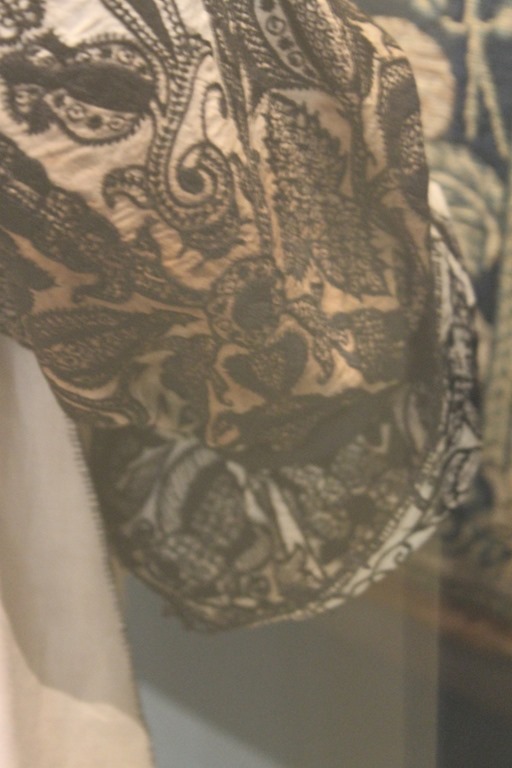
I tried to get very close to the turned back cuffs to determine whether or not they were exactly double sided, with both front and back identical. Well, they’re close but not absolute. My pictures aren’t good enough to show it, but there are (barely) detectable knots on the inside of the cuff. The double running stitch fills and solid areas (satin stitch in this case) are certainly worked very neatly, especially compared to the relative chaos of the back sides of other contemporary work, but they are not spot on exactly the same front and back, although they are presentable and nicely done, for sure.
Here are some more pix of the thing. These shots were taken by Elder Daughter, with her superior camera skills and equipment:


And finally, to satisfy the people who pointed out that I did not include exact citations for every fill in my free-to-download Ensamplario Atlantio collection, here is a set of 10 plates with fills sourced specifically to this artifact.
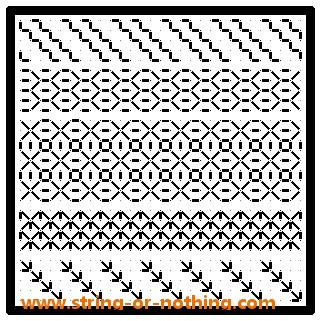
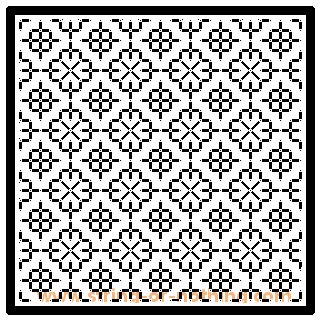


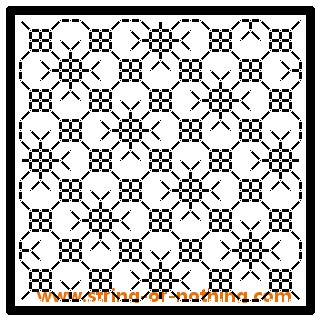
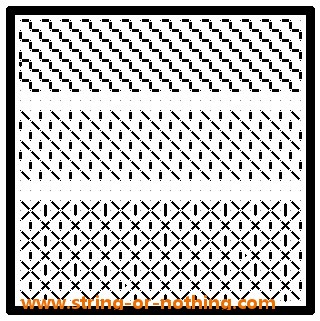


So much for facts. I have to say there were several items on display that caused me to hyperventilate like a Twilight fangirl. Blackwork geek that I am, this was one. It’s in excellent condition, with the stitching, dense, the threads shiny, and minimal wear or damage. The overall effect was one of understated opulence, but not splendor. For one, there is an aspect of “loving hands at home” to this piece, especially in the composition and heaviness of the fills.
But what struck me the most was that the standard of excellence in this piece is entirely achievable today. Yes, it’s exacting, and acquiring the materials would be difficult, but it’s not miles beyond the capability and reach of modern amateur needleworkers. It’s time we stop bowing to “the ancients” and banish our temporal craftsmanship insecurities The best of us are darned good (no pun intended), and many of the contemporary projects I see on the web are just as well executed as this prime piece from the 16th century.
 String-Or-Nothing